


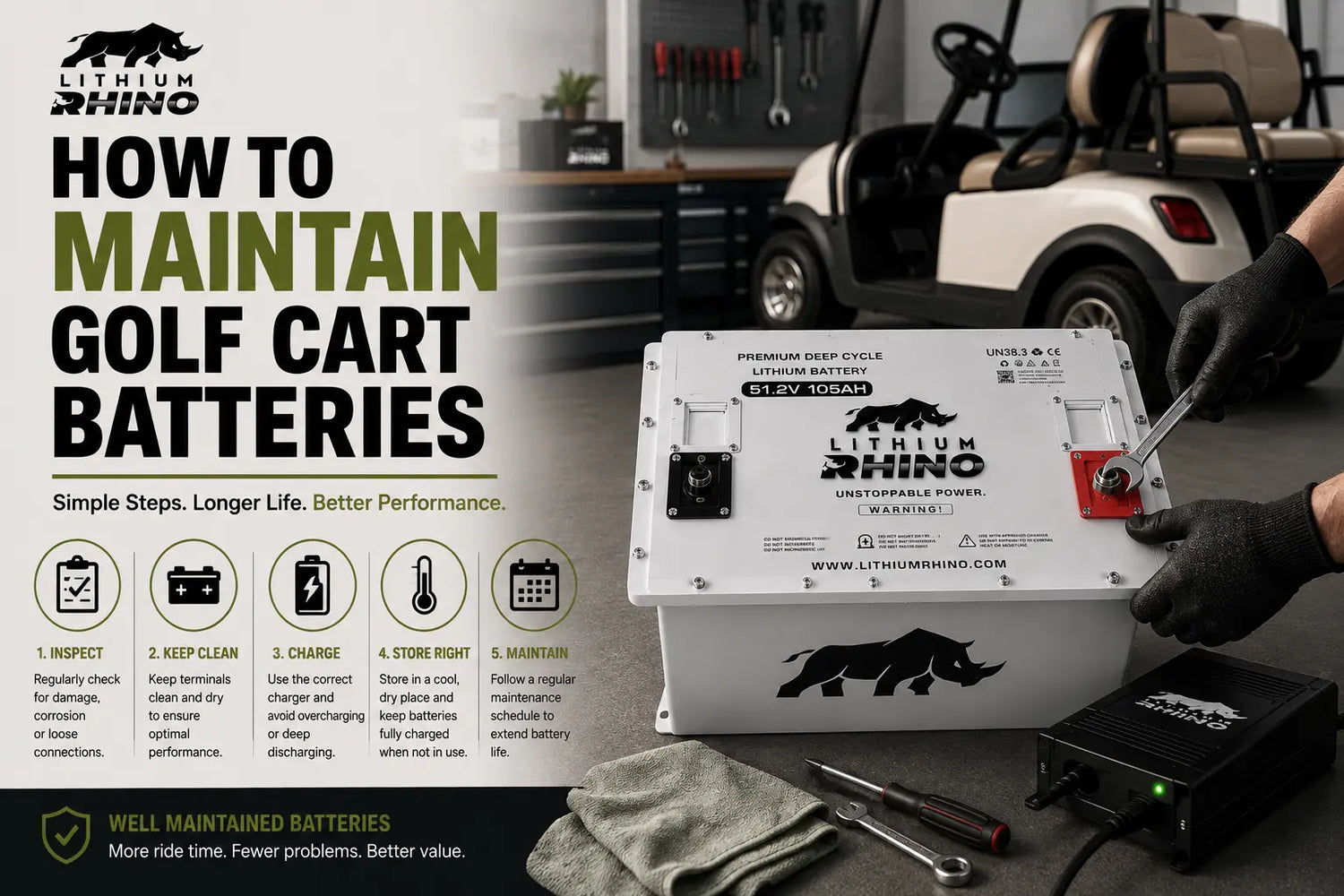
Maintaining golf cart batteries comes down to five habits: keep them charged after every use, check and top off water levels monthly (for lead-acid batteries), clean corrosion off the terminals, avoid deep discharges below 20%, and inspect connections regularly for looseness or damage. Following these steps can add one to two years to a lead-acid battery's lifespan. Lithium batteries skip most of this list entirely, since they don't need watering, rarely corrode, and handle deep discharges without damage.
If you own a lead-acid golf cart battery, the maintenance routine below will help it last as long as possible. If you're tired of the upkeep, we'll also explain why lithium owners barely think about this topic at all.
Why Golf Cart Battery Maintenance Matters
A well-maintained lead-acid golf cart battery typically lasts 4 to 6 years. A neglected one can fail in as little as 2 years. Since a full set of golf cart batteries often costs between $800 and $2,000, a bit of routine care is one of the cheapest ways to protect that investment.
Lead-acid batteries are chemical systems, and how you treat them day to day directly affects how long they hold a charge. Lithium batteries work differently internally, which is why the maintenance burden looks so different between the two.
1. Charge After Every Use
Golf cart batteries should be charged after each use, even if the cart was only driven a short distance. Leaving a lead-acid battery sitting in a partially discharged state causes a process called sulfation, where lead sulfate crystals build up on the plates and reduce the battery's ability to hold a charge.
- Plug the cart in as soon as you're done using it, not the next time you plan to drive.
- Use a charger designed for your battery's voltage (36V, 48V, or 76V golf carts all require different chargers).
- Avoid leaving batteries fully discharged overnight or longer.
Lithium batteries don't suffer from sulfation, so this rule matters far less once you've converted to a lithium conversion kit.
2. Check and Add Water Monthly (Lead-Acid Only)
Flooded lead-acid batteries lose water through normal charging, and low water levels expose the internal plates to air, which permanently damages them.
How to add water correctly:
- Charge the battery fully before adding water, not before charging.
- Remove the vent caps and check the water level. It should sit about ¼ inch above the plates.
- Add only distilled water. Tap water contains minerals that shorten battery life.
- Never overfill. Water expands during charging and can overflow, causing corrosion.
Should you charge after adding water? No. Add water after a full charge, not before. Adding water to a low battery before charging can cause the water to overflow once the electrolyte expands during charging.
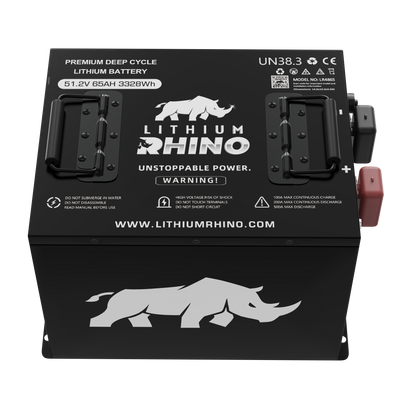
This entire step doesn't apply to lithium batteries. Lithium chemistry is sealed, so there's no water to check, add, or spill. Our 48V 65Ah Lithium Rhino Conversion Kit and similar kits arrive fully sealed with zero watering required.
3. Clean Terminals and Check for Corrosion
Corrosion on battery terminals creates resistance, which weakens the connection and can prevent the cart from charging or running properly.
How to clean golf cart battery terminals:
- Disconnect the battery before cleaning (negative terminal first).
- Mix baking soda with water to neutralize the acid in any corrosion.
- Scrub the terminals with a wire brush or old toothbrush.
- Rinse with plain water and dry thoroughly.
- Apply a thin layer of dielectric grease or a terminal protector spray to slow future corrosion.
Check terminals every one to two months, or sooner if you notice slow acceleration or dimming lights, both common signs of a corroded connection.
4. Check Battery Levels and Voltage Regularly
Testing your batteries lets you catch problems before they leave you stranded on the course.
- Use a voltmeter to check each battery individually, not just the overall pack voltage.
- A fully charged 6V battery should read about 6.3V; a 12V battery should read about 12.6-12.8V.
- If one battery in the pack reads significantly lower than the others, it's likely failing and dragging down the whole set.
For a full walkthrough, see our guide on how to test golf cart batteries.
5. Avoid Deep Discharges
Running a lead-acid battery down to empty regularly shortens its lifespan more than almost any other habit. Try to recharge once the battery drops to around 20-30% remaining, rather than waiting until the cart struggles to move.
Lithium batteries handle deep discharges without the same damage, since they don't rely on the same chemical reaction that causes sulfation in lead-acid cells. Kits like the 48V 170Ah Lithium Rhino 300A BMS Conversion Kit are built specifically to tolerate frequent deep discharges without capacity loss.
6. Store Properly During Off-Season
If your golf cart sits unused for weeks or months, storage habits matter as much as daily habits.
- Charge the battery fully before storing it.
- Disconnect the battery or use a maintainer/trickle charger to prevent slow self-discharge.
- Check water levels before and after long storage periods (lead-acid only).
- Store in a cool, dry place. Extreme heat accelerates water loss and corrosion. In colder climates, self-heated lithium kits prevent the capacity loss that standard batteries experience in freezing temperatures.
Quick Maintenance Checklist
| Task | Frequency | Lead-Acid | Lithium |
|---|---|---|---|
| Charge after use | Every use | Required | Recommended |
| Check water level | Monthly | Required | Not applicable |
| Clean terminals | Every 1-2 months | Required | Rarely needed |
| Check voltage | Monthly | Recommended | Optional |
| Avoid deep discharge | Ongoing | Important | Less critical |
| Off-season maintainer | During storage | Required | Recommended |
Why Lithium Batteries Eliminate Most of This Work
Everything above is standard practice for lead-acid batteries, and skipping it is the most common reason golf cart batteries die early. Lithium batteries remove several of these tasks completely:
- No watering. Lithium cells are sealed, so there's nothing to check or top off.
- No sulfation. Lithium chemistry doesn't degrade from partial charges or deep discharges the way lead-acid does.
- Minimal corrosion. Lithium terminals corrode far less often than lead-acid ones.
- Built-in protection. Most lithium batteries include a Battery Management System (BMS) that automatically prevents overcharging, over-discharging, and cell imbalance, tasks you'd otherwise have to manage manually. Our 48V 170Ah 300A BMS Conversion Kit is a good example of how much protection a modern BMS handles on its own.
For most owners, this means the maintenance routine shrinks from a monthly checklist to an occasional visual inspection.
Frequently Asked Questions
How often should I water my golf cart batteries?
Check water levels monthly, and always add water after charging, not before.
Can I use tap water in golf cart batteries?
No. Use distilled water only. Minerals in tap water build up on the plates and reduce battery performance over time.
Why is my golf cart battery not holding a charge?
This is usually caused by sulfation from repeated partial charging, low water levels, corroded terminals, or one weak battery pulling down the rest of the pack. Testing each battery individually with a voltmeter will identify which cause applies.
Do lithium golf cart batteries need any maintenance at all?
Very little. An occasional visual check of the terminals and connections is generally enough, since lithium batteries don't require watering and include a BMS that manages charging automatically.
How long will proper maintenance extend battery life?
Consistent maintenance can extend a lead-acid golf cart battery's life by 1-2 years compared to a neglected one, though actual results depend on usage patterns and climate.
Ready to Skip the Maintenance Altogether?
If you're tired of watering, cleaning terminals, and babysitting your battery pack, a lithium conversion removes nearly all of it. Popular options by voltage:
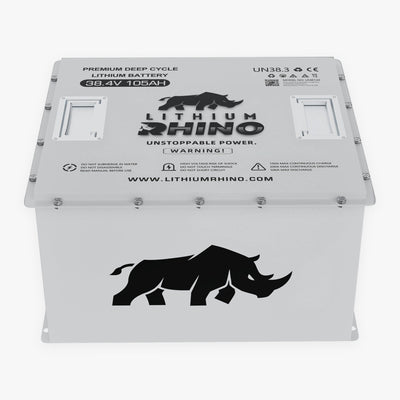
- 36V 105Ah Lithium Rhino Conversion Kit - for 36V carts needing a full maintenance-free upgrade
- 48V 105Ah Lithium Rhino Conversion Kit - our most popular kit for standard 48V carts
- 48V 120Ah Lithium Rhino Conversion Kit - extra capacity for longer days on the course
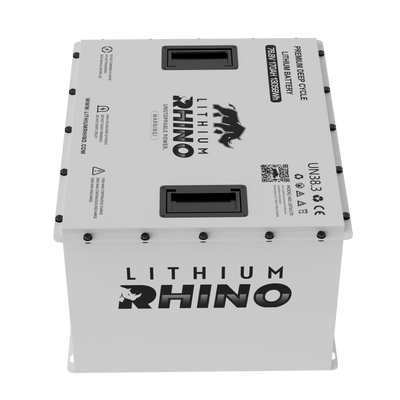
- 76V 105Ah Lithium Rhino Conversion Kit (Self-Heated) - built for high-voltage carts and cold climates
Every Lithium Rhino kit is sealed, BMS-protected, and built to handle daily use without the upkeep a lead-acid pack demands. Browse the full lineup of conversion kits to find the right fit for your cart.


Leave a comment
This site is protected by hCaptcha and the hCaptcha Privacy Policy and Terms of Service apply.