

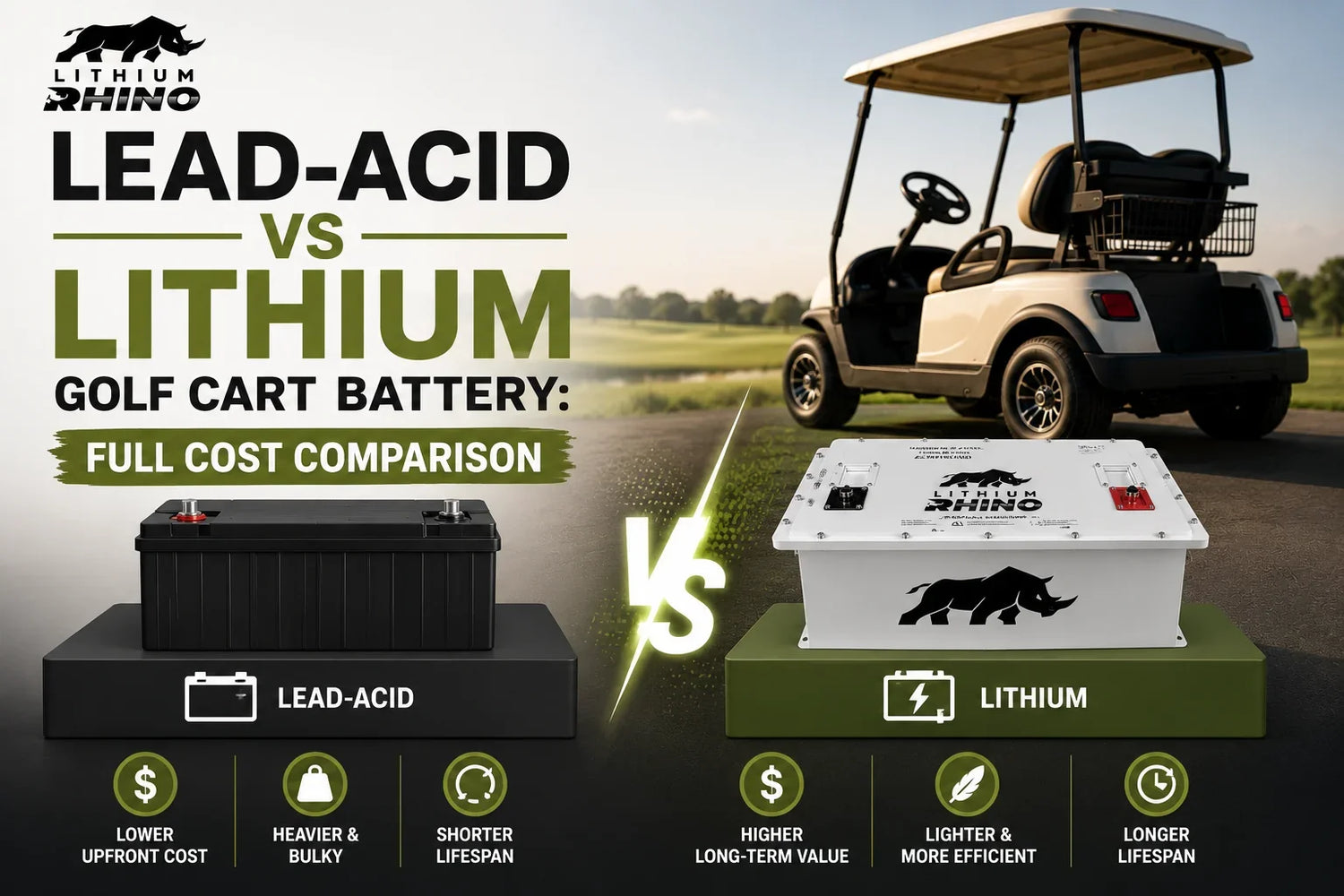
If you're shopping for a new golf cart battery, you've probably noticed the sticker shock: a lithium pack can cost 2-3x more upfront than a lead-acid set. So is lithium actually worth it, or is lead-acid the smarter buy?
Short answer: lithium almost always wins on total cost of ownership, but the real numbers matter more than the marketing. Below, we break down the actual 5-year cost of each option, including the hidden expenses most buying guides leave out.
The Upfront Price Tag
| Lead-Acid | Lithium Rhino (LiFePO4) | |
|---|---|---|
| Typical 48V pack cost | $800 – $1,200 | $1,299 – $3,499 |
| Installation | Usually included/simple | Simple with a conversion kit |
| Warranty | 1–2 years typical | Up to 8 years |
Yes, lead-acid looks cheaper on day one. But that's where the story starts, not where it ends.
Here's what real lithium pricing looks like across our lineup, so you can compare against whatever lead-acid quote you've gotten:
| Kit | Sale Price |
|---|---|
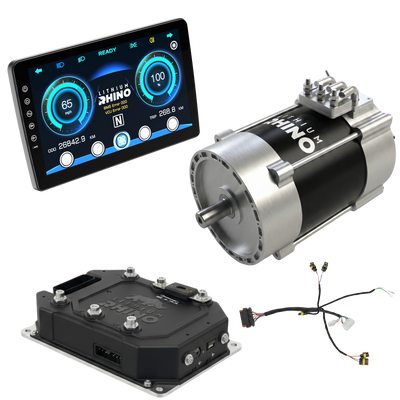
| 36V 65Ah Conversion Kit | $1,499 |
| 48V 50Ah Conversion Kit | $1,299 |
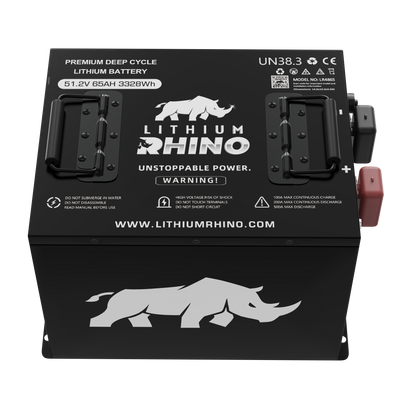
| 48V 65Ah Conversion Kit | $1,699 |
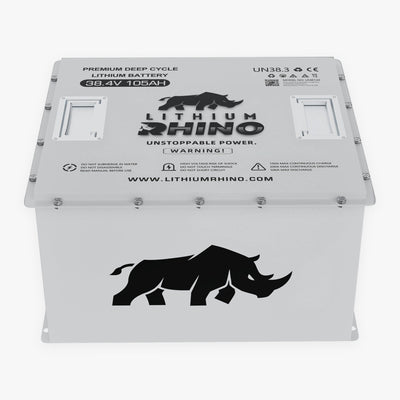
| 48V 105Ah Conversion Kit | $2,299 |
| 48V 105Ah 'CUBE' Kit | $2,299 |
| 48V 120Ah Conversion Kit | $2,699 |
| 48V 170Ah Conversion Kit (300A BMS) | $3,499 |
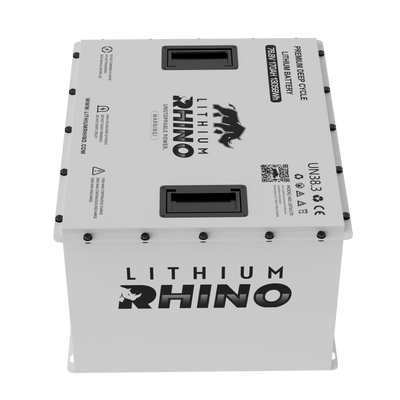
| 76V 170Ah Conversion Kit ("Godzilla") | $4,199 |
Most golf cart owners land in the 48V 50Ah – 105Ah range, putting real-world lithium pricing at roughly $1,299–$2,299, not far from what you'd spend on two rounds of lead-acid replacements over the same period.
Lifespan: The Number That Changes Everything
This is the single biggest factor in the cost equation.
- Lead-acid batteries typically last 1–3 years (300–500 charge cycles) under regular golf cart use, and that lifespan shrinks fast if the cart sits unused for weeks, gets deep-discharged, or lives somewhere hot.
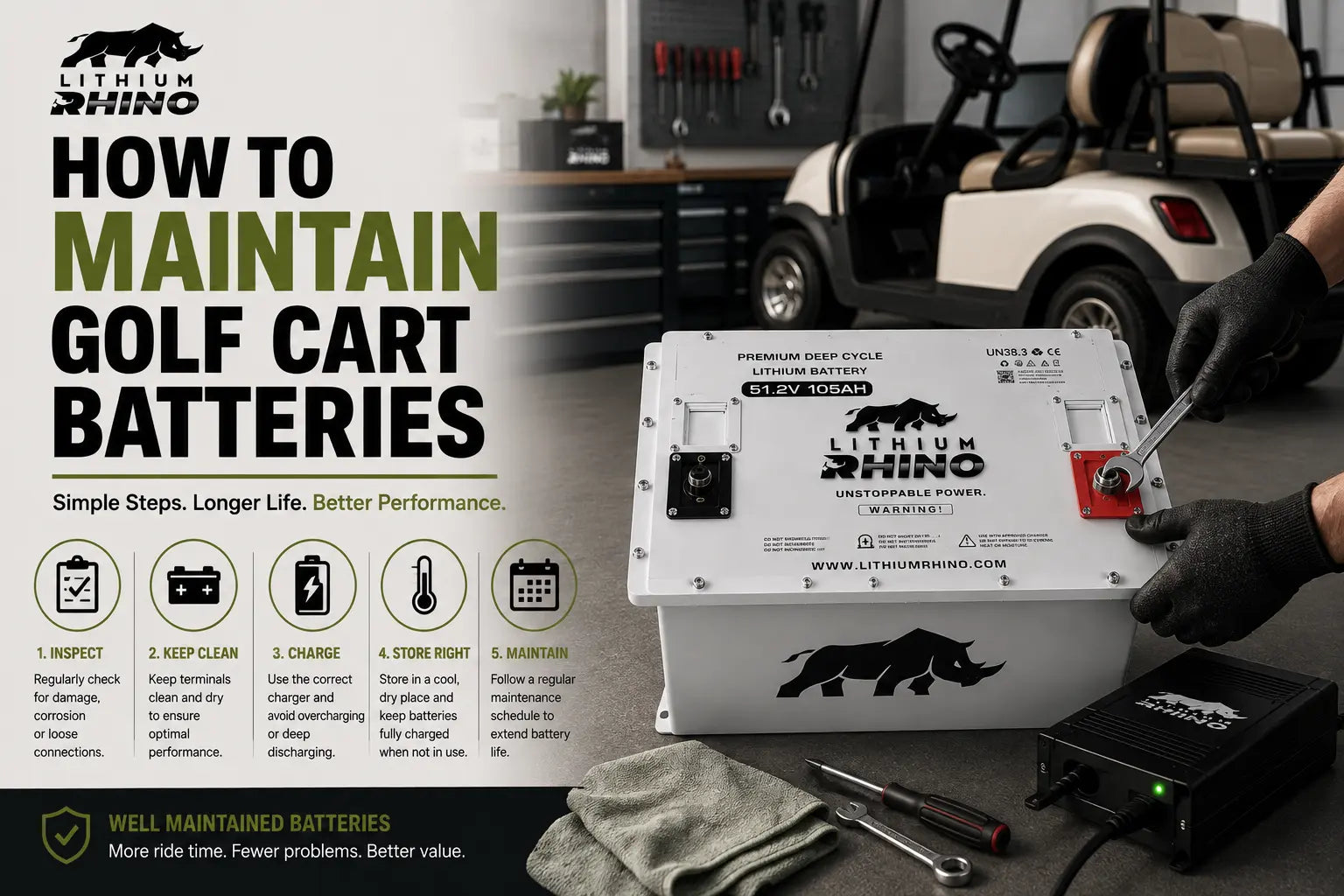
- Lithium batteries last 8–12 years (2,000–5,000+ charge cycles) with proper care. We cover what "proper care" actually looks like in our guide on how to maintain your lithium-powered golf cart.
That means over a 10-year period, a lead-acid owner is likely buying 3–5 replacement sets, while a lithium owner buys one.
The 5-Year Cost Breakdown
Using a common example, a 48V 105Ah setup, here's how the math actually plays out:
| Cost Factor | Lead-Acid (5 years) | Lithium Rhino 48V 105Ah (5 years) |
|---|---|---|
| Battery purchases | 2–3 replacements = $1,600–$3,600 | 1 purchase = $2,299 |
| Charging electricity | Higher (less efficient) | ~20–30% lower cost |
| Maintenance (watering, terminal cleaning) | $100–$200/yr in time & materials | Effectively $0 |
| Performance loss over time | Noticeable after year 1 | Minimal until end of life |
| Disposal/core fees | $20–$50 per swap | One-time, end of life only |
| Estimated 5-year total | $2,300 – $4,500+ | ~$2,299 – $2,500 |
In this example, lithium isn't just competitive, it's often the cheaper option by year 5, even before you factor in the extra range, faster charging, and zero maintenance. Once you're past that 5-year mark, lead-acid keeps racking up replacement costs while your Lithium Rhino kit is often still going strong for another 3-7 years.
Beyond the Sticker Price: What Lead-Acid Really Costs You
A lot of golf cart owners underestimate three "invisible" lead-acid costs:
- Maintenance time. Watering cells, cleaning corroded terminals, equalizing charges, this is time (and hassle) lithium simply doesn't require.
- Performance decay. Lead-acid voltage sags under load almost immediately, meaning your cart feels sluggish on hills or with a full load well before the battery is "dead." Lithium holds a flat voltage curve for nearly its entire cycle life.
- Weight penalty. Lead-acid packs are 2–3x heavier, which increases wear on tires, suspension, and motors, a cost that rarely shows up on a battery receipt but shows up in your maintenance bills elsewhere.
Where Lithium Pulls Ahead Even Further
- Charging speed: Lithium charges roughly 3-4x faster than lead-acid, so you spend less downtime waiting and more time driving.
- Depth of discharge: Lead-acid batteries shouldn't be discharged below 50% regularly without damaging them, meaning you're effectively only using half the rated capacity. Lithium can be safely discharged to 80-100%, so a lithium battery with the same rated capacity delivers more usable range. We break this down further in our 48V lithium lifespan guide.
- Warranty backing: Most reputable lithium brands, including Lithium Rhino, back their batteries with far longer warranties than lead-acid manufacturers ever offer. If you're comparing warranty terms across brands, our warranty deep dive is worth a read before you buy.
When Does Lead-Acid Still Make Sense?
To be fair, lead-acid isn't always the wrong call:
- You're on a very tight upfront budget and plan to sell the cart within a year or two
- The cart sees very light, occasional use
- You're not planning to keep the cart long-term
But for anyone using their cart regularly, on a course, a property, or for hunting/utility work — the 5-year math almost always favors lithium once you factor in replacement cycles.
So, Which Should You Buy?
If you're keeping your cart for more than 2-3 years, lithium pays for itself and then keeps saving you money every year after. If you want the full picture of why lithium outperforms lead-acid beyond just cost, check out Why Choose Lithium? Top Benefits of Golf Cart Lithium Batteries Explained.
Not sure which lithium kit fits your cart? Take our 30-second battery quiz and we'll match you with the right voltage and capacity, whether that's a 36V, 48V, or 72V conversion kit.

Leave a comment
This site is protected by hCaptcha and the hCaptcha Privacy Policy and Terms of Service apply.