


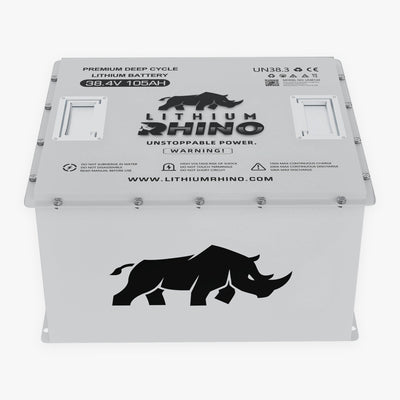
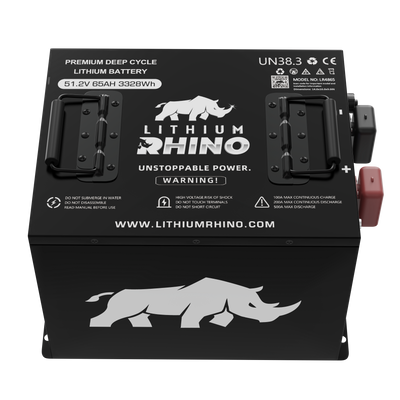
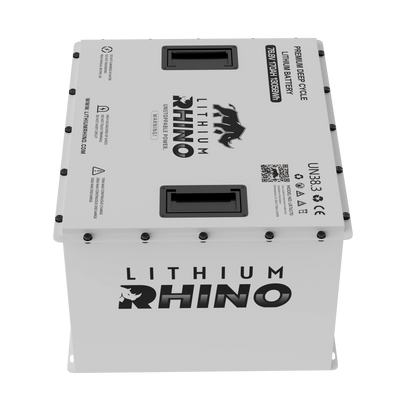

Lithium golf cart batteries need proper preparation before long-term winter storage. Check the manufacturer's recommended storage charge, switch off unnecessary electrical loads, disconnect the charger when instructed, and keep the battery within its specified storage-temperature range. Most importantly, never charge a battery when its cells are below the permitted charging temperature.
LiFePO4 batteries generally require less routine maintenance than flooded lead-acid batteries, but they still have specific storage and charging requirements. Following the correct procedure can help prevent deep discharge, cold-weather charging damage, and avoidable battery problems when spring arrives.
Why Does Winter Storage Matter for Lithium Golf Cart Batteries?
Many golf cart owners stop using their carts during winter. The vehicle may remain parked in a garage or storage area for several weeks or months.
However, a parked battery can still lose charge.
Lithium iron phosphate (LiFePO4) batteries experience gradual self-discharge. Their battery management systems (BMS) and connected electronics may also consume a small amount of power while the cart is switched off.
Additional electrical components can create another source of battery drain. Displays, controllers, GPS trackers, USB accessories, and other equipment may continue drawing power when the cart is not being used.
Cold temperatures create a separate challenge. They can reduce available battery performance and restrict charging. Charging lithium cells below their permitted temperature can cause permanent damage.
Proper winter storage helps you:
- Reduce unnecessary battery drain.
- Maintain the manufacturer's recommended storage charge.
- Protect the battery from unsuitable temperatures.
- Avoid charging under unsafe conditions.
- Reduce the risk of deep discharge.
- Prepare the golf cart for the next driving season.
The correct procedure depends on your battery model, its BMS features, and the conditions in your storage location.
How Does Cold Weather Affect Lithium Golf Cart Batteries?
Cold weather affects lithium batteries in several ways. Understanding these effects helps you distinguish between normal winter performance changes and conditions that can damage the battery.
1. Available Battery Performance Can Decrease
Low temperatures can reduce the amount of energy a lithium battery can deliver during use.
For example, a golf cart may provide less driving performance in freezing weather than it does in moderate temperatures. The actual difference depends on cell design, battery temperature, electrical load, and operating conditions.
Some performance limitations can improve after the battery warms up. A temporary reduction in available power does not automatically mean the battery has permanently lost capacity.
2. Charging May Be Restricted
Charging temperature is one of the most important winter considerations.
Many standard LiFePO4 batteries restrict charging when their internal cell temperature falls below 32°F (0°C). Charging lithium cells below their permitted temperature can cause lithium plating, which may permanently damage the cells and create safety risks.
Some batteries use a BMS that blocks charging when the cells are too cold. Other models include a self-heating system that warms the cells before charging begins.
Do not assume every lithium golf cart battery has the same charging protection. Check the minimum charging temperature in the manual for your exact model.
3. Storage Temperature Has Its Own Limits
A battery's operating-temperature range is not necessarily its recommended long-term storage-temperature range.
A battery may be designed to operate in cold outdoor conditions but have a different temperature range for extended storage.
Before choosing a winter storage location, check the manufacturer's:
- Recommended storage-temperature range.
- Maximum permitted storage duration.
- Minimum charging temperature.
- Storage charge recommendation.
These specifications should guide your winter preparation.
What Charge Level Should a Lithium Golf Cart Battery Have Before Winter Storage?
There is no universal storage charge percentage for every lithium golf cart battery.
The correct level depends on the manufacturer's instructions and the battery's design.
For example, Trojan recommends fully charging its lithium batteries before long-term winter storage. Epoch's winter storage tips, on the other hand, recommend a partial charge of about 50–80%.
These differences show why you should not automatically apply one manufacturer's storage instructions to another brand.
Before storing your battery:
- Check its current state of charge.
- Find the recommended storage percentage in the battery manual.
- Charge or discharge it to the specified level if necessary.
- Confirm that its internal temperature is within the permitted charging range before recharging.
- Follow the manufacturer's instructions for switching off or placing the battery in storage mode.
Why Should You Avoid Storing a Battery Completely Discharged?
A lithium battery can lose additional charge while sitting unused. Its BMS and connected electronics may also consume power.
If the battery starts winter storage with very little charge, continued power consumption may push it below its safe operating limits.
A deeply discharged battery may enter BMS protection and become difficult to recover.
Do not leave your battery completely discharged unless its manufacturer specifically provides a different procedure.
Important: Do not assume every lithium golf cart battery should be stored at 50% or 100%. Follow the storage recommendation for your exact battery model.
Step-by-Step: How to Store Lithium Golf Cart Batteries in Winter
Use the following checklist before leaving your golf cart unused for several weeks or months.
Step 1: Inspect the Battery and Connections
Start with a visual inspection of the battery and its accessible electrical connections.
Look for:
- Cracks or visible physical damage.
- Loose or damaged cables.
- Corrosion around terminals.
- Swelling or deformation.
- Signs of moisture entering the battery compartment.
- Warning lights or fault notifications.
If you notice unusual heat, leakage, physical damage, or an abnormal smell, stop using the battery and contact the manufacturer or a qualified technician.
Never open the battery casing or attempt to repair its internal components yourself.
Step 2: Check the Battery's State of Charge
Use the battery display, monitoring app, or the method recommended by the manufacturer.
Compare the reading with the battery's specified storage charge level.
If the charge is too low, recharge the battery only when its internal cell temperature is within the permitted charging range.
If the battery is too cold, move it to a suitable environment and allow it to warm naturally before charging. Do not use an open flame, heat gun, or other direct high-temperature source.
Step 3: Switch Off the Golf Cart
Turn off the golf cart before preparing it for storage.
If your vehicle has a Tow/Run switch, check the cart manufacturer's instructions for the correct winter-storage position.
Some golf cart manufacturers recommend Tow mode to help reduce electrical drain from certain vehicle systems. However, the correct procedure can vary by model.
Do not assume the same switch position is appropriate for every Club Car, EZGO, or Yamaha golf cart.
Step 4: Disconnect Unnecessary Electrical Loads
Some golf cart components can continue drawing power even when the vehicle is not being driven.
Depending on the installation, these may include:
- Displays and monitoring systems.
- GPS trackers.
- USB charging accessories.
- Lights and aftermarket electronics.
- Controllers and other standby components.
Use the battery manufacturer's shutdown or storage procedure. If your battery has a power switch or storage mode, follow its instructions.
Disconnecting unnecessary electrical loads can help reduce parasitic drain during storage.
However, do not disconnect live electrical connections or improvise wiring changes. Large golf cart battery systems should be handled by someone qualified to work on them.
Step 5: Disconnect the Charger When Instructed
After the battery reaches its recommended storage charge level, disconnect the charger unless the manufacturer specifically instructs otherwise.
Do not assume that leaving the golf cart charger connected throughout winter is necessary or beneficial.
Battery and charger combinations have different storage procedures. Some manufacturers recommend disconnecting the charger after charging, while others provide specific maintenance instructions.
Use the approved charger and follow the instructions for your battery system.
Step 6: Choose a Suitable Storage Location
Store the golf cart or battery in a dry, protected location that remains within the manufacturer's specified storage-temperature range.
A suitable location should be:
- Dry and well ventilated.
- Protected from rain, snow, and direct sunlight.
- Within the recommended storage-temperature range.
- Away from open flames and unnecessary heat sources.
- Free from excessive moisture and condensation.
Avoid exposing the battery to temperatures outside its permitted limits.
If you remove the battery, keep it upright and secure it according to the manufacturer's handling instructions. Place it on a stable surface that can support its weight.
Do not attempt to remove a large golf cart battery without the appropriate equipment and knowledge.
Step 7: Monitor the Battery During Storage
Do not assume the battery will maintain the same charge level throughout winter.
Check its state of charge at the interval recommended by the manufacturer.
Some battery manufacturers recommend monthly inspections, while others specify different intervals.
If the battery needs a charge top-up, first confirm that its internal cell temperature is within the permitted charging range.
Avoid unnecessary charging. The goal is to maintain the recommended storage condition, not repeatedly charge a battery without a reason.
Can You Leave a Lithium Golf Cart Battery in an Unheated Garage?
Yes, some lithium golf cart batteries can be stored in an unheated garage, but only when the temperature remains within the manufacturer's permitted storage range.
An unheated garage may protect the battery from rain and snow while still exposing it to freezing temperatures.
Before choosing this location, check:
- The battery's minimum and maximum storage temperatures.
- Whether the garage regularly falls below the permitted range.
- Whether moisture or condensation is a concern.
- Whether the manufacturer recommends removing the battery from the cart.
- Whether the battery can be safely inspected during storage.
A garage suitable for one battery model may not be suitable for another.
Remember: The battery's operating-temperature range and storage-temperature range are separate specifications. Do not use one as a substitute for the other.
Can Lithium Golf Cart Batteries Freeze?
LiFePO4 batteries do not behave exactly like lead-acid batteries in freezing conditions. However, they are not immune to cold-weather damage.
Very low temperatures can affect battery performance, charging capability, and the materials inside the battery system.
For many lithium batteries, the more immediate concern is charging when the internal cells are too cold.
A battery may be permitted to discharge below freezing while having a higher minimum temperature for charging.
Always check the manufacturer's minimum charging, discharging, and storage temperatures before using or storing the battery in cold conditions.
Can You Charge a Lithium Golf Cart Battery in Freezing Temperatures?
You should not charge a standard LiFePO4 battery when its internal cells are below the manufacturer's minimum charging temperature.
Many standard models restrict charging below 32°F (0°C), but the exact limits vary by battery.
Charging lithium cells below their permitted temperature can cause lithium plating. This may reduce battery capacity and create safety risks.
Do not rely only on the temperature shown by a garage thermometer. The battery's internal cell temperature is what matters.
What If Your Battery Has a Built-In Heater?
Some lithium golf cart batteries include a self-heating system.
These batteries can warm their cells before normal charging begins. Depending on the design, the heater may use power from the connected charger.
Before charging a heated battery in winter, confirm:
- Whether the battery actually includes a built-in heater.
- The heater's activation temperature.
- Whether the charger must remain connected while the cells warm up.
- The minimum permitted ambient temperature.
- The temperature at which normal charging begins.
- Any additional winter-storage instructions.
A BMS and a built-in heater are not the same feature. A BMS may block charging under unsuitable conditions, while a heater actively warms the cells.
Do not assume that a heated battery can be charged at every temperature.
Should You Remove the Lithium Battery From Your Golf Cart for Winter?
Not always.
Whether you should remove the battery depends on the storage environment, battery design, and manufacturer's instructions.
When Leaving the Battery Installed May Be Suitable
Keeping the battery installed may be practical when:
- The golf cart is stored in a protected location.
- The battery remains within its permitted storage-temperature range.
- The battery can be switched off or placed in storage mode.
- Unnecessary electrical loads can be disabled.
- You can check its state of charge during storage.
When Removing the Battery May Be Better
Removing the battery may be worth considering when:
- The cart must remain outdoors in severe weather.
- The storage environment falls outside the battery's permitted range.
- The manufacturer recommends indoor storage.
- The cart has electrical components that cause unnecessary battery drain.
Golf cart lithium batteries can be heavy and contain hazardous electrical energy. Do not attempt to remove or disconnect a large battery without the proper equipment and knowledge.
For high-voltage connections, use a qualified golf cart technician.
Lithium vs. Lead-Acid Golf Cart Battery Winter Storage
Lithium and lead-acid batteries have different storage and maintenance requirements. Using the wrong procedure can create unnecessary problems.
| Feature | Lithium (LiFePO4) | Lead-Acid |
|---|---|---|
| Routine maintenance | Generally low maintenance | Depends on battery type |
| Watering | Not required | Required for serviceable flooded batteries |
| Storage charge | Follow the lithium manufacturer's recommendation | Follow the lead-acid manufacturer's recommendation |
| Cold-weather charging | Must remain within specified cell-temperature limits | Also requires temperature-appropriate charging |
| Self-discharge | Generally low, but varies by battery and connected electronics | Varies by battery type and condition |
| Long-term storage | Requires suitable charge and temperature management | Requires appropriate charge maintenance to help prevent sulfation |
Neither battery type should be stored without considering its charge condition and temperature limits.
Do not apply lead-acid winter storage instructions to a lithium battery. Their charging requirements and maintenance procedures are different.
How to Prepare Your Lithium Golf Cart Battery for Spring
After several months of storage, inspect the battery before returning your golf cart to regular use.
Follow these steps:
1. Inspect the Battery and Connections
Look for visible damage, moisture, loose connections, and corrosion.
If you notice unusual damage, swelling, leakage, or signs of overheating, do not use the battery until it has been inspected by a qualified professional.
2. Check the State of Charge
Use the battery display or monitoring app to check its current charge level.
If it has lost charge during storage, recharge it according to the manufacturer's instructions.
3. Check the Temperature Before Charging
If the battery has been stored in freezing conditions, allow its internal cells to reach the permitted charging temperature before connecting the charger.
Never use an open flame, heat gun, or direct high-temperature source to warm the battery.
4. Inspect the Charger
Check the charger, cables, connectors, and charging port for visible damage.
Use the charger approved for your battery system. An incompatible charger can cause charging problems or damage.
5. Check for BMS Warnings
If your battery has a monitoring app or display, look for fault notifications, temperature warnings, or other alerts.
Do not ignore a warning simply because the battery appears to turn on.
6. Test the Golf Cart Carefully
Once the battery is ready, take a short test drive in a safe area.
Check acceleration, power delivery, battery readings, and unusual warning messages before returning to normal use.
If the battery does not charge correctly or displays a fault, contact the manufacturer or a qualified technician.
Common Winter Storage Mistakes to Avoid
Even a well-designed lithium golf cart battery can experience problems when stored incorrectly.
Avoid these common mistakes:
1. Storing the battery completely discharged A battery can lose additional charge during storage. Starting with an excessively low charge level increases the risk of deep discharge.
2. Assuming every lithium battery should be stored at 50% Storage recommendations vary by manufacturer and battery model. Some recommend a full charge, while others specify a partial charge.
3. Leaving unnecessary electrical loads connected Displays, accessories, and vehicle electronics may continue consuming power while the cart is parked.
4. Charging when the battery cells are too cold Always follow the manufacturer's minimum charging-temperature limit.
5. Leaving the charger connected without checking the instructions Long-term charging arrangements vary by battery and charger. Follow the manufacturer's procedure.
6. Storing the battery in a damp location Moisture and condensation can create problems with electrical connections and battery components.
7. Assuming the BMS eliminates every winter risk A BMS provides protection according to its design. It does not make every storage or charging condition safe.
8. Forgetting to check the battery during winter Self-discharge and standby power consumption can reduce the battery's charge over time.
Lithium Rhino and Winter Storage: What Should Owners Check?
Lithium Rhino offers LiFePO4 golf cart conversion kits, including its 48V 105Ah CUBE.
The current product listing identifies the 105Ah CUBE with:
- 48V system voltage (51.2V nominal).
- 105Ah capacity.
- 5,376Wh total energy.
- LiFePO4 cell chemistry.
- A listed operating-temperature range of -4°F to 140°F.
These are product-listing specifications, not a complete winter-storage procedure.
The operating-temperature range should not be treated as the recommended long-term storage range or as confirmation that the battery can be charged throughout that range.
Before storing a Lithium Rhino battery for winter, consult the current product manual or contact the support team to confirm:
- Recommended storage charge level.
- Permitted long-term storage temperature.
- Minimum charging temperature.
- Whether the battery should be disconnected from the golf cart.
- Recommended inspection and recharge intervals.
- Correct charger storage procedure.
These details matter because operating, storage, and charging temperatures are not necessarily the same.
Planning a lithium golf cart upgrade? Explore the Lithium Rhino 48V 105Ah CUBE conversion kit and review its current specifications, installation requirements, and warranty information.
Frequently Asked Questions
1. How should I store lithium golf cart batteries in winter?
Follow the battery manufacturer's storage instructions. Check the recommended charge level, switch off unnecessary electrical loads, disconnect the charger when instructed, and store the battery in a dry location within its specified temperature range.
2. Should I fully charge my lithium golf cart battery before winter storage?
It depends on the manufacturer and battery model. Some recommend a full charge before long-term storage, while others recommend a partial charge. Check your battery manual instead of assuming one percentage applies to every lithium battery.
3. Can I leave my lithium golf cart battery outside during winter?
Only if the battery's storage-temperature and environmental specifications permit it. Outdoor storage can expose the battery to extreme temperatures and moisture. A dry, protected location within the manufacturer's limits is generally preferable.
4. Can lithium golf cart batteries be stored in freezing temperatures?
Some models permit limited storage below freezing, while others have higher minimum storage temperatures. Check the manufacturer's storage-temperature specifications before leaving a battery in an unheated garage or outdoor location.
5. Can I charge a LiFePO4 golf cart battery below 32°F?
Many standard LiFePO4 batteries restrict charging when their internal cells are below 32°F (0°C). Some models have different limits or built-in heating systems. Always follow the minimum charging-temperature specification for your exact battery.
6. Should I disconnect my lithium golf cart battery during winter?
Switching off unnecessary electrical loads can reduce standby power consumption. Whether you should physically disconnect the battery depends on the cart and battery manufacturer's instructions. Use a qualified technician for high-voltage connections.
7. Should I leave my golf cart charger plugged in all winter?
Do not assume you should leave it connected. Some manufacturers recommend disconnecting the charger after reaching the recommended storage charge level. Follow the instructions for your battery and charger.
8. How often should I check my lithium golf cart battery during winter?
Follow the manufacturer's recommended inspection interval. Check the state of charge and recharge only when necessary and when the battery is within its permitted charging-temperature range.
9. Do lithium golf cart batteries lose charge when not in use?
Yes. Lithium batteries experience self-discharge, and their BMS or connected electronics may consume additional power. The amount depends on the battery design and whether it is properly switched off or disconnected.
10. Do lithium golf cart batteries need a trickle charger?
Not necessarily. Many lithium batteries do not require a continuous trickle charge during storage. Use only the charging method recommended by the battery manufacturer.
11. Can cold weather permanently damage a lithium golf cart battery?
It can if the battery is exposed to conditions outside its permitted limits or charged when its cells are too cold. Following the manufacturer's storage and charging precautions helps reduce this risk.
12. How do I restart my lithium golf cart battery after winter?
Inspect the battery and connections, check its state of charge, allow it to reach the permitted charging temperature, and use the approved charger. Check the BMS for warnings before driving. For year-round care, see our guide on how to maintain your lithium battery-powered golf cart.
Protect Your Lithium Golf Cart Battery This Winter
Winter storage does not need to be complicated, but it does require the correct procedure.
Check your battery's recommended storage charge, switch off unnecessary electrical loads, disconnect the charger when instructed, and keep the battery within its permitted storage-temperature range.
Most importantly, never charge a lithium battery when its internal cells are below the manufacturer's allowed charging temperature.
A few sensible precautions can help protect your battery during the off-season and make it easier to prepare your golf cart for spring.
Related reading
- 48V vs 72V Lithium Golf Cart Batteries: Which Should You Choose?
- How Long Do Golf Cart Batteries Last?
- Warranty Deep Dive: Lithium Golf Cart Battery Warranties
Thinking about upgrading your golf cart? Explore Lithium Rhino's lithium golf cart conversion kits and compare battery capacity, installation requirements, and warranty terms before choosing a system for your cart.


Leave a comment
This site is protected by hCaptcha and the hCaptcha Privacy Policy and Terms of Service apply.