

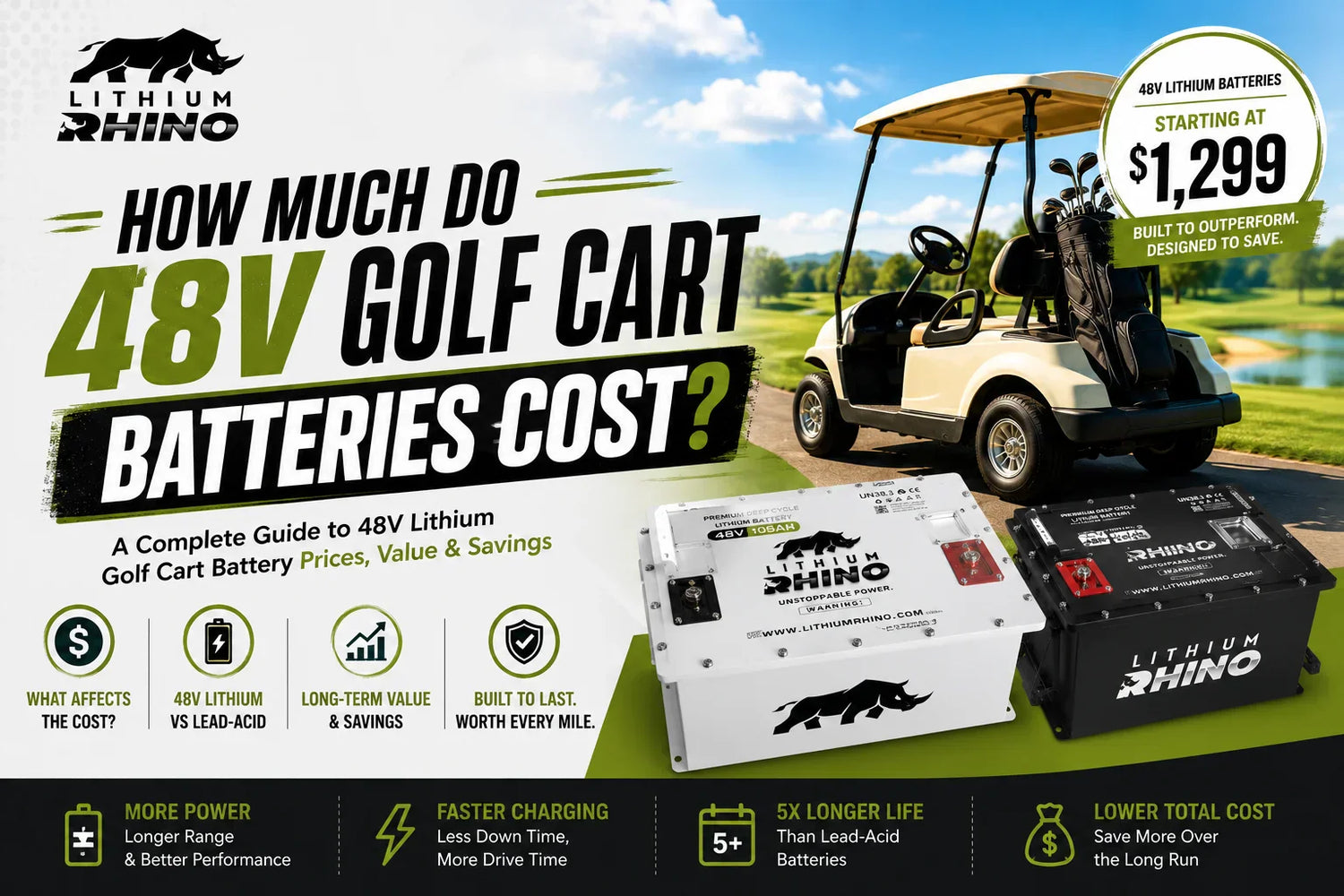
A 48V golf cart battery costs between $800 and $3,500 depending on the chemistry. A complete lead-acid set (6 to 8 batteries) runs $800–$1,500, AGM packs cost $1,200–$2,000, and a 48V lithium battery or full lithium conversion kit ranges from $1,500 to $3,500+. Lithium costs more upfront but lasts 3–4× longer, making it the cheaper option over a 10-year window.
If you own a 48-volt golf cart, whether it's an EZ-GO TXT, Club Car Precedent, Yamaha Drive2, or ICON EV — you've probably noticed your batteries dying faster, your range shrinking, and your charger taking longer. That's the universal cue: you need new batteries. The next question is always the same, how much do 48V golf cart batteries actually cost in 2026?
The short answer is: it depends on what you buy. The long answer (and the one that saves you thousands over the next decade) requires looking past the sticker price. This guide breaks down every cost: per-battery prices, full-pack replacement, lithium conversion kits, installation, and the 10-year total cost of ownership that almost nobody calculates correctly.
48V Golf Cart Battery Cost at a Glance
Here's the fastest way to understand 2026 pricing:
| Battery Type | Full 48V Pack Cost | Lifespan | Charge Cycles | Maintenance |
|---|---|---|---|---|
| Flooded Lead-Acid | $800–$1,200 | 3–5 years | 200–500 | Monthly watering |
| AGM (Sealed Lead-Acid) | $1,200–$2,000 | 3–5 years | 400–700 | Low |
| Lithium (LiFePO4) Drop-In | $1,500–$2,500 | 8–10+ years | 3,000–5,000 | None |
| Premium Lithium Conversion Kit | $2,000–$3,500 | 10–15+ years | 5,000–6,000+ | None |
Prices above reflect a full 48V replacement, not a single battery. That's the number you actually care about, because a 48-volt cart doesn't run on one battery; it runs on a stack.
How Many Batteries Does a 48 Volt Golf Cart Need?
Before you can answer "how much does it cost," you need to know how many batteries you're buying. A 48V golf cart isn't powered by a single 48-volt unit (unless you switch to lithium). It uses a series of smaller batteries wired together to add up to 48 volts.
The three common 48V configurations are:
- Six 8-volt batteries (6 × 8V = 48V): the most common factory setup on EZ-GO TXT and Yamaha Drive
- Eight 6-volt batteries (8 × 6V = 48V): higher capacity, longer range, used in Club Car Precedent
- Four 12-volt batteries (4 × 12V = 48V): fewer units but heavier each, common on some Yamaha and aftermarket carts
With lithium, this changes completely. A single 48V lithium battery replaces the entire stack, one unit instead of 4, 6, or 8.
Cost of 48V Lead-Acid Golf Cart Batteries
Lead-acid is the cheapest entry point and still the default on most factory 48V carts. Here's what you'll pay per battery and per pack in 2026:
Per-Battery Pricing
- 6-volt deep-cycle (flooded): $100–$180 each
- 8-volt deep-cycle (flooded): $130–$220 each
- 12-volt deep-cycle (flooded): $150–$250 each
- 6V or 8V AGM (sealed): $180–$300 each
Full 48V Lead-Acid Pack Replacement Cost
- Six 8V flooded: $780–$1,320 total
- Eight 6V flooded: $800–$1,440 total
- Four 12V flooded: $600–$1,000 total
- Six 8V AGM: $1,080–$1,800 total
Trojan T875 packs (a popular premium 8V option) often run $1,100–$1,300 for a complete 48V set. Cheaper generic brands can dip below $800, but they typically die in 2–3 years instead of 4–5.
Why Lead-Acid Looks Cheap (Until It Isn't)
The sticker price hides three real costs:
- Short lifespan: most owners replace lead-acid batteries every 3 to 4 years
- Monthly maintenance: checking water, cleaning corroded terminals, equalizing
- Performance decline: by year 3, your range drops 20–30% before the pack fully fails
We covered the lifespan math in detail in our guide on how long 48 volt golf cart batteries last, the short version is that "lasting 5 years" and "performing well for 5 years" are not the same thing.
Cost of 48V Lithium Golf Cart Batteries
Lithium iron phosphate (LiFePO4) is now the default upgrade for any owner who plans to keep their cart more than 4 years. A 48V lithium battery is a single unit that drops into the same tray as your old lead-acid stack, no more 4–8 batteries, no more watering, no more equalizing.
48V Lithium Battery Price by Capacity
The price depends on amp-hour (Ah) capacity, which determines how far you can drive on a charge:
- 48V 50Ah lithium: $900–$1,400 (best for short neighborhood loops, 15–20 mile range)
- 48V 65Ah lithium: $1,300–$1,800 (everyday cart use, 20–25 mile range)
- 48V 100–105Ah lithium: $1,500–$2,500 (most popular size, 30–40 mile range)
- 48V 120Ah lithium: $2,200–$3,000 (long-range, hilly terrain, 35–45 miles)
- 48V 160–170Ah lithium: $2,800–$3,800 (maximum range, fleet/commercial use, 50+ miles)
These prices reflect a complete kit, battery, BMS, charger, and mounting hardware. A bare battery alone is cheaper, but you'll spend another $300–$500 piecing together the charger, cables, and brackets you need to actually install it.
Why Lithium Prices Vary So Much
Two 48V 105Ah lithium batteries can be priced $700 apart for reasons that aren't obvious from the listing:
- BMS (Battery Management System) quality: a 200A BMS is standard; 300A handles hills and heavy loads without cutting out
- Cell grade: Tier 1 LiFePO4 cells (from CATL, EVE, or BYD) cost more than recycled or B-grade cells
- Build quality: coated steel housings, IP67 ratings, and self-heating cells for cold climates add cost
- Warranty: a battery with a 2-year warranty is priced very differently from one with 8 years of full coverage
- What's included: a real conversion kit ships with the charger, touchscreen, 12V reducer, mounting hardware, and removal gear. A bare battery does not.
Lithium Conversion Kit Cost (Complete Drop-In Solutions)
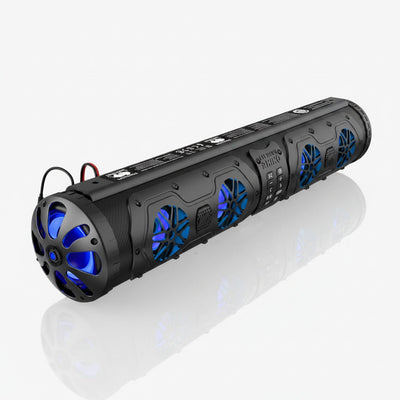
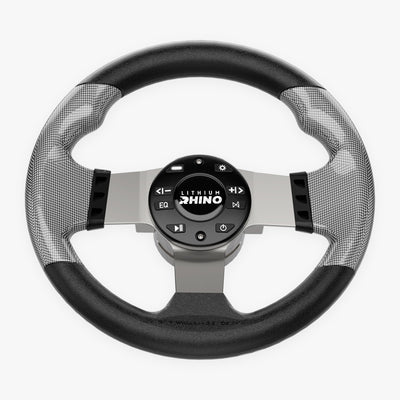
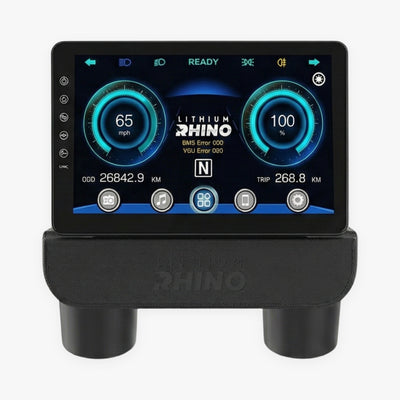
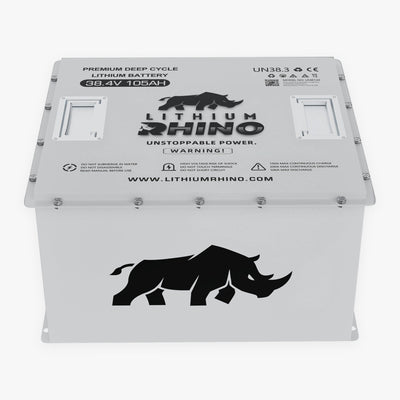
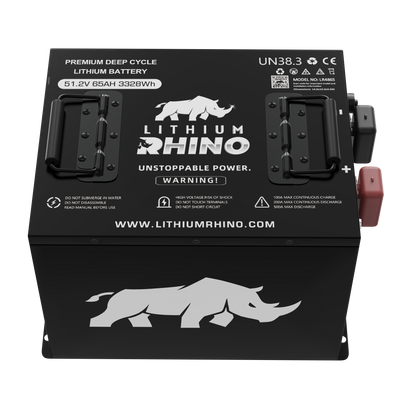
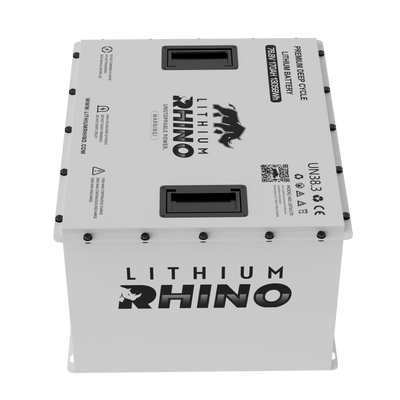
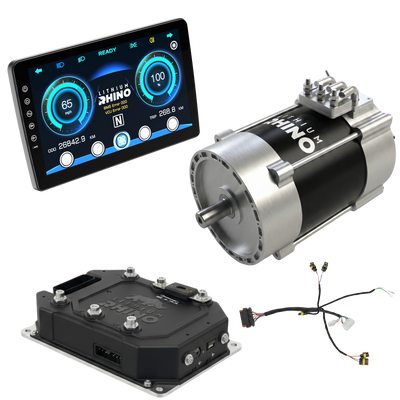
If you want to skip the parts-hunting and install everything in one afternoon, a complete lithium conversion kit is the way most owners go. A full Lithium Rhino kit includes the lithium battery, ultra-fast charger, LCD touchscreen, secondary power button, isolated 12V reducer, mounting brackets, charge port adapter, main cables, lead-acid removal tools, safety gear, and all hardware, shipped in one hazmat-certified box. Here's our complete 2026 48V lineup, organized by use case:
Complete Conversion Kits (Everything Included)
These ship with the battery, ultra-fast charger, LCD touchscreen, 12V reducer, mounting hardware, and removal tools, install in one afternoon, no extra parts to buy:
- 48V 50Ah Lithium Rhino Conversion Kit: $1,299 (was $1,699), Best for short neighborhood loops, 15–20 mile range
- 48V 65Ah Lithium Rhino Conversion Kit: $1,699 (was $1,999), Everyday cart use, 20–25 mile range
- 48V 105Ah Lithium Rhino Conversion Kit: $2,299 (was $2,899), Our most popular pick, 30–40 mile range
- 48V 120Ah Lithium Rhino Conversion Kit: $2,699 (was $3,199), Long-range driving, hilly terrain, 35–45 miles
- 48V 170Ah Lithium Rhino 300A BMS Conversion Kit: $3,499 (was $3,899), Maximum range and torque, 50+ miles, fleet-grade 300A BMS
Specialty Kits (Built for Specific Needs)
- 48V 105Ah CUBE Lithium Rhino Conversion Kit: $2,299 (was $2,899), Compact CUBE form factor for tight battery trays where standard kits don't fit. Same 105Ah capacity, smaller footprint.
- 48V 120Ah Self-Heated Lithium Rhino Conversion Kit: $2,749 (was $3,199), Built-in self-heating tech for cold-climate owners. Charges and discharges safely in freezing temps where standard lithium batteries can't.
Battery-Only Simple Kits (DIY Budget Option)
Already have a working charger and accessories from your last upgrade? Save $300–$500 by ordering the battery alone with a few essential install components:
- 48V 105Ah Battery Only Simple Kit: $1,999 (was $2,499), Lowest-cost path to 105Ah lithium for DIY upgraders
- 48V 170Ah Battery Only Simple Kit: $2,999 (was $3,899), Maximum capacity at a stripped-down price
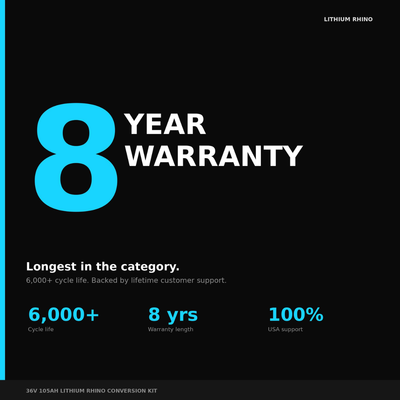
Every Lithium Rhino kit, full conversion or battery-only, comes with the same protection: 8-year full-coverage warranty, 6,000+ charge cycles, free shipping, 30-day money-back guarantee, and lifetime US-based phone, text, and video-call support from real technicians in Charlotte, NC.
Compare the full lineup side-by-side on our 48V conversion kit collection page, or take the 30-second battery quiz to get matched to the exact kit your cart needs.
48V Battery Cost by Golf Cart Brand
Battery cost varies slightly by cart model because of fitment, voltage compatibility, and connector type.
EZ-GO 48V Battery Replacement Cost
- EZ-GO TXT (lead-acid 6×8V): $900–$1,400 for a full pack
- EZ-GO RXV (lithium drop-in): $1,500–$3,000 depending on capacity
- EZ-GO Express S4 (lithium conversion): $2,000–$3,500
Club Car 48V Battery Replacement Cost
- Club Car Precedent (lead-acid 6×8V or 4×12V): $800–$1,400
- Club Car DS (lithium conversion): $1,700–$3,200
- Club Car Onward (lithium drop-in): $2,000–$3,500
Yamaha 48V Battery Replacement Cost
- Yamaha Drive (lead-acid 4×12V): $700–$1,200
- Yamaha Drive2 (lithium conversion): $1,800–$3,500
ICON EV 48V Battery Replacement Cost
- ICON i40/i60 (lithium upgrade): $1,800–$3,200
All Lithium Rhino kits are compatible with EZ-GO TXT, RXV, Express, Club Car Precedent, DS, Onward, Yamaha Drive and Drive2, ICON, Polaris Ranger EV, and most major brands. If you're not sure which kit fits your cart, our 30-second battery quiz matches you to the right voltage and capacity.
Installation and Hidden Costs
The battery itself isn't the only line item. Here's what else you're likely to pay for during a replacement:
- Professional installation (lead-acid): $100–$300
- Professional installation (lithium): $200–$500 (most lithium kits install in 2–4 hours)
- Disposal of old lead-acid batteries: $20–$80 (some shops include this)
- New charger (if upgrading to lithium): $250–$600 (included in most Lithium Rhino kits)
- Battery wiring harness or replacement cables: $50–$150
- Tray modifications or mounting brackets: $0–$200 (true drop-in kits eliminate this)
A real all-in-one lithium kit eliminates most of these — the charger, brackets, cables, hardware, and removal gear are already in the box, which is why "kit price vs battery price" comparisons can be misleading.
Total Cost of Ownership: Lithium vs Lead-Acid Over 10 Years
This is the math that changes the decision for most owners. Here's what you actually spend over a decade on a 48V golf cart:
Lead-Acid Scenario (typical owner, average maintenance)
- Initial pack: $1,200
- Replacement at year 4: $1,300
- Replacement at year 8: $1,400
- Water, terminal cleaner, equalizer charger over 10 years: $200
- Total 10-year cost: ~$4,100
- Plus 120+ hours of maintenance work over the decade
Lithium Scenario (Lithium Rhino 48V 105Ah)
- Initial kit: $2,299
- Maintenance: $0
- Replacement before year 10: $0 (8-year warranty, 10–15 year expected life)
- Total 10-year cost: $2,299
- Plus zero maintenance and dramatically better performance every day
Lithium isn't just cheaper over a decade — it's roughly 45% cheaper, while delivering more range, faster charging, lighter weight, and no upkeep.
Why Are Lithium Golf Cart Batteries So Expensive Upfront?
Because you're buying the next 10+ years of power in one purchase. A lithium battery replaces 4–8 lead-acid batteries, a separate charger, the watering routine, the corrosion cleanup, and the year-3 performance decline — all at once. The upfront cost looks high because it's bundling costs you would otherwise pay across three lead-acid replacements.
The other reason: quality lithium cells, a high-amp BMS, a hazmat-certified shipping process, and a real warranty cost money to engineer and stand behind. A $700 lithium battery on Amazon almost always cuts corners on at least two of those four. (You can see the warranty differences in our lithium golf cart battery warranty breakdown.)
How to Get the Best Price on 48V Golf Cart Batteries
A few practical tips before you buy:
- Compare full kits, not bare batteries — a $1,200 "battery" plus $500 in accessories isn't cheaper than a $1,699 kit with everything included
- Check the warranty terms carefully — a 5-year warranty that prorates after year 2 isn't the same as a true 8-year full-coverage warranty
- Look at cycle life, not just years — 3,000 cycles vs 6,000 cycles is a 10-year difference
- Avoid the cheapest lead-acid brands — sub-$700 packs typically last 18–30 months, not 4 years
- Factor in installation — a true drop-in kit cuts installation cost in half
- Buy from a US-based brand with real support — when something goes wrong in year 4, you need a phone number that answers
Frequently Asked Questions
How much does a 48 volt golf cart battery cost?
A complete 48V battery replacement costs between $800 and $3,500. Lead-acid packs run $800–$1,500, AGM costs $1,200–$2,000, and lithium batteries or conversion kits range from $1,500 to $3,500 depending on capacity and brand.
How much does it cost to replace 48v golf cart batteries?
Replacing a full 48V lead-acid pack costs $800–$1,500 in 2026, plus $100–$300 for installation. A lithium conversion costs $1,500–$3,500 total but eliminates installation extras because everything ships in one kit.
How many batteries does a 48 volt golf cart need?
A 48V golf cart uses six 8-volt, eight 6-volt, or four 12-volt lead-acid batteries wired in series. With lithium, you only need one 48V battery that replaces the entire stack.
Are lithium golf cart batteries worth the cost?
Yes for most owners. A lithium battery costs more upfront but lasts 3–4× longer, charges 2–3× faster, and requires zero maintenance. Over 10 years, lithium typically costs 40–50% less than repeated lead-acid replacements.
How much is a lithium battery for a 48v golf cart?
A 48V lithium golf cart battery costs $900 to $3,500, depending on capacity. Common 100–105Ah models run $1,500–$2,500. Complete conversion kits with charger and accessories included start around $1,300.
What is the cheapest 48v golf cart battery?
The cheapest option is a set of generic flooded 6V or 8V lead-acid batteries at roughly $700–$900 for a full pack. They last 2–3 years and require monthly maintenance, so the long-term cost is usually higher than lithium.
How much does it cost to convert a golf cart to lithium?
A complete 48V lithium conversion kit costs $1,300 to $3,500, including the battery, charger, mounting hardware, and cables. Most kits install in 2–4 hours with basic hand tools.
How long do 48 volt golf cart batteries last before replacement?
Lead-acid 48V batteries last 3–5 years. Lithium 48V batteries last 10–15+ years with 6,000+ charge cycles. Read our full breakdown of 48V battery lifespan here.
How much do EZGO 48v batteries cost?
A full set of lead-acid batteries for an EZ-GO TXT or RXV costs $900–$1,400. A lithium conversion kit for the same cart runs $1,500–$3,500 depending on range and capacity.
How much does Club Car 48v battery replacement cost?
A Club Car Precedent 48V lead-acid replacement costs $800–$1,400. A lithium conversion for a Club Car Precedent, DS, or Onward runs $1,700–$3,500 for a complete kit.
Can I install a 48v golf cart battery myself?
Yes. Lead-acid replacement requires heavy lifting (each battery weighs 60+ lbs) and proper connection. A lithium drop-in kit is much easier — most owners complete a full conversion in 2–4 hours with basic tools, and quality brands provide video support during installation.
The Bottom Line on 48V Golf Cart Battery Costs
If you only keep your cart 2–3 more years, lead-acid wins on upfront price. If you plan to keep it 5+ years, or you're tired of watering, terminal cleaning, and dying range, lithium is the cheaper, easier, and better-performing choice.
For most 48V cart owners in 2026, a complete lithium conversion kit between $1,699 and $2,699 hits the sweet spot of price, range, warranty, and longevity. Our 48V 65Ah kit at $1,699 is the budget winner for everyday neighborhood driving, and the 48V 105Ah kit at $2,299 is the all-around favorite for owners who want serious range without overpaying. You install once, drive for a decade, and forget about batteries. Not sure which kit matches your cart and your driving habits? Take our 30-second battery fit quiz, or browse the full Lithium Rhino 48V conversion kit lineup, all backed by an 8-year warranty, free shipping, and a 30-day money-back guarantee.

Leave a comment
This site is protected by hCaptcha and the hCaptcha Privacy Policy and Terms of Service apply.