

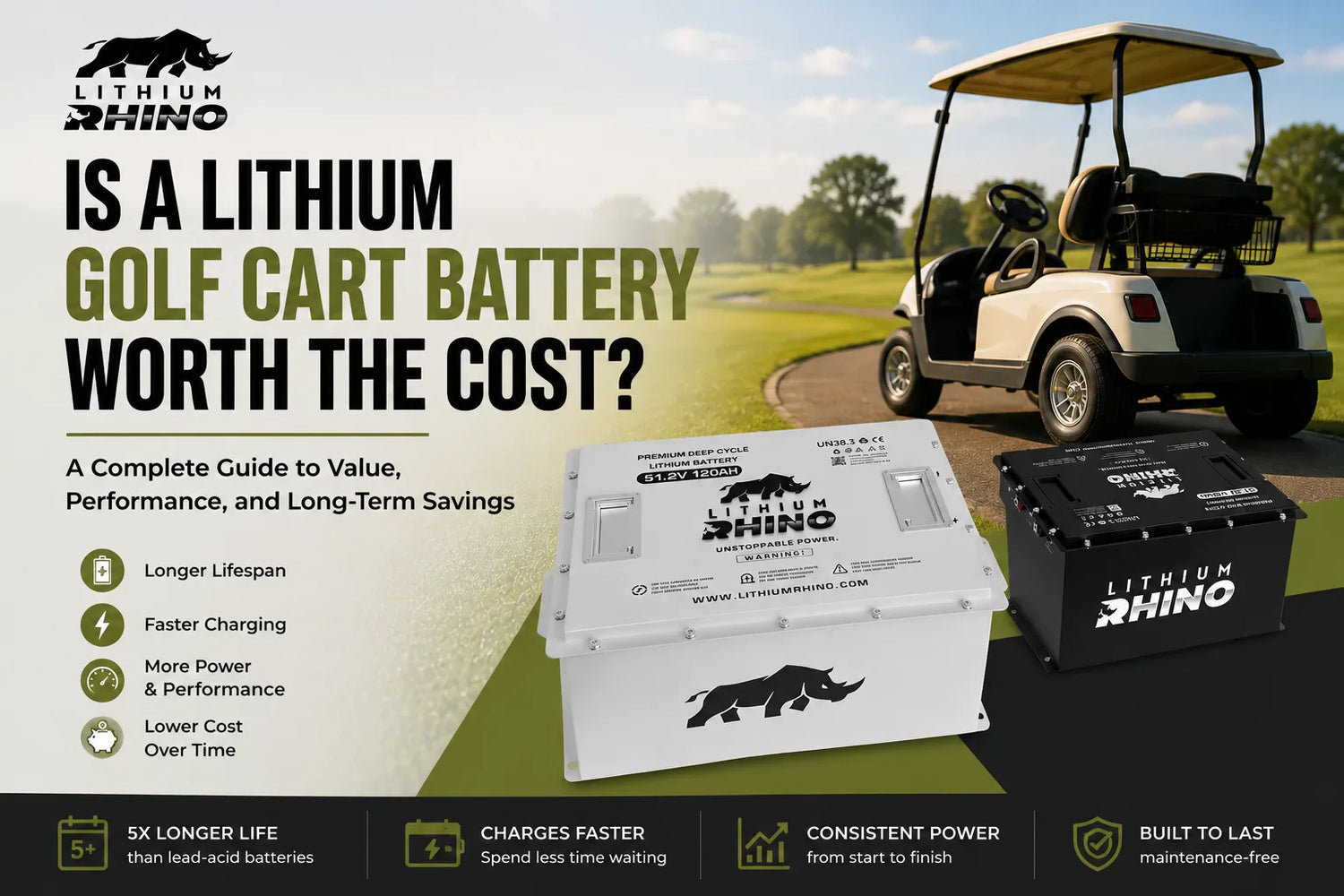
Your golf cart batteries are dead, or getting close. You've been quoted $800–$1,500 for a fresh set of lead-acid batteries, but now you keep hearing about lithium. Same cart, dramatically better performance. The catch? A lithium conversion kit costs $1,500–$3,500 depending on your cart.
So the question on every golf cart owner's mind is the same: Is a lithium golf cart battery actually worth the higher upfront cost?
The short answer is yes, for most owners. But the full answer depends on how you use your cart, how long you plan to keep it, and what "worth it" really means to you. Let's break it all down.
- 6,000+: Charge cycles rated life
- 10–15: Years of expected lifespan
- 300 lbs: Average weight saved
- 2–3×: Faster charging speed
- 0 Maintenance required
- 8 yr: Lithium Rhino warranty
The Upfront Cost: Lithium vs. Lead-Acid
Let's start with the number that makes most people pause: price. Here's a realistic golf cart battery replacement cost comparison for a standard 48V golf cart in 2026:
| Battery Type | Upfront Cost (48V) | Lifespan | Maintenance | Replacement Cycles (10 yr) |
|---|---|---|---|---|
| Flooded Lead-Acid | $700–$1,500 | 2–4 years | High (watering, cleaning) | 3–4 replacements |
| AGM Lead-Acid | $900–$2,200 | 3–5 years | Low | 2–3 replacements |
| Lithium (LiFePO4) | $1,500–$3,500 | 10–15 years | Zero | 0–1 replacements |
On day one, lead-acid wins on sticker price. But that's the only category it wins. By year four, you're replacing lead-acid batteries again. By year eight, you've done it twice, and spent more in total than the lithium kit would have cost from the start.
The Math Most People Miss: A $1,200 lead-acid pack replaced every 3 years costs you $4,000+ over 10 years, not counting maintenance time, acid spills, or reduced cart performance. A $2,500 lithium kit, installed once, covers the same decade for less.
The Real 10-Year Cost of Ownership
Comparing battery prices at checkout is the wrong way to think about this decision. What matters is the total cost of ownership over the life of your cart. Here's an honest side-by-side breakdown:
10-Year Total Cost Comparison (48V Golf Cart)

The numbers speak for themselves. When you factor in repeated lead-acid replacements, maintenance supplies, and the hidden cost of reduced cart performance over time, lithium isn't the expensive option, it's the economical one.
Performance Difference: What You'll Actually Notice
Beyond the financial case, the day-to-day driving experience with a lithium battery is fundamentally different, in a good way. Here's what golf cart owners consistently report after switching:
More Power From Start to Finish
Lead-acid batteries lose voltage as they discharge. That means your cart slows down and weakens as the charge drops. Lithium batteries maintain a flat, consistent voltage curve throughout the entire discharge cycle. Your cart performs just as strongly at 20% charge as it does at 100%.
Dramatically More Range
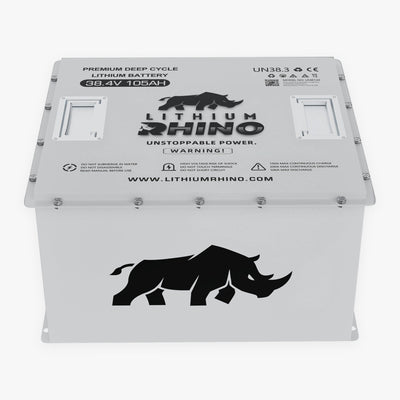
Lithium batteries offer 90–100% usable capacity versus roughly 50% for flooded lead-acid. In practical terms, that means you can access nearly double the range from the same rated amp-hour capacity. Lithium Rhino's 105Ah kit, for example, delivers up to 50 miles on a single charge.
Faster Charging
Lead-acid batteries typically take 8–12 hours for a full charge. Lithium batteries charge 2–3 times faster, often fully recharged in 2–4 hours. If you're out on a campground, a golf course, or a neighborhood and need a quick top-up between uses, that difference is enormous.
Zero Maintenance, For Real
With lead-acid batteries, you're watering cells monthly, checking for corrosion, cleaning terminals, and watching water levels. Miss a cycle and you damage the pack. Lithium batteries require absolutely none of that. No water. No acid. No corrosion. You install it and forget about it for a decade.
Who Gets the Most Value From Lithium?
Lithium is a clear win for golf cart owners who:
- Use their cart regularly: daily, weekly, or any time range and reliability matter
- Drive on hills or carry passengers: lithium handles load better and maintains power under stress
- Use their cart away from home: campgrounds, resorts, farms, and neighborhoods where you can't babysit a long charge
- Want to keep their cart for 5+ years: the longer you own, the better the ROI
- Hate maintenance — zero upkeep is a genuine quality-of-life upgrade
- Care about sustainability: lithium batteries are 99% recyclable and eliminate toxic acid disposal
Will Lithium Work With Your Golf Cart?
Lithium Rhino conversion kits are designed to work with the most popular golf cart models on the market, including:
- EZGO TXT, RXV, Express, and Valor models (36V and 48V)
- Club Car Precedent, DS, Onward, and Tempo (48V)
- Yamaha Drive and Drive2 (48V)
- Polaris Ranger EV
- ICON electric carts
- Many other 36V, 48V, and 72V configurations
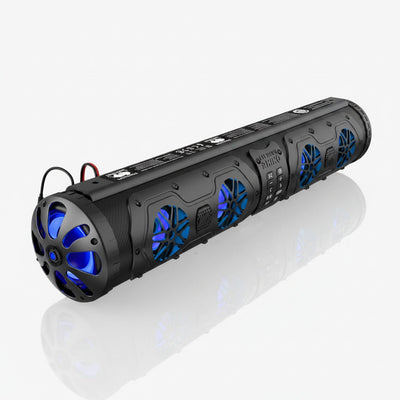
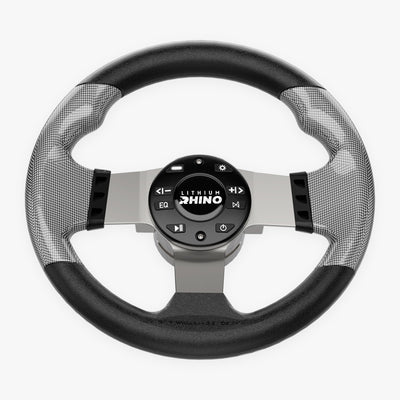
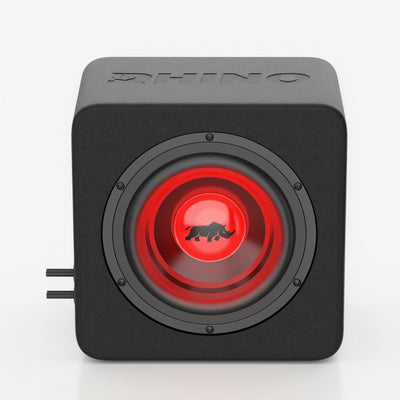
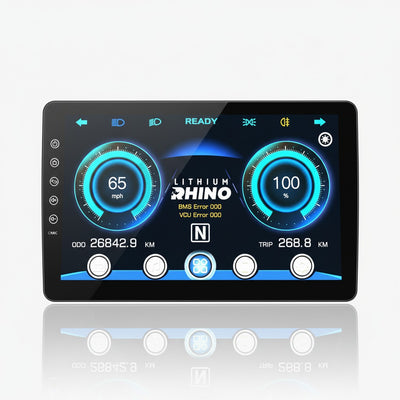
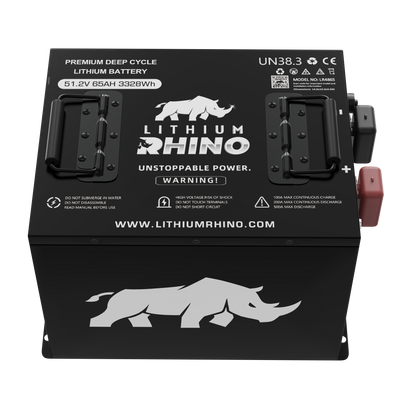
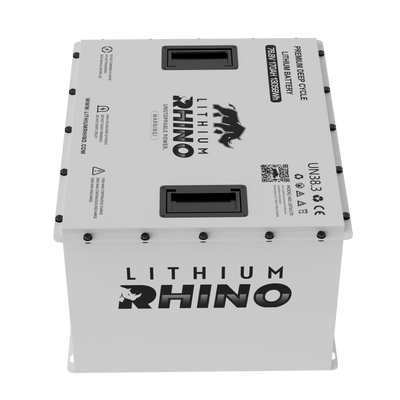
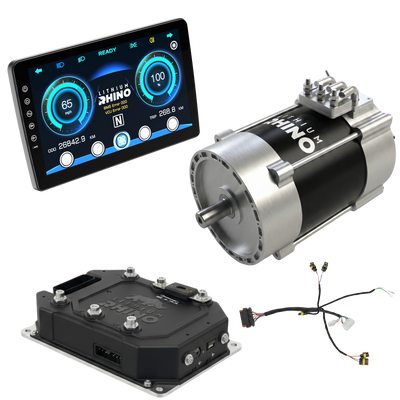
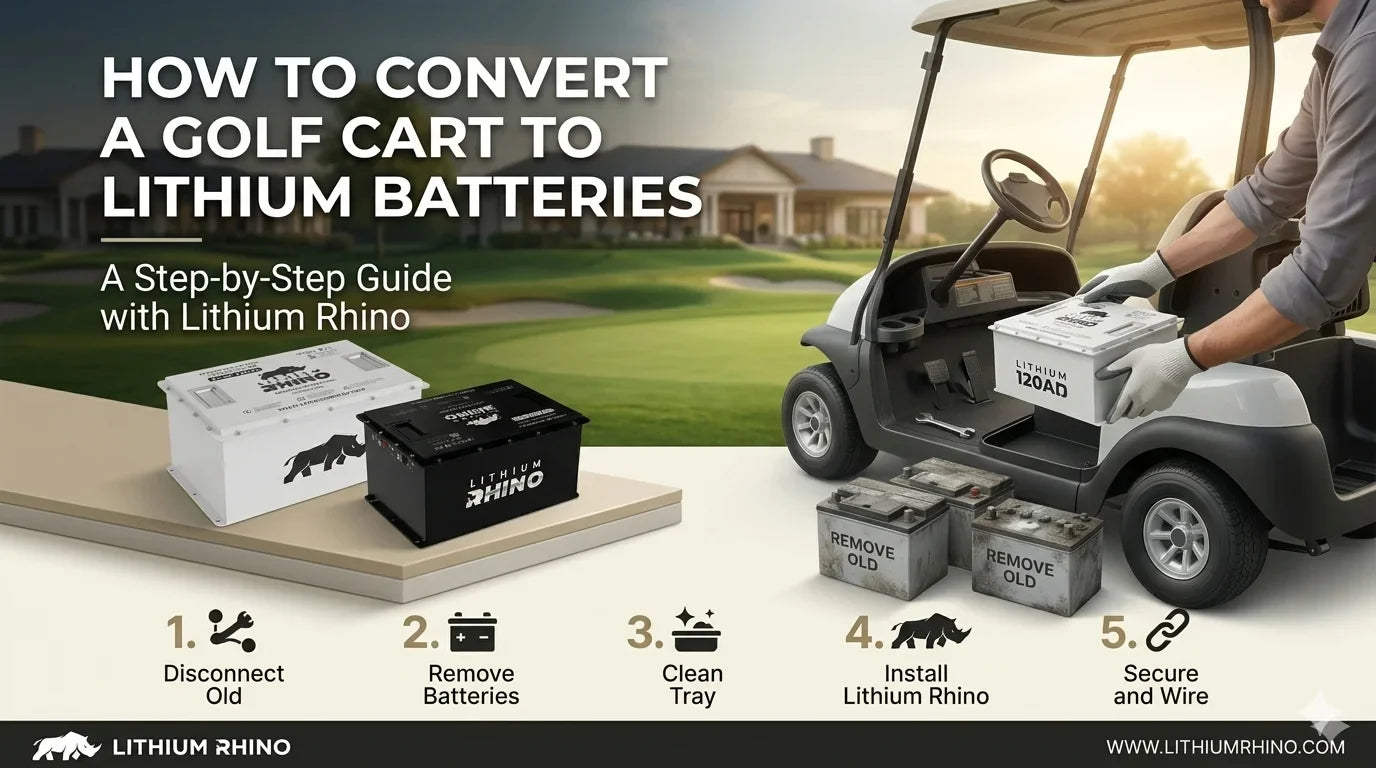
Each Lithium Rhino kit ships as a complete, all-in-one conversion package, battery, charger, LCD display, mounting hardware, cables, and full instructions. Most owners complete the installation in an afternoon without professional help.
Not sure which kit fits your cart? Lithium Rhino's team is available to help you match the right voltage and capacity to your specific model.
The Environmental Argument for Lithium
Beyond the financial and performance case, there's an environmental reason to make the switch that doesn't always get enough attention.
Lead-acid batteries contain sulfuric acid and lead both hazardous materials that require careful disposal. They also degrade faster, meaning more frequent manufacturing and waste. Lithium Rhino batteries are built with a 99% recyclable design and are rated for 6,000+ charge cycles, dramatically reducing the environmental footprint over time. Lithium Rhino also donates a portion of every sale to conservation causes, including partnering with the International Rhino Foundation.
Choosing lithium isn't just better for your wallet. It's genuinely better for the planet.
Ready to Make the Switch?
Join thousands of golf cart owners who've already upgraded to Lithium Rhino, the longest-lasting, most powerful lithium battery on the market. Rated 6,000+ cycles, backed by an 8-year warranty, and engineered to outlast the competition.
Frequently Asked Questions
Q1. Are lithium golf cart batteries worth the cost?
Yes. For most golf cart owners, lithium batteries are worth the investment. While the upfront cost is higher ($1,500–$4,000 vs. $500–$1,500 for lead-acid), lithium batteries last 10–15 years compared to 2–4 years for lead-acid. They also require zero maintenance, charge 2–3x faster, weigh up to 300 lbs less, and deliver consistent power throughout the entire charge cycle. Over a 10-year period, lithium typically costs less in total.
A quality lithium golf cart battery like those from Lithium Rhino is rated for 6,000+ charge cycles. which translates to 10–15 years of use under normal conditions. That's 3–5 times longer than standard lead-acid batteries, which typically last just 2–4 years.
Q3. How much does a lithium golf cart conversion kit cost?Complete lithium conversion kits typically range from $1,500 to $3,500 depending on voltage (36V, 48V, or 72V) and capacity (Ah). Lithium Rhino kits come with everything you need in a single box, battery, charger, LCD display, mounting hardware, and cables, so there are no hidden add-on costs.
Q4. What is the difference between lithium and lead-acid golf cart batteries?Lithium batteries last 3–5x longer, weigh up to 70% less, charge 2–3x faster, require zero maintenance, and deliver stable power throughout the entire discharge cycle. Lead-acid batteries cost less upfront but require regular watering, corrode over time, lose power as they discharge, and need full replacement every 2–4 years.
Q5. Is it safe to charge a lithium golf cart battery overnight?Yes. Lithium Rhino batteries include a Battery Management System (BMS) with overcharge, short-circuit, over-discharge, and thermal protection. The smart charger automatically stops when the battery is full, making overnight charging completely safe.
Q6. Do I need a new charger when switching to a lithium golf cart battery?Yes, in most cases. Lithium batteries require a lithium-compatible (LiFePO4) charger that matches your cart's voltage. Most Lithium Rhino conversion kits include a matched charger, so you won't need to purchase one separately.
Q7. Which golf cart models are compatible with Lithium Rhino kits?Lithium Rhino kits are compatible with EZGO TXT, RXV, Express, Club Car Precedent, DS, Onward, Yamaha Drive and Drive2, Polaris Ranger EV, ICON electric carts, and many others. Kits are available in 36V, 48V, and 72V configurations. Contact Lithium Rhino's team to confirm compatibility with your specific model.
The Bottom Line
Asking whether a lithium golf cart battery is "worth it" is really asking whether you'd rather spend $1,200 every three years, while doing monthly maintenance, dealing with acid, and watching your cart slow down, or spend more once, do nothing after, and enjoy better performance for the next decade.
For regular golf cart users, the math isn't close. Lithium costs less over time, performs better from day one, requires nothing from you in between, and holds its value if you ever sell the cart.
Lead-acid was the default for decades because there wasn't a better option. Now there is. The question isn't really whether lithium is worth it, it's whether you want to keep paying for the old way.
Lithium Rhino offers complete, all-in-one conversion kits for the most popular golf cart models on the market. Every kit ships with everything you need, backed by an 8-year warranty and lifetime customer support.

Leave a comment
This site is protected by hCaptcha and the hCaptcha Privacy Policy and Terms of Service apply.