

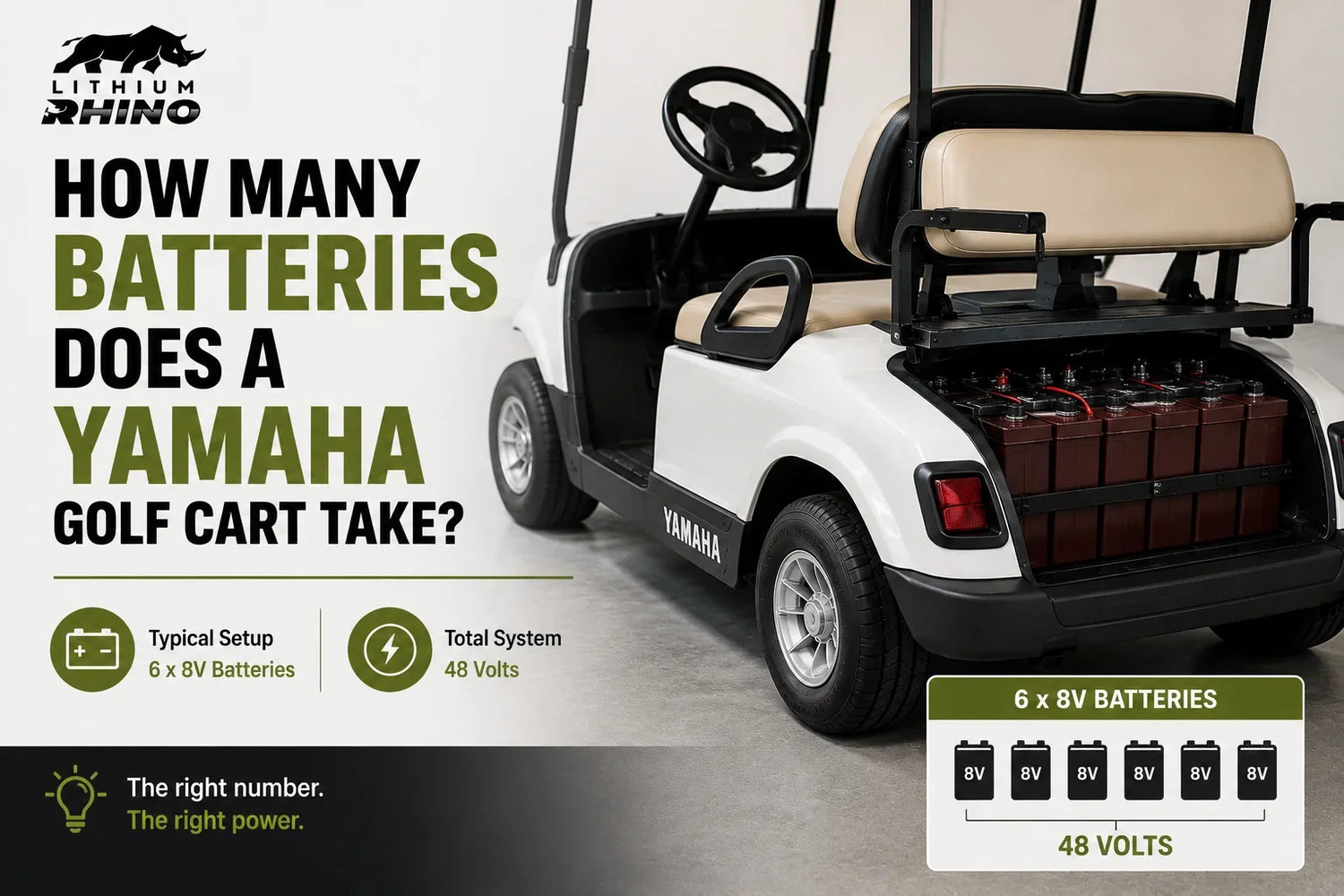
A gas-powered Yamaha golf cart takes just 1 battery, a 12-volt starting battery, similar to a car battery. An electric Yamaha golf cart takes 6 batteries in almost every case: either six 6-volt batteries (36-volt models) or six 8-volt batteries (48-volt models). The exact count depends on which Yamaha model you own, since Yamaha changed voltage systems over the years.
Below is the exact breakdown by model, plus how to confirm your cart's system if you're not sure, and how the battery count changes if you switch to lithium.
Yamaha Golf Cart Battery Count by Model
Yamaha has produced three generations of golf carts since 1979: the G-Series (1979–2007), the Drive/Drive2 (2007–present), and gas models throughout. Here's how battery count and voltage map to each:
| Yamaha Model | Years | System | Battery Count | Battery Type |
|---|---|---|---|---|
| G1 | 1979–1989 | 36V Electric | 6 batteries | 6V |
| G2, G3, G5, G9 | 1985–1995 | 36V Electric | 6 batteries | 6V |
| G8, G14 | 1990–1996 | 36V Electric | 6 batteries | 6V |
| G16 | 1996–2002 | 36V Electric | 6 batteries | 6V |
| G19, G20, G21 | 1996–2002 | 48V Electric | 6 batteries | 8V |
| G22 (G-Max) | 2003–2007 | 48V Electric | 6 batteries | 8V |
| G29 / Drive | 2007–2016 | 48V Electric | 6 batteries | 8V |
| Drive2 | 2017–present | 48V Electric | 6 batteries | 8V |
| Any G-Series, Drive, or Drive2 (Gas) | All years | 12V Gas | 1 battery | 12V starting battery |
Source basis: Yamaha's own generational voltage split confirms G1 through G16 run on 36 volts, while G19 onward, including G22 and the G29/Drive, moved to 48 volts, which is why G19 is often referred to as Yamaha's first 48-volt cart. This is consistent across Yamaha parts documentation and serial number identification guides.
Why the Battery Count Stays at 6 Even When Voltage Changes
This trips up a lot of owners: your Yamaha's voltage can be 36V or 48V, but in nearly every factory configuration, the battery count stays at 6. What changes is the voltage per battery, not the number of batteries.
- 36V system = six 6-volt batteries (6 × 6V = 36V)
- 48V system = six 8-volt batteries (6 × 8V = 48V)
A small number of fleet or budget configurations used four 12-volt batteries to reach 48V, or three 12-volt batteries to reach 36V, but this is uncommon on factory Yamaha carts and more typical of aftermarket rebuilds or other brands. If you count your batteries and get 4 instead of 6, it's worth double-checking whether they're 12V units before assuming something is wrong.
How to Confirm Your Yamaha's Battery System
If you're not sure which category your cart falls into, here's the fastest way to check, in order:
- Open the battery compartment and count. Six batteries almost certainly means a 36V or 48V electric system. One battery means a gas model.
- Read the voltage printed on each battery. This tells you immediately whether you have a 36V (6V batteries) or 48V (8V batteries) system, no guesswork needed.
- Check the charger. Yamaha chargers are voltage-specific and typically display the voltage they're rated for on the housing.
- Find your serial number and model code. It's usually located under a seat, in the glove compartment, or on the frame near the rear bumper depending on the model, the exact spot varies by generation, which is a common source of confusion for owners searching for it.
What Happens to Battery Count When You Switch to Lithium
This is where things change. Lead-acid systems are built around fixed-voltage battery units, you need six 6V or six 8V batteries wired in series to hit 36V or 48V, no way around it.
Lithium (LiFePO4) doesn't work the same way. Because lithium batteries are commonly manufactured directly at 12V, 24V, or 48V per unit, you often need fewer physical batteries to reach the same system voltage, sometimes as few as 4, or in some 48V setups, a single lithium pack wired in parallel with others purely for capacity, not voltage.
The result for most Yamaha owners switching to lithium:
- Same or better range with fewer total batteries
- Significantly less weight in the battery compartment
- No more matching six individual batteries, degraded battery packs are replaced as a unit, not cell by cell
If you're planning a lithium conversion, the right number of batteries depends on your target range and how your specific model's compartment is laid out, not just matching the old lead-acid count. Our guide on how many batteries a golf cart takes across brands breaks down the voltage math in more detail if you're comparing Yamaha to Club Car or EZ-GO.
Frequently Asked Questions
How many batteries does a 48V Yamaha golf cart take?
Six 8-volt batteries wired in series (6 × 8V = 48V). This applies to the G19, G22, G29/Drive, and Drive2 models.
How many batteries does a 36V Yamaha golf cart take?
Six 6-volt batteries wired in series (6 × 6V = 36V). This applies to G1 through G16 electric models.
Does a gas Yamaha golf cart have a battery?
Yes, one 12-volt starting battery, the same role a car battery plays. It's not part of the propulsion system; it only starts the engine and powers lights and accessories.
Can I put fewer batteries in my Yamaha golf cart?
Not with lead-acid, the battery count is tied directly to reaching your required system voltage, so removing a battery drops your voltage and the cart won't run correctly. Lithium is the exception, since lithium battery units are built at higher voltages per battery.
How do I know if my Yamaha is 36V or 48V?
Count the batteries in the compartment and read the voltage printed on each one. Six 6V batteries means 36V; six 8V batteries means 48V. You can also check your model code, G1 through G16 are 36V, G19 onward are 48V.
Ready to Switch Your Yamaha to Lithium?
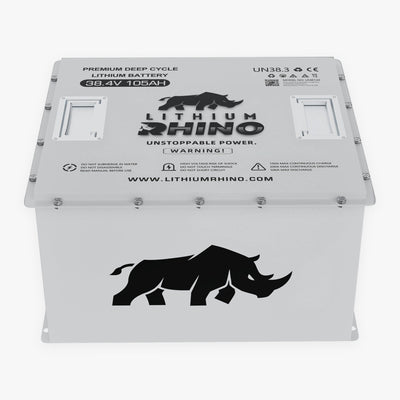
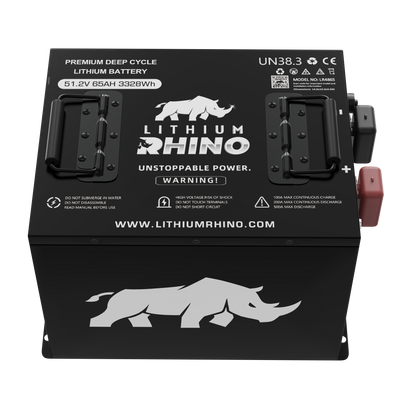
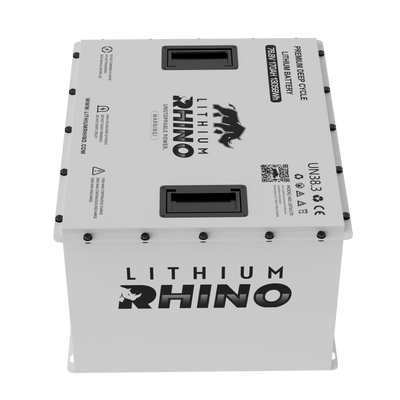
Whether your Yamaha runs 36V or 48V, Lithium Rhino builds drop-in lithium packs sized specifically for Yamaha G-Series, Drive, and Drive2 carts, no rewiring, no guesswork on how many batteries you need.
👉 Shop Yamaha Lithium Golf Cart Batteries
Not sure which voltage or capacity fits your cart? Take our 30-second battery finder quiz and get matched instantly. Want the full cost comparison first? Lead-acid vs lithium golf cart batteries, side by side.
Every Lithium Rhino battery is backed by our warranty program, buy once, stop replacing batteries every few years.

Leave a comment
This site is protected by hCaptcha and the hCaptcha Privacy Policy and Terms of Service apply.