

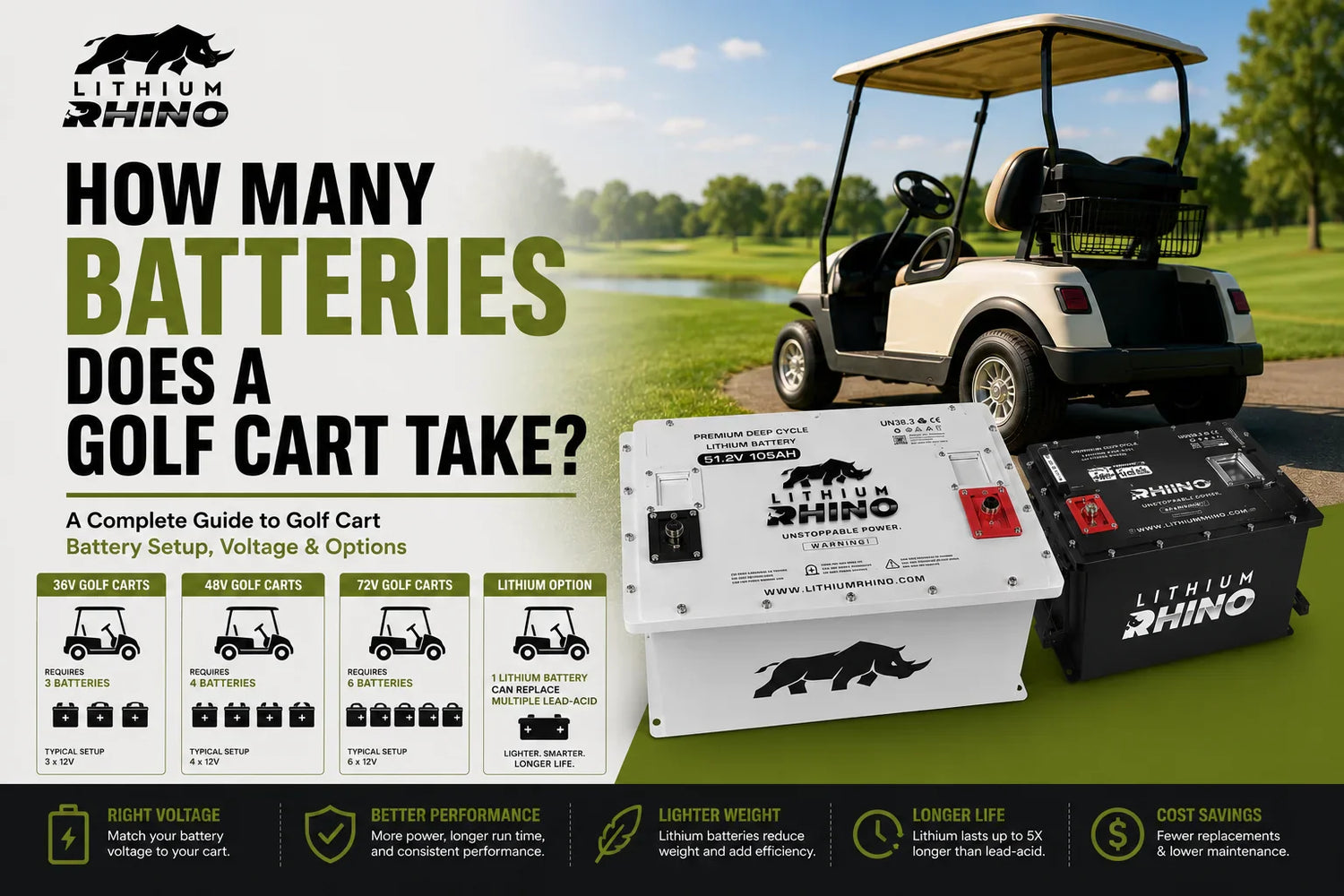
Most golf carts take between 4 and 8 batteries, depending on the cart's voltage system. A 36-volt golf cart takes six 6-volt batteries. A 48-volt golf cart takes six 8-volt batteries, four 12-volt batteries, or eight 6-volt batteries. A 72-volt golf cart takes six 12-volt batteries, nine 8-volt batteries, or twelve 6-volt batteries. If you convert to lithium, your golf cart takes just one battery pack that replaces the entire lead-acid bank.
Here's the quick breakdown:
| Cart Voltage | Battery Configuration | Total Batteries |
|---|---|---|
| 36V Golf Cart | Six 6-volt batteries | 6 batteries |
| 36V Golf Cart | Three 12-volt batteries (rare) | 3 batteries |
| 48V Golf Cart | Six 8-volt batteries (most common) | 6 batteries |
| 48V Golf Cart | Four 12-volt batteries | 4 batteries |
| 48V Golf Cart | Eight 6-volt batteries | 8 batteries |
| 72V Golf Cart | Six 12-volt batteries | 6 batteries |
| 72V Golf Cart | Nine 8-volt batteries | 9 batteries |
| 72V Golf Cart | Twelve 6-volt batteries | 12 batteries |
| Lithium Conversion | One drop-in battery pack | 1 battery |
A standard golf cart battery isn't like the single 12-volt battery in your car. Carts run entirely on electricity, so they use a "battery bank", multiple deep-cycle units linked together to feed enough voltage and amperage to the motor and controller.
How Many Batteries Does a 36-Volt Golf Cart Take?
A 36-volt golf cart takes six 6-volt deep-cycle batteries wired in series. This is the classic, original configuration found in older EZ-GO TXT models, vintage Club Cars, and early Yamaha carts.
When you add six 6-volt batteries together (6V × 6 = 36V), you get the total system voltage your motor needs. You'll usually see three batteries on one side of the battery compartment and three on the other, joined by short jumper cables running from positive to negative terminals.
A handful of 36-volt carts use three 12-volt batteries instead (12V × 3 = 36V), but this setup is uncommon and was usually a fleet or budget configuration. If your cart was manufactured before 2010, there's a strong chance it's a 36V using the 6×6V layout.
Range expectation on lead-acid: roughly 15 to 25 miles per charge when batteries are new.
How Many Batteries Does a 48-Volt Golf Cart Take?
A 48-volt golf cart takes six 8-volt batteries in the most common factory configuration. However, 48V carts are uniquely flexible, they can run three different battery setups to reach 48 volts:
- Six 8-volt batteries (8V × 6 = 48V): used by EZ-GO TXT 48V, Yamaha Drive2, ICON, and most modern carts
- Four 12-volt batteries (12V × 4 = 48V): popular on Club Car Precedent and some industrial models
- Eight 6-volt batteries (6V × 8 = 48V): older or extended-range configurations
The 48-volt system is the gold standard of modern golf carts. Compared to a 36V cart, it delivers more torque, better hill-climbing, faster acceleration, and noticeably longer range, all while drawing about one-third less amperage to produce the same power. That's why every major manufacturer (Club Car, EZ-GO, Yamaha, ICON) shifted to 48V years ago.
Range expectation on lead-acid: roughly 25 to 40 miles per charge when new.
How Many Batteries Does a 72-Volt Golf Cart Take?
A 72-volt golf cart takes between 6 and 12 batteries depending on the size of each unit:
- Six 12-volt batteries (12V × 6 = 72V)
- Nine 8-volt batteries (8V × 9 = 72V)
- Twelve 6-volt batteries (6V × 12 = 72V)
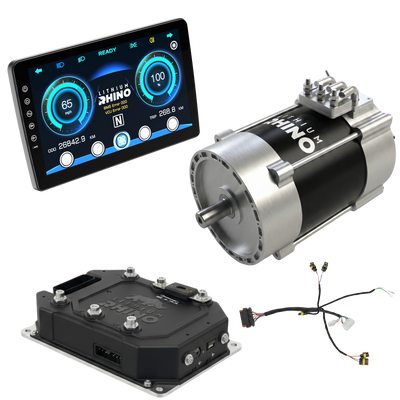
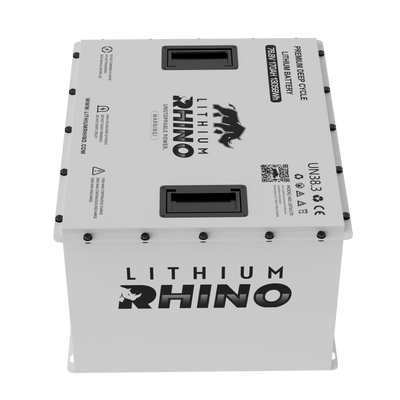
The 72-volt platform is the high-performance category, built for steep terrain, hauling passengers, towing, off-road use, and aftermarket lifted carts. You'll find 72V configurations on custom builds, premium models, and Lithium Rhino's self-heated 76V conversion kits like the 76V 170Ah "Godzilla" kit.
Twelve lead-acid batteries is a serious amount of weight (often 700+ pounds) and a serious amount of maintenance. It's also the strongest case for converting to lithium, more on that in a minute.
How to Tell What Voltage Your Golf Cart Is (60-Second Test)
Before you can answer how many batteries does a golf cart take for your specific cart, you need to know its voltage. You don't need a multimeter, mechanic, or owner's manual. Just count the water caps. Here's the trick golf cart techs use:
- Lift the seat to expose the battery compartment.
- Look at one battery, pick any one in the bank.
- Count the round caps on top (the screw-on covers that let you add distilled water).
- Multiply the number of caps by 2. Each cap represents one 2-volt cell, by the laws of lead-acid chemistry.
- Multiply that by the total number of batteries in your cart.
Examples:
- 3 caps × 2V = 6V battery. Six 6V batteries = 36V cart.
- 4 caps × 2V = 8V battery. Six 8V batteries = 48V cart.
- 6 caps × 2V = 12V battery. Four 12V batteries = 48V cart. Six 12V batteries = 72V cart.
Sealed AGM or lithium batteries don't have visible caps, so check the label on the side or count the total battery voltage stamped on the casing.
How Many Batteries Does a Club Car Golf Cart Take?
A Club Car golf cart takes six 8-volt batteries in most modern models, or four 12-volt batteries in the Club Car Precedent 48V configuration. Older Club Car DS models from the 90s and early 2000s used six 6-volt batteries on a 36-volt system.
- Club Car DS (older, 36V): six 6-volt batteries
- Club Car DS (newer, 48V): six 8-volt batteries
- Club Car Precedent (48V): four 12-volt OR six 8-volt batteries
- Club Car Onward / Tempo (48V): six 8-volt batteries
If you own a Club Car Precedent with the 4×12V setup, you have one of the most common lithium-upgrade candidates on the market and Lithium Rhino's 48V conversion kits drop in with full hardware included.
How Many Batteries Does an EZ-GO Golf Cart Take?
An EZ-GO golf cart takes six batteries in nearly every configuration:
- EZ-GO TXT 36V (pre-2010): six 6-volt batteries
- EZ-GO TXT 48V: six 8-volt batteries
- EZ-GO RXV 48V: six 8-volt batteries (factory)
- EZ-GO Express series: six 8-volt batteries
The EZ-GO TXT is one of the most popular golf carts ever built, and the six-battery layout is what most people picture when they hear "golf cart battery bank." It's also the platform that benefits most from a lithium conversion, because you're replacing six maintenance-heavy lead-acids with one sealed lithium unit that weighs about a third as much.
How Many Batteries Does a Yamaha Golf Cart Take?
A Yamaha golf cart takes six batteries in most cases, though Yamaha has flipped between 36V and 48V systems across its model years more than any other major brand. Don't assume — always lift the seat and count.
- Yamaha G14 / G16 / G19 (older): typically 36V with six 6-volt batteries
- Yamaha G22 (transitional era): could be 36V or 48V
- Yamaha G29 "The Drive": 48V with six 8-volt batteries
- Yamaha Drive2 (current): 48V with six 8-volt batteries
If you own a Yamaha and you're not sure which voltage you have, run the "count the caps" test from earlier in this guide.
How Many Batteries Does an ICON Golf Cart Take?
An ICON golf cart takes six 8-volt batteries on the 48V system used across the i20, i40, i60, and EV series. ICON exclusively uses the 48V platform, which makes battery selection straightforward, and makes them an excellent candidate for a lithium drop-in conversion.
Lithium vs. Lead-Acid: How the Battery Count Changes Everything
Here's where the answer to "how many batteries does a golf cart take" gets interesting. The numbers above all assume lead-acid batteries. When you convert to lithium, the entire question changes.
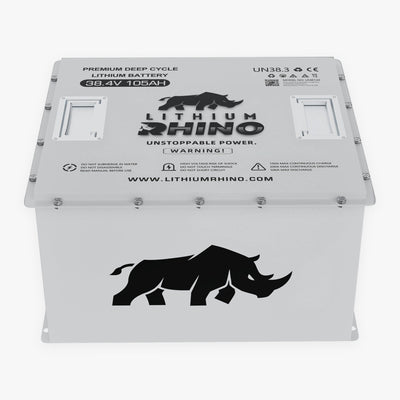
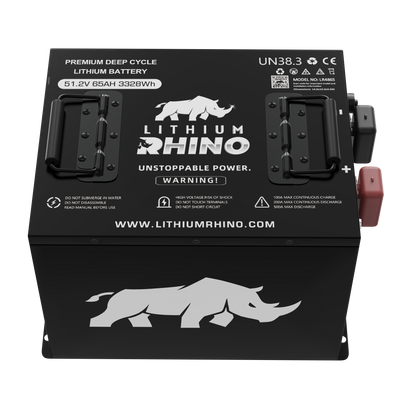
A single Lithium Rhino battery replaces the entire 4-to-8 battery bank in your cart. One sealed unit. One charger. Zero water fills. Zero terminal cleaning. Zero acid leaks.
| Factor | Lead-Acid (6 batteries) | Lithium Rhino (1 battery) |
|---|---|---|
| Number of batteries | 6 to 8 units | 1 sealed pack |
| Lifespan | 3 to 5 years | 10 to 15+ years |
| Charge cycles | 300 to 500 | 6,000+ |
| Weight | 300 to 400 lbs | ~80 to 120 lbs |
| Maintenance | Monthly watering, terminal cleaning, equalizing | None |
| Range | 15 to 30 miles | 40 to 100+ miles |
| Warranty | 1 year typical | 8 years (Lithium Rhino) |
This is why a single Lithium Rhino battery can eliminate the need for 20+ lead-acid batteries entering the landfill over the lifespan of one cart. Fewer batteries. Less weight. Less waste. More range.
Why Cart Owners Are Switching to Lithium in 2026
A lithium conversion solves the three biggest pain points of a multi-battery lead-acid setup:
1. Endless maintenance. Six lead-acid batteries means six caps to check, six terminals to clean, six water levels to track, and six chances for corrosion every month. Lithium eliminates all of it.
2. Voltage sag. Lead-acid batteries lose power steadily as they drain, your cart feels strong at full charge and sluggish at 40%. Lithium delivers consistent voltage across the entire discharge curve, so the cart feels brand new from the first mile to the last.
3. Premature replacement. Most golf cart owners replace their lead-acid bank every 3 to 5 years. Over the life of a single Lithium Rhino battery (10 to 15 years), you'd buy three or more complete lead-acid replacements, at $800 to $1,500 a set.
Add in the weight savings (a single Rhino battery is about 70% lighter than a full lead-acid bank), the included smart BMS, the 8-year full-coverage warranty, and the drop-in installation, and the math becomes pretty obvious.
How Many Lithium Batteries Does a Golf Cart Need?
A golf cart needs just one lithium battery in most modern conversions. Lithium Rhino's 48V conversion kits are engineered as a single, intelligent unit that delivers the full system voltage from one sealed pack.
Lithium batteries can be wired in parallel (positive to positive, negative to negative) to increase capacity, meaning more range, without needing more series-wired packs to hit the right voltage. So if you want extra range, you can add a second lithium battery, but it's an upgrade, not a requirement.
For most golfers, neighborhood drivers, and resort/community owners, one 48V 105Ah Lithium Rhino kit delivers 40 to 60+ miles of range, more than enough for 36 holes, a beach cruise, or a full day of community driving on a single charge.
What Size Lithium Battery Do You Need for Your Golf Cart?
The right lithium battery size depends on two specs: voltage (V) and amp-hours (Ah).
Voltage must match your cart's existing system, 36V cart needs a 36V lithium, 48V cart needs a 48V lithium, 72V cart needs a 72V lithium. This is non-negotiable.
Amp-hours determine your range. The higher the Ah, the further you can drive on a single charge:
- 50Ah: light use, short trips, single rounds of golf (15-25 miles)
- 65Ah: daily neighborhood use, casual golfing (25-35 miles)
- 105Ah: extended range, long days out, hilly terrain (40-60 miles)
- 120Ah to 170Ah: heavy-duty, fleet, off-road, towing, max range (60-100+ miles)
Not sure which size your cart needs? Take the Lithium Rhino 30-second battery quiz and we'll match you to the right voltage and capacity based on your cart's year, make, model, and how you drive.
Frequently Asked Questions
How many batteries does a golf cart take?
Most golf carts take between 4 and 8 deep-cycle lead-acid batteries, depending on voltage. A 36V cart uses six 6V batteries. A 48V cart uses six 8V, four 12V, or eight 6V batteries. A 72V cart uses six to twelve batteries. A lithium-converted cart uses just one battery pack.
How many batteries are in a 48V golf cart?
A 48-volt golf cart most commonly contains six 8-volt batteries wired in series. Some configurations use four 12-volt batteries or eight 6-volt batteries, all reaching the same 48-volt total.
How many batteries are in a 36V golf cart?
A 36-volt golf cart contains six 6-volt batteries wired in series. A small number of 36V carts use three 12-volt batteries instead, but the six-battery setup is by far the most common.
Can I replace 6 lead-acid batteries with 1 lithium battery?
Yes. A single Lithium Rhino battery is engineered to replace your entire 6-battery lead-acid pack. One unit delivers the full system voltage (36V, 48V, or 72V), drops into your existing battery compartment, and includes all hardware, cables, mounting brackets, and a lithium-specific charger. Installation takes one afternoon.
How long do golf cart batteries last?
Lead-acid golf cart batteries last 3 to 5 years with average use, or up to 6 years with strict maintenance. Lithium golf cart batteries last 10 to 15+ years and deliver 6,000+ charge cycles — roughly 10x the lifespan of lead-acid.
Do all 6 golf cart batteries need to be replaced at the same time?
Yes, lead-acid batteries should always be replaced as a complete matched set. Mixing old and new batteries causes the older ones to drain the new ones, kills overall pack performance, and shortens the lifespan of every battery in the bank.
How much does it cost to replace golf cart batteries?
A full set of lead-acid replacement batteries typically runs $800 to $1,500, not including installation, core charges, or a new charger. A complete Lithium Rhino conversion kit starts at $1,299, includes everything you need, and lasts 3 to 4 times longer, making it cheaper per year of ownership.
What's the difference between 36V and 48V golf carts?
A 48V golf cart delivers more torque, higher top speed, better hill-climbing ability, and longer range than a 36V cart. 48V is the modern standard and is sold by every major brand (Club Car, EZ-GO, Yamaha, ICON). 36V carts have been largely discontinued by mainstream manufacturers.
Can I convert my 36V golf cart to 48V?
Yes, but it requires more than just batteries, you'll need a compatible motor, controller, charger, and solenoid for the new voltage. For most owners, the smarter move is to upgrade your existing 36V cart with a 36V lithium conversion that keeps the original system but doubles or triples your range. Check out Lithium Rhino's 36V conversion kits for drop-in options.
How do I know if my golf cart batteries need to be replaced?
Watch for these signs: reduced range per charge, slow acceleration, sluggish performance on hills, longer charging times, visible corrosion on terminals, bulging battery cases, low electrolyte levels that won't stay topped off, or an obvious drop in top speed. If you're seeing any of these, your pack is on its way out — and it's the perfect time to upgrade to lithium instead of buying another set of lead-acids.
The Bottom Line: How Many Batteries Does a Golf Cart Take?
A standard golf cart takes 4 to 8 lead-acid batteries depending on its voltage system, six 6-volt batteries for a 36V cart, six 8-volt batteries for a 48V cart, and six 12-volt batteries for a 72V cart. But the real answer for 2026 is even simpler: you only need one.
One Lithium Rhino battery replaces the entire bank. One battery, ten-plus years of life, sixty-plus miles of range, and zero maintenance. That's the upgrade thousands of EZ-GO, Club Car, Yamaha, and ICON owners are making this year, and the reason "how many batteries does a golf cart take" is becoming a question with a much shorter answer.
Ready to ditch the 6-battery routine? Take the 30-second Rhino Quiz to find the perfect lithium conversion kit for your cart, or shop Rhino kits now to see every voltage and capacity in stock with free shipping and an 8-year warranty.

Leave a comment
This site is protected by hCaptcha and the hCaptcha Privacy Policy and Terms of Service apply.