


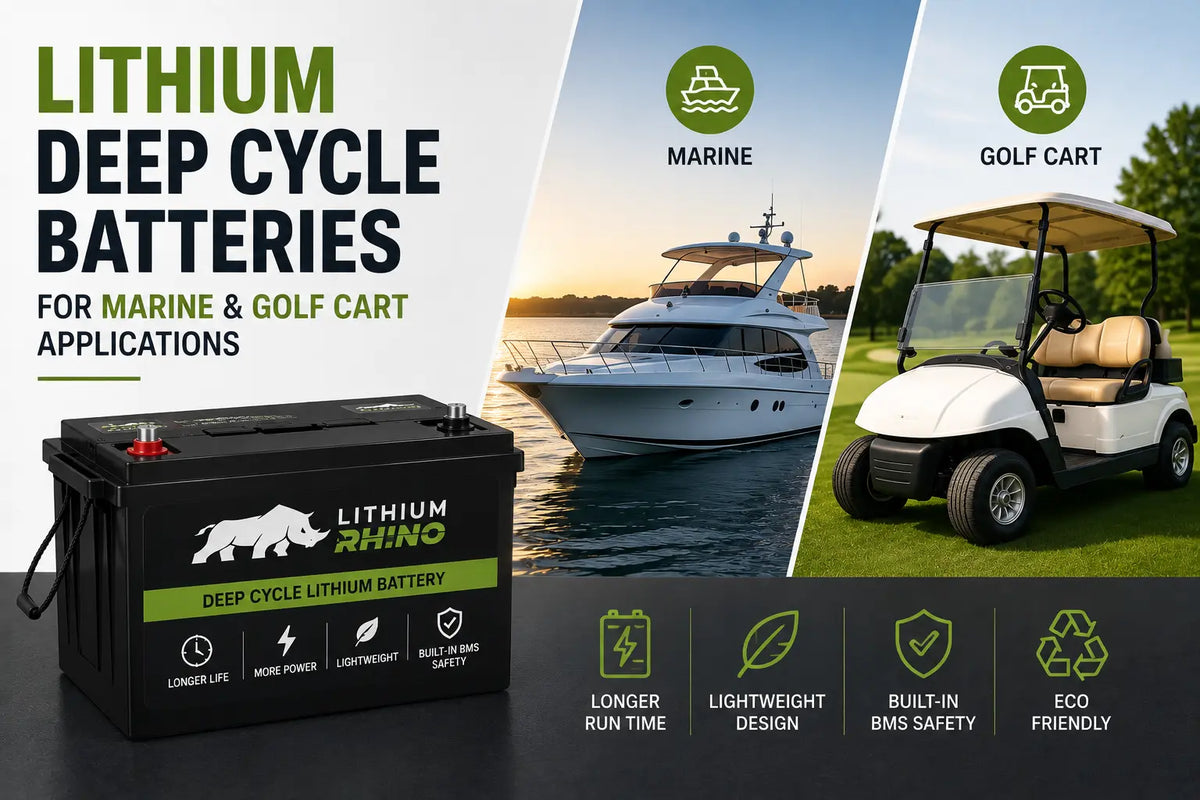
A deep cycle lithium battery is a rechargeable lithium-ion battery designed to provide sustained power through repeated charge and discharge cycles. Compared with traditional lead-acid batteries, lithium batteries can offer lower weight, longer cycle life, faster charging, and less maintenance.
For applications such as RVs, marine, and golf carts, the right battery depends on more than voltage alone. Capacity, battery chemistry, charging requirements, available space, power demands, and battery management all matter.
Among lithium chemistries, LiFePO4 (lithium iron phosphate) is especially popular for deep-cycle applications because it combines long service life with stable performance and a chemistry well suited to repeated cycling.
What Is a Deep Cycle Lithium Battery?
Unlike a starter battery, which is primarily designed to deliver a short burst of high current, a deep cycle battery is designed to provide power over a longer period and tolerate repeated discharge and recharge.
A lithium ion deep cycle battery uses lithium-ion cells to store and deliver electrical energy. Its usable capacity is generally described in amp-hours (Ah), while total stored energy can be expressed in watt-hours (Wh).
The basic relationship is:
Watt-hours (Wh) = Voltage (V) × Amp-hours (Ah)
For example, a battery with a higher Ah rating can generally store more energy at the same voltage. However, actual runtime depends on the equipment being powered, operating conditions, temperature, and how much of the battery's capacity is used.
This is why choosing a battery based only on its Ah rating can lead to the wrong result. The battery needs to match the complete electrical system.
Lithium vs. Lead-Acid Deep Cycle Batteries
Lead-acid batteries have been used for decades in RVs, marine systems, golf carts, and other deep-cycle applications. They remain a practical option, but lithium technology offers several advantages for users who want lower weight, less maintenance, and longer-term performance.
Weight
Lithium batteries can be substantially lighter than comparable lead-acid battery systems. That can be particularly useful in golf carts and mobile applications where reducing battery weight can improve overall efficiency and available payload.
Usable Energy
Lithium batteries can provide a greater portion of their stored capacity during normal use, depending on the battery design and manufacturer's specifications.
Lead-acid batteries can also be deeply discharged, but repeatedly doing so can shorten their service life. In general, shallower discharge cycles are easier on batteries and can increase cycle life.
Charging
A properly matched lithium charger can make recharging more convenient and predictable. The charger must still be compatible with the specific battery chemistry and voltage.
For this reason, replacing lead-acid batteries with lithium is not simply a matter of installing a different battery. The charging system and electrical components should also be checked for compatibility.
Maintenance
Traditional flooded lead-acid batteries require regular attention, including water maintenance. Lithium batteries generally eliminate that routine requirement.
For someone using a golf cart frequently or relying on a battery system away from home, reducing routine maintenance can be one of the biggest practical benefits.
Why Choose LiFePO4 for Deep Cycle Applications?
LiFePO4 is one of the most widely used lithium chemistries for applications where durability and repeated cycling are important.
A quality LiFePO4 battery can provide a long cycle life, but the exact number depends on the cells, battery management system, charging conditions, discharge depth, temperature, and testing method.
Battery University notes that depth of discharge has a significant effect on lithium battery cycle life and that partial discharge can reduce battery stress. It also emphasizes that cycle-life figures vary according to battery type and testing conditions.
That means a manufacturer's cycle-life rating should be viewed as an important specification, not a guarantee that every battery will deliver the exact same number of cycles in real-world use.
How to Choose the Right Deep Cycle Lithium Battery
Before buying a deep cycle lithium battery, consider these five factors.
1. Voltage
The battery voltage needs to match the electrical system.
Common systems include 12V, 24V, 36V, 48V, and higher-voltage configurations. A battery designed for a 48V system should not simply be substituted into a system requiring a different voltage.
2. Capacity
Capacity is normally expressed in amp-hours (Ah).
A higher Ah rating generally means more stored energy at the same voltage, but more capacity is not automatically better. The right capacity depends on how much energy the application actually requires and how long you need the battery to operate between charges.
3. Battery Management System
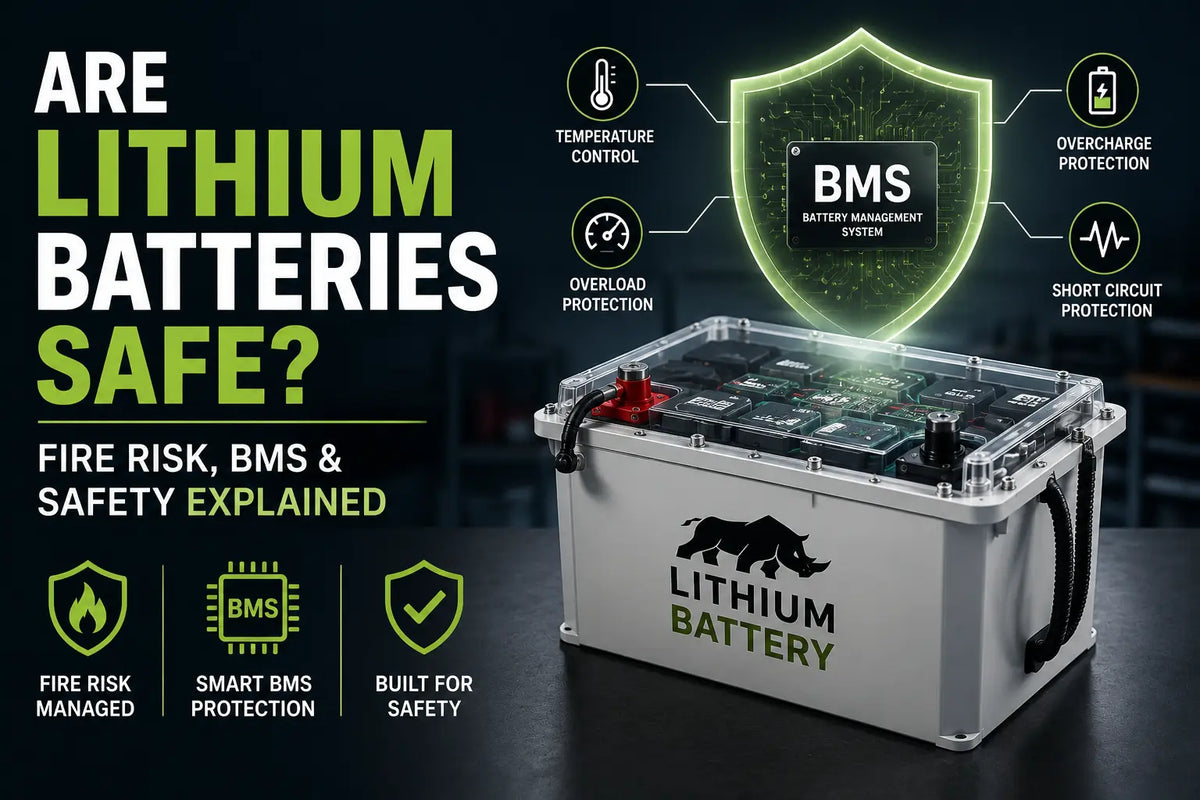
The BMS is an important part of a modern lithium battery. It monitors and manages the battery to help protect the cells during charging and discharging.
For high-power applications such as golf carts, pay particular attention to the BMS's continuous and peak current capabilities.
4. Charger Compatibility
A lithium battery should be charged with a charger designed for that battery's chemistry and voltage.
If you're converting an existing lead-acid system, check the charger before purchasing the battery. A complete conversion kit can simplify this process because the battery, charger, wiring, and other components are designed to work together.
5. Physical Size and Weight
Measure the available battery compartment before ordering.
This is particularly important when converting an older golf cart because battery compartments can vary between manufacturers, models, and model years.
Deep Cycle Lithium Batteries for RVs
RV owners use deep cycle batteries to power equipment such as lighting, electronics, appliances, pumps, and other onboard systems when shore power is unavailable.
For an RV, battery capacity should be selected according to your expected energy consumption. Start by identifying the devices you use, their power requirements, and how long you typically run them.
For example, a system that powers several appliances for extended periods will require considerably more stored energy than one primarily used for lights and small electronics.
Temperature is another consideration. Lithium batteries should be stored and operated according to the manufacturer's specifications. The U.S. Environmental Protection Agency recommends avoiding prolonged exposure to extreme heat or cold during storage because it can damage lithium-ion batteries.
When selecting an RV battery, focus on the complete system rather than simply choosing the largest Ah rating available.
Deep Cycle Lithium Batteries for Marine Applications
Marine environments place additional demands on a battery system. Moisture, vibration, temperature changes, and limited onboard space all make battery selection important.
For boats and marine systems, look for batteries specifically designed for marine use and pay attention to protection ratings, capacity, voltage, and the requirements of your trolling motor or onboard electronics.
Lithium Rhino currently offers marine LiFePO4 conversion options, including 24V 100Ah, 36V 65Ah, and 36V 120Ah IP67 marine systems. The company's marine collection describes these batteries as being designed for applications such as trolling motors, onboard electronics, and auxiliary systems.
Explore Lithium Rhino Marine Batteries
Deep Cycle Lithium Batteries for Golf Carts
Golf carts are one of the applications where switching from lead-acid to lithium can make a particularly noticeable difference.
A traditional golf cart may use multiple heavy lead-acid batteries. A lithium conversion replaces that battery bank with a lithium system designed around the cart's voltage and power requirements.
The benefits can include:
- Less battery weight
- Reduced maintenance
- Consistent power delivery
- Faster charging
- Longer rated cycle life
- More usable battery capacity
- Integrated battery monitoring on compatible systems
However, the correct battery depends on the cart. Before purchasing, confirm the cart's voltage, year, make, model, available battery space, and controller requirements.
If you're considering a conversion, start with our guide on How to Convert a Golf Cart to Lithium Batteries to understand the basic process before choosing a battery.
You can also learn How Many Batteries Does a Golf Cart Take? if you're replacing a traditional lead-acid setup and want to understand how the battery configuration works.
Lithium Rhino Golf Cart Options
Lithium Rhino offers golf cart lithium conversion systems in several voltage configurations, including 36V, 48V, and 76V-class systems.
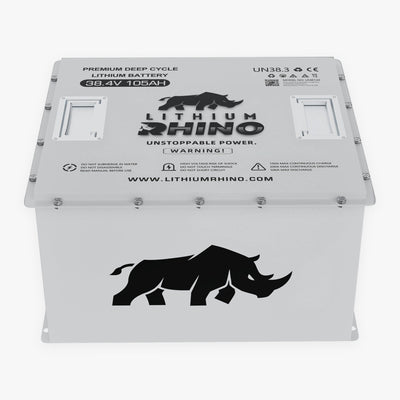
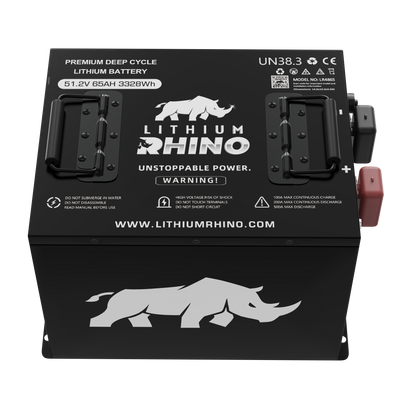
For example, the company's 48V 105Ah Lithium Rhino Conversion Kit is listed with a 48V nominal system voltage, 105Ah capacity, 5,376Wh total energy, Grade-A LiFePO4 prismatic cells, a 6,000+ rated cycle life, Bluetooth monitoring, and an 8-year warranty. The manufacturer also lists a 200A continuous/700A maximum BMS and a drop-in installation design.
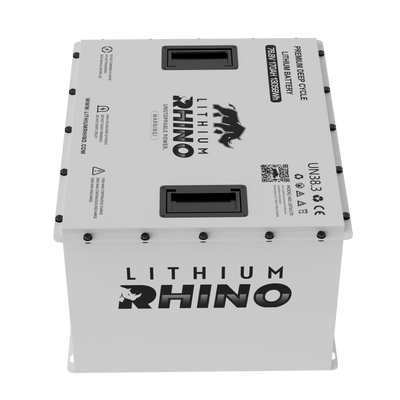
For customers with 72V golf cart systems, Lithium Rhino also offers a 76V 105Ah self-heated conversion kit, designed for 72V applications. The manufacturer lists 76.8V nominal voltage, 105Ah capacity, 8,064Wh total energy, Grade-A EVE cells, a 300A continuous BMS, self-heated charging, Bluetooth connectivity, and an 8-year warranty.
The important point is that the highest-capacity battery isn't necessarily the right battery for every golf cart. Voltage compatibility, physical fit, current requirements, and the cart's intended use should come first.
Browse Lithium Rhino Golf Cart Conversion Kits
How Long Does a Deep Cycle Lithium Battery Last?
There is no single answer because battery life depends on how the battery is used.
Important factors include:
- Depth of discharge
- Charging habits
- Operating temperature
- Discharge current
- Battery chemistry
- Cell quality
- BMS design
- Storage conditions
Cycle life is also different from calendar life. A battery can age from both usage and time.
For example, Battery University reports that LiFePO4 cycle life generally increases as depth of discharge decreases, while also warning that laboratory cycle figures do not always translate directly into real-world performance.
The best approach is to follow the battery manufacturer's charging, storage, and operating recommendations rather than trying to maximize every cycle.
Is a Deep Cycle Lithium Battery Worth It?
For many users, the answer can be yes—especially when the battery is used frequently.
Lithium usually costs more upfront than a comparable lead-acid setup. However, the decision should not be based only on purchase price.
Consider the total ownership experience:
Initial price + maintenance + charging requirements + replacement frequency + usable performance
If you use a golf cart, boat, or other equipment regularly, the combination of lower maintenance, reduced weight, and longer rated cycle life can make lithium attractive over the long term.
The key is buying a battery that actually matches your application rather than paying extra for capacity or features you don't need.
Why Choose Lithium Rhino?
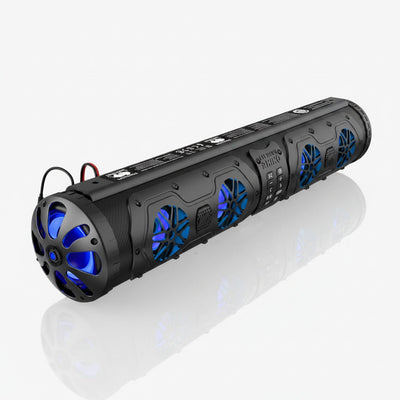
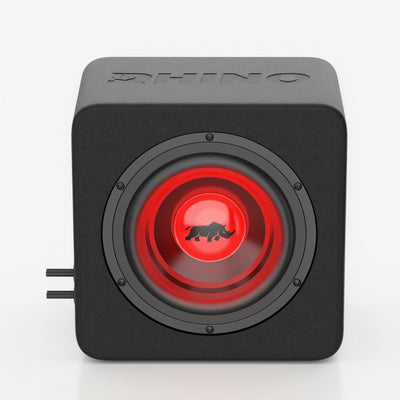
Lithium Rhino focuses on lithium battery systems for applications including golf carts, marine equipment, UTVs, RVs, sound systems, and more.
Its golf cart lineup includes multiple voltage and capacity options, while its marine lineup includes IP67 LiFePO4 systems for marine applications. The company also publishes an 8-year warranty on its lithium batteries and provides lifetime customer support.
For golf cart owners, the biggest advantage of choosing a complete conversion kit is convenience. Instead of sourcing a battery, charger, cables, and installation components separately, the kit is designed around the conversion process.
Before ordering, always verify that the battery matches your vehicle's voltage and physical fitment.
Frequently Asked Questions
What is a deep cycle lithium battery?
A deep cycle lithium battery is a rechargeable lithium battery designed to provide sustained power through repeated charge and discharge cycles. LiFePO4 is a common chemistry for deep-cycle applications.
Is a lithium ion deep cycle battery better than lead-acid?
Lithium can offer advantages including lower weight, less maintenance, faster charging, and longer rated cycle life. The best choice depends on your application, budget, and electrical system.
Can I replace lead-acid batteries with lithium?
In many applications, yes, but the conversion needs to be compatible with the system. Voltage, charger compatibility, wiring, BMS requirements, and available space should all be checked before installation.
How many amp-hours do I need?
That depends on your energy requirements and how long you need the system to operate between charges. Higher Ah means more stored capacity, but the correct battery should be selected based on the complete application.
Does a lithium battery need maintenance?
LiFePO4 batteries generally require much less routine maintenance than flooded lead-acid batteries because there is no regular water-filling requirement.
How can I make my lithium battery last longer?
Follow the manufacturer's charging and storage instructions, avoid unnecessary deep discharges when practical, and keep the battery within its specified temperature range. Partial discharge can help reduce battery stress over time.
Ready to Make the Switch to Lithium?
Whether you're upgrading a golf cart, powering a marine system, or planning a larger off-grid setup, the right deep cycle lithium battery starts with choosing the correct voltage, capacity, chemistry, and system compatibility.
For golf cart owners, explore Lithium Rhino's conversion kits to find a battery system designed around your cart and your driving needs.

Leave a comment
This site is protected by hCaptcha and the hCaptcha Privacy Policy and Terms of Service apply.