

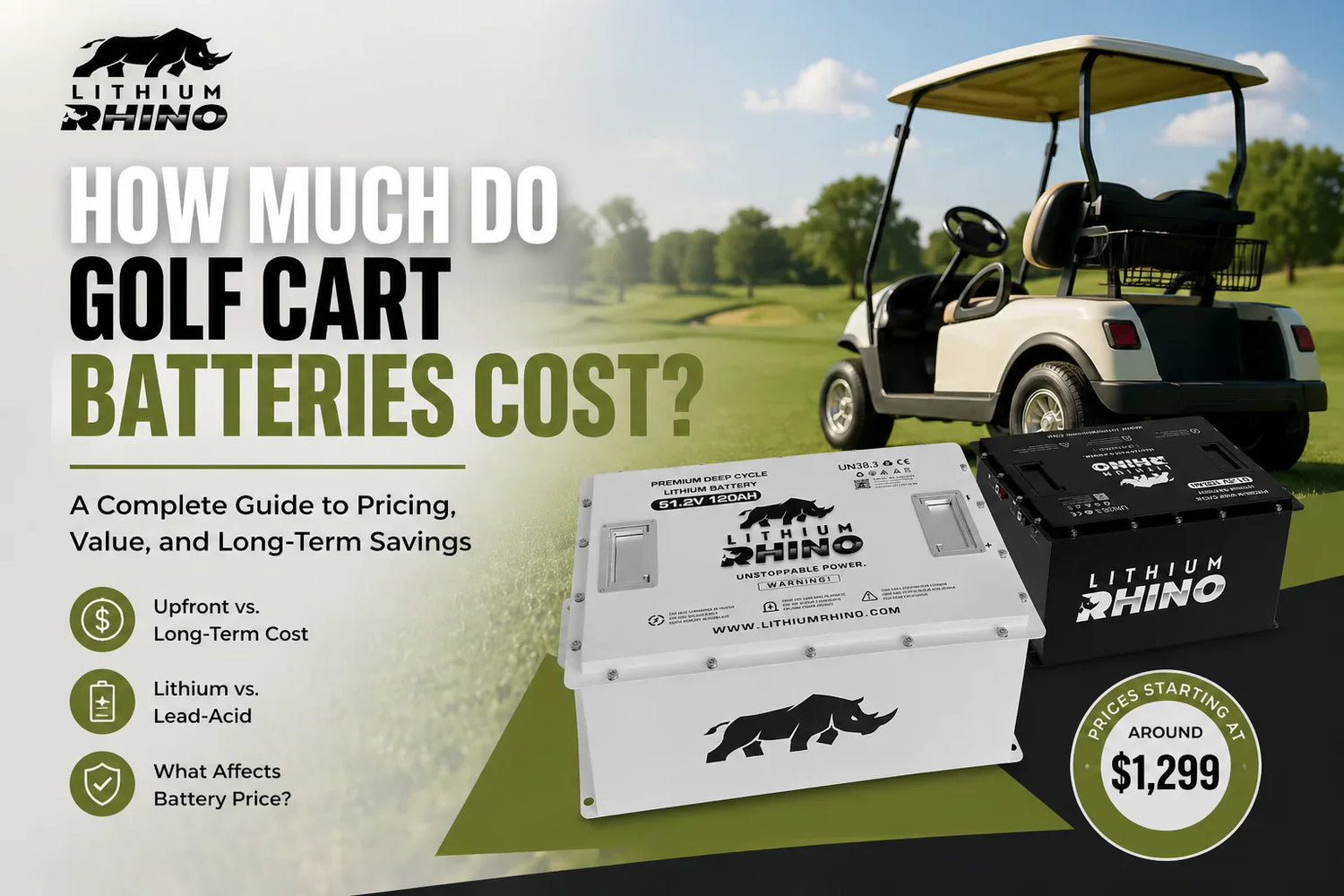
If your golf cart is slowing down, losing range, or just not performing the way it used to, you already know what's coming, a battery replacement. And the first question every cart owner asks is the same:
How much do golf cart batteries cost?
Here's the quick answer: a full lead-acid battery replacement typically runs $800 to $1,500+ depending on your cart's voltage and the number of batteries needed. A lithium conversion kit which replaces your entire lead-acid pack with one single, long-lasting battery starts at $1,299 and goes up to $4,199 depending on range and voltage.
But cost alone doesn't tell the full story. The real question is: what does it cost you over the next 10 to 15 years? That's where the math gets interesting and where most cart owners realize they've been paying too much for too long.
This guide breaks down every golf cart battery option with real prices, so you can make the smartest decision for your cart and your budget.
Golf Cart Battery Cost by Type
There are three main battery types for golf carts, flooded lead-acid, AGM (sealed lead-acid), and lithium iron phosphate (LiFePO4). Each has a very different price point, lifespan, and total cost of ownership.
Flooded Lead-Acid Battery Cost - $800 to $1,500+
This is what most carts come with from the factory. A full flooded lead-acid replacement pack, the kind where you fill water monthly typically costs between $800 and $1,500 for the batteries alone, not including labor if you have them installed professionally.
The exact cost depends on your cart's voltage system and how many batteries it requires:
| Configuration | # of Batteries | Avg. Cost Per Battery | Typical Total Cost |
|---|---|---|---|
| 36V (6×6V) | 6 batteries | $80–$120 each | $480–$720 |
| 48V (4×12V) | 4 batteries | $120–$180 each | $480–$720 |
| 48V (6×8V) | 6 batteries | $100–$160 each | $600–$960 |
| 48V (8×6V) | 8 batteries | $80–$120 each | $640–$960 |
| 72V/76V | 6×12V or custom | $150–$200 each | $900–$1,200+ |
On top of the battery cost, add:
- Professional installation labor: $100–$300
- New compatible charger (if needed): $150–$400
- Disposal of old batteries: sometimes free, sometimes a fee
Realistically, a full 48V lead-acid replacement with installation runs $1,000 to $1,800 out the door and you'll be doing it again in 4 to 6 years.
AGM (Sealed Lead-Acid) Battery Cost - $1,000 to $1,800+
AGM batteries are a sealed, maintenance-free version of lead-acid. They cost 20–40% more than flooded batteries but require no water refills and handle irregular use better. However, they share the same fundamental limitations declining capacity over time, sensitivity to deep discharges, and a lifespan ceiling of 4 to 7 years.
For most golf cart owners, AGM is a marginal improvement over flooded lead-acid at a higher upfront cost. Neither solves the root problem: you'll still be replacing them every few years.
Lithium Golf Cart Battery Conversion Cost $1,299 to $4,199
This is where the conversation changes completely. A golf cart lithium battery conversion kit replaces your entire lead-acid bank whether that's 4, 6, or 8 batteries with a single, intelligent lithium unit. One battery. One charger. Everything included.
The cost of lithium batteries for golf carts varies by voltage and amp-hour (Ah) capacity, which directly determines your range per charge. More on that in the Lithium Rhino pricing section below.
What's Included in the Cost of Golf Cart Batteries?
This is where lead-acid and lithium diverge most dramatically. When you're comparing prices, make sure you're comparing total package costs not just the battery cells.
What's typically included with lead-acid:
- The batteries (cells only)
- Sometimes a basic charger (often sold separately)
- No monitoring, no BMS, no smart features
What's included with every Lithium Rhino kit:
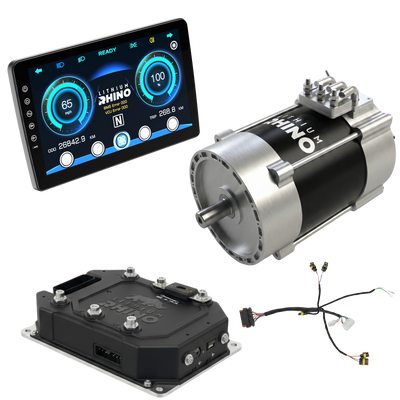
- The full lithium battery unit with intelligent BMS
- Ultra-fast 25-amp smart charger (auto-shuts off at full charge)
- LCD touch screen & mount
- Charge port adapter
- Heavy gauge wiring & cables
- Mounting hardware, straps & drill bit
- Lead-acid removal strap
- Safety gloves & glasses
- Bluetooth app connectivity
- Free 30-minute tech support call with a certified installer
- 8-year warranty (6 years full + 2 years with $500 service option)
- Free shipping (contiguous US)
When you factor in what a comparable lead-acid setup costs with a quality charger and all hardware, the price gap between lithium and lead-acid narrows considerably — and the performance and lifespan gap widens dramatically.
Lithium Rhino Conversion Kit Prices - Full Lineup
Here are the current sale prices for every Lithium Rhino kit. All kits include free shipping, everything needed for installation, and the industry-best 8-year warranty.
36V Kits
| Kit | Sale Price | Regular Price | Range | Best For |
|---|---|---|---|---|
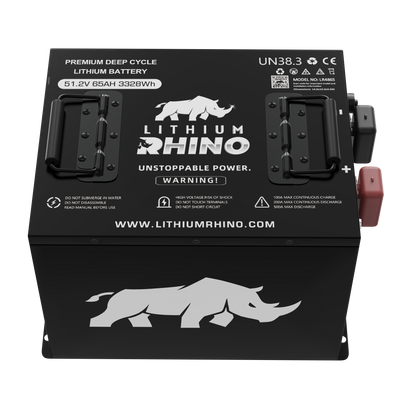
| 36V 65Ah Rhino Kit | $1,499 | 30+ miles | Older 36V carts, lighter use | |
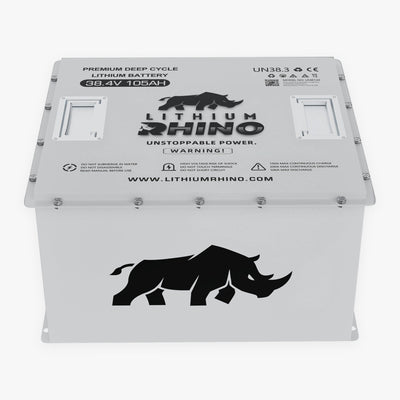
| 36V 105Ah Rhino Kit | $1,899 | 40–50 miles | 36V carts needing max range |
48V Kits
| Kit | Sale Price | Regular Price | Range | Best For |
|---|---|---|---|---|
| 48V 50Ah Rhino Kit | $1,299 | 20+ miles | Budget entry, stock/standard carts | |
| 48V 65Ah Rhino Kit | $1,699 | 27+ miles | Everyday riding, 36-hole range | |
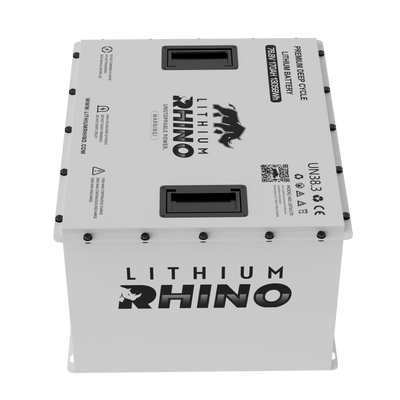
| 48V 105Ah Rhino Kit | $2,299 | 50+ miles | Most popular — best all-round kit | |
| 48V 105Ah 'CUBE' Rhino Kit | $2,299 | 50+ miles | Compact form factor for tight battery trays | |
| 48V 120Ah Rhino Kit (Self-Heated) | $2,749 | 60+ miles | Cold climates, year-round use | |
| 48V 170Ah Rhino Kit | $3,499 | 74+ miles | Max range, heavy loads, performance builds |
76V Kits
| Kit | Sale Price | Regular Price | Range | Best For |
|---|---|---|---|---|
| 76V 105Ah Rhino Kit | $3,199 | 60+ miles | 72V systems, performance upgrades | |
| 76V 170Ah "Godzilla" Rhino Kit | $4,199 | 80+ miles | Maximum performance, dual-controller builds |
Golf Cart Battery Replacement Cost: Lead-Acid vs. Lithium Over Time
Here's what most people miss when they compare battery prices: lead-acid is a recurring cost. Lithium is a one-time investment.
Let's run the real numbers over a 12-year ownership period:
| Lead-Acid (12 Years) | Lithium Rhino 48V 105Ah | |
|---|---|---|
| Year 1 cost | $1,000–$1,500 | $2,299 |
| Year 5 replacement | $1,000–$1,500 | $0 |
| Year 9 replacement | $1,000–$1,500 | $0 |
| Charger replacements | $150–$400 | $0 (included) |
| Maintenance supplies | $50–$150/yr | $0 |
| 12-year total | $4,500–$6,500+ | $2,299 |
The most popular Lithium Rhino kit, the 48V 105Ah at $2,299 costs less than a single full lead-acid replacement cycle when you factor in everything. Over 12 years, you save thousands.
And that's before counting the time you spend maintaining lead-acid batteries checking water levels monthly, equalizing charges, cleaning corrosion off terminals. With lithium, that time is worth exactly zero, because there's nothing to do.
Average Cost of Golf Cart Batteries: What to Expect by Scenario
Whether you're replacing a worn-out lead-acid pack or upgrading for the first time, here's what to budget depending on your situation:
- Scenario 1: Like-for-Like Lead-Acid Replacement Budget $800–$1,800 out the door for a full pack replacement including a charger and professional installation. Expect to repeat this every 4–6 years.
- Scenario 2: Entry-Level Lithium Conversion (48V) The Lithium Rhino 48V 50Ah kit at $1,299 is priced nearly the same as a basic lead-acid replacement but you're getting 20+ mile range, zero maintenance, and a 5-year warranty. For budget-conscious owners, this is the smart starting point.
- Scenario 3: Best Value Lithium Conversion (48V) The 48V 105Ah Rhino Kit at $2,299 delivers 50+ mile range and the full 8-year warranty. This is Lithium Rhino's most popular kit and the one most customers consider the sweet spot of cost vs. performance.
- Scenario 4: Maximum Range Build (48V or 76V) If you want the absolute most performance — long rides, heavy loads, performance motor upgrades, the 48V 170Ah at $3,499 or the 76V 170Ah "Godzilla" at $4,199 are built for exactly that.
Hidden Costs of Lead-Acid Batteries Most People Don't Think About
When comparing the cost of golf cart batteries, lead-acid has several expenses that rarely show up in the upfront price comparison:
1. The charger you didn't know you needed
Many lead-acid chargers are basic, not smart. A quality smart charger that prevents overcharging and extends battery life runs $150–$400 extra. Every Lithium Rhino kit includes one.
2. Watering equipment
A battery watering system or even just a quality filler costs $20-$80. Minor, but another thing to buy and maintain.
3. Terminal corrosion damage
Corroded terminals can damage your cart's wiring over time. Terminal cleaning sprays, protectors, and occasional wiring repairs add up.
4. Performance degradation costs you
By year 2–3, lead-acid batteries are delivering noticeably less range. That means shorter rides, more charges, and a cart that simply doesn't perform the way it should. That decline in utility has a real cost even if it doesn't show up on a receipt.
5. Disposal fees
While lead-acid batteries are recyclable, some areas charge disposal fees. The weight alone, 250–360+ lbs of battery makes this a project.
Is It Worth Paying More for Lithium Golf Cart Batteries?
For most golf cart owners, yes the cost of lithium golf cart batteries is justified when you look at the full picture.
Here's when lithium makes clear financial sense:
- You plan to keep your cart for 5+ more years
- Your lead-acid pack is due for replacement anyway
- You're spending money on maintenance, watering, or charger replacements
- You want noticeably better performance, range, and reliability
- You're tired of a cart that slows down as the charge level drops
Here's the only scenario where lead-acid might still make sense:
- You're selling the cart very soon and just need something to get it running temporarily
For everyone else especially anyone investing in their cart for the long haul, a lithium conversion is the financially smarter and better-performing choice.
How to Choose the Right Lithium Rhino Kit for Your Budget
Not sure which kit makes sense for you? Here's a simple decision guide:
- Under $1,500 - 48V 50Ah Rhino Kit ($1,299): The most affordable entry into lithium. Drop-in ready, same footprint as a single lead-acid battery. Perfect for standard/stock carts that don't need extreme range. 20+ miles per charge and Bluetooth monitoring included.
- $1,500–$2,000 - 48V 65Ah or 36V 65Ah Rhino Kit ($1,499–$1,699): More range, more flexibility, full kit included. Great for everyday neighborhood use and casual golf course riding.
- $2,000–$2,500 - 48V 105Ah or 48V 105Ah CUBE Rhino Kit ($2,299): The most popular option for a reason. 50+ mile range, the full 8-year warranty, and enough power for any standard or modified 48V cart. The CUBE version fits tighter battery compartments without sacrificing any performance.
- $2,500–$3,000 - 48V 120Ah Self-Heated Rhino Kit ($2,749): Best choice for cold-climate riders. Self-heating technology protects the cells and allows charging below freezing — a genuine all-season solution.
- $3,000–$4,500 - 48V 170Ah, 76V 105Ah, or 76V 170Ah Rhino Kit ($3,499–$4,199): For the serious enthusiast performance builds, heavy-use applications, long-range touring, and high-voltage system upgrades. These are the kits that turn heads and truly transform what a golf cart can do.
Frequently Asked Questions
How much does it cost to replace golf cart batteries?
A full lead-acid replacement costs $800–$1,500 for batteries alone, plus $150–$400 for a charger and $100–$300 for professional installation. Total out-of-pocket is typically $1,000–$1,800+. A Lithium Rhino conversion kit starts at $1,299 and includes everything battery, charger, wiring, hardware, and warranty.
How much do lithium golf cart batteries cost?
Lithium Rhino conversion kits range from $1,299 (48V 50Ah) to $4,199 (76V 170Ah "Godzilla"), with the most popular 48V 105Ah kit priced at $2,299. All kits include free shipping, a smart charger, full hardware, and an 8-year warranty.
Are lithium golf cart batteries worth the cost?
For cart owners keeping their cart 5+ years, yes lithium costs less over time than repeatedly replacing lead-acid. A single Lithium Rhino kit at $2,299 outlasts 2–3 lead-acid replacement cycles that would cost $3,000–$5,000+ combined.
What is the average cost of golf cart batteries per year?
With lead-acid, you're spending roughly $150–$375/year when you amortize replacement costs plus maintenance. With Lithium Rhino at $2,299 over a 10+ year lifespan, you're spending about $190–$230/year with zero maintenance cost and far better performance.
Why are lithium golf cart batteries more expensive upfront?
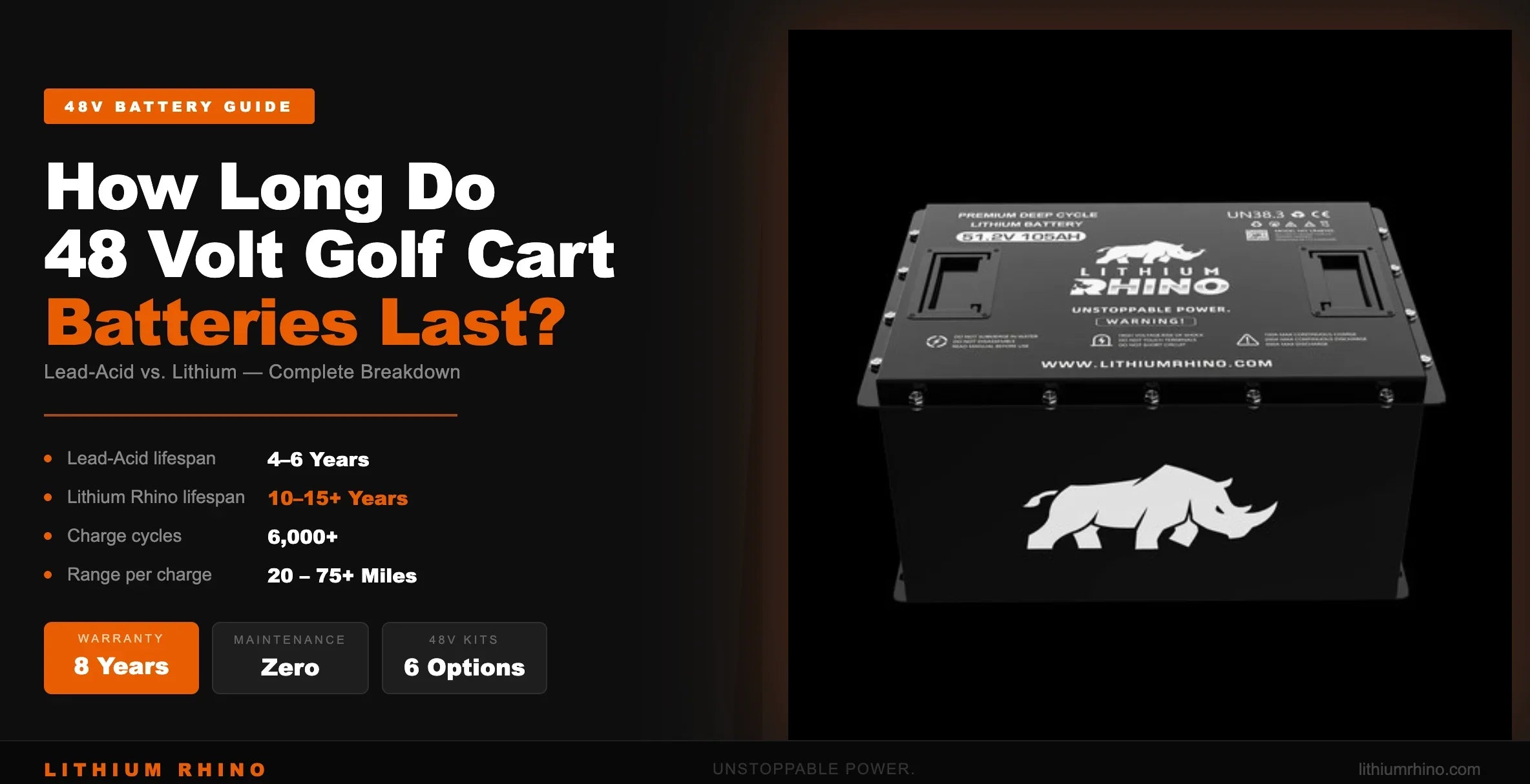
Lithium batteries use more advanced chemistry (LiFePO4), include an intelligent BMS, and come with far more components than a bare lead-acid battery. You're paying for 6,000+ charge cycles, zero maintenance, consistent performance, and an 8-year warranty, none of which lead-acid can match.
Can I install a lithium golf cart battery myself?
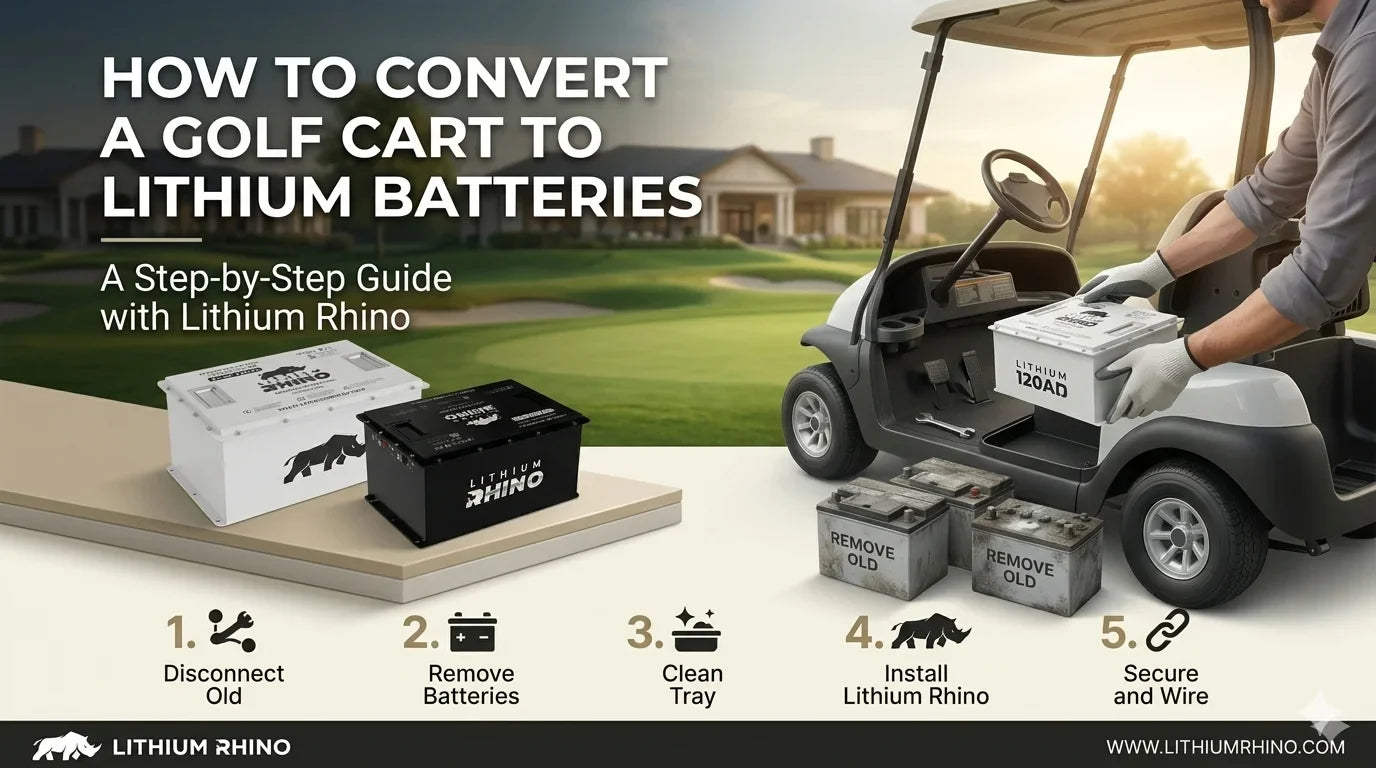
Yes. Every Lithium Rhino kit is designed for DIY installation, most conversions take under an hour using the included hardware, wiring, and step-by-step instructions. A free 30-minute video call with a certified tech is also included with every purchase.
What is the cheapest lithium golf cart battery option?
The Lithium Rhino 48V 50Ah kit at $1,299 is the most affordable full lithium conversion kit available and it's priced close to what you'd spend on a lead-acid replacement pack.
The Bottom Line on Golf Cart Battery Costs
When you look at the numbers honestly, the cost question isn't really "how much do golf cart batteries cost?" it's "how much do you want to keep paying?"
- Lead-acid: $800–$1,500+ every 4–6 years, plus maintenance, plus declining performance
- Lithium Rhino: One investment, starting at $1,299, lasting 10–15+ years with an 8-year warranty
The most popular Lithium Rhino kit the 48V 105Ah at $2,299 is on sale right now and currently saving customers $600 off the regular price.
Stop replacing lead-acid. Make the switch once and never look back.
👉 Shop All Lithium Rhino Conversion Kits and find the right kit for your cart today.

Leave a comment
This site is protected by hCaptcha and the hCaptcha Privacy Policy and Terms of Service apply.