

Filters
5 products
Lithium Rhino


Lithium Rhino
Lithium Rhino
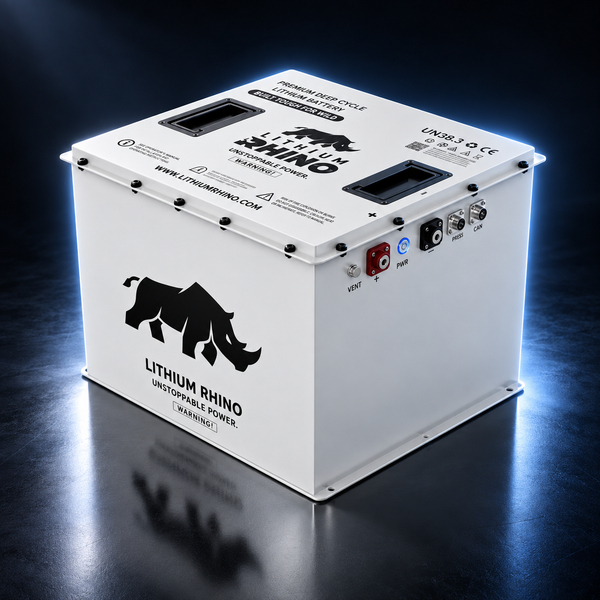
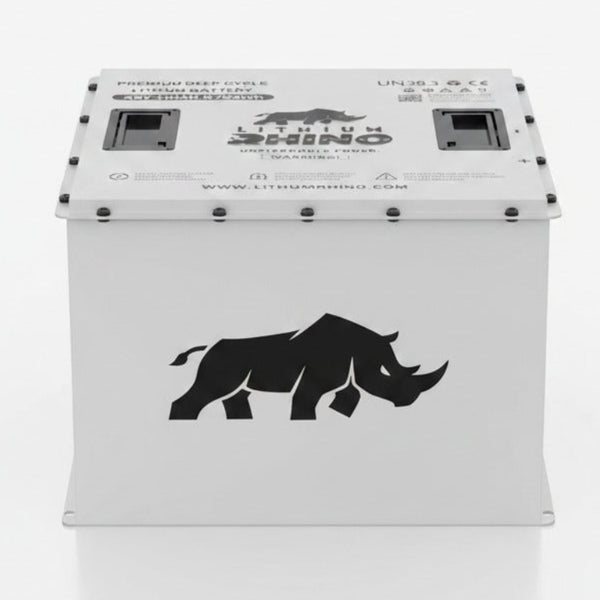
Lithium Rhino


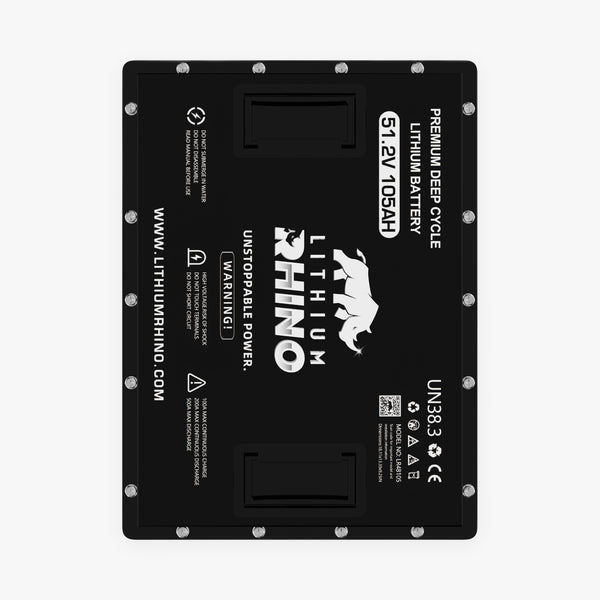
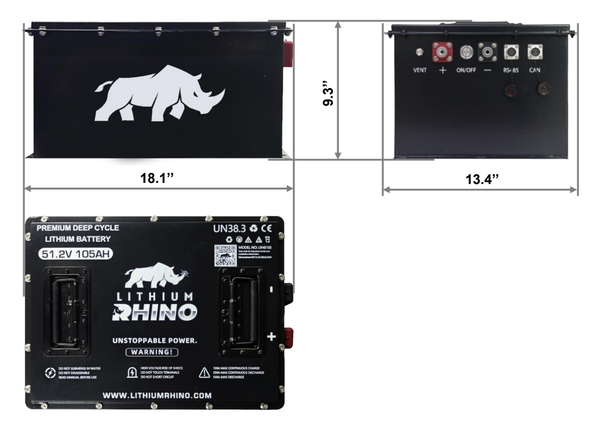
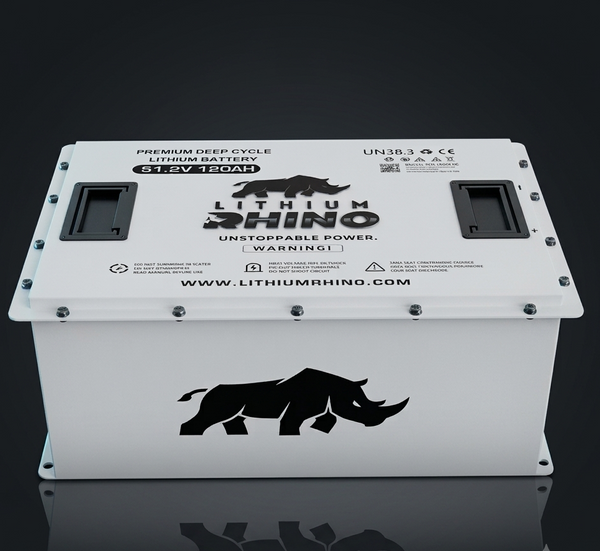
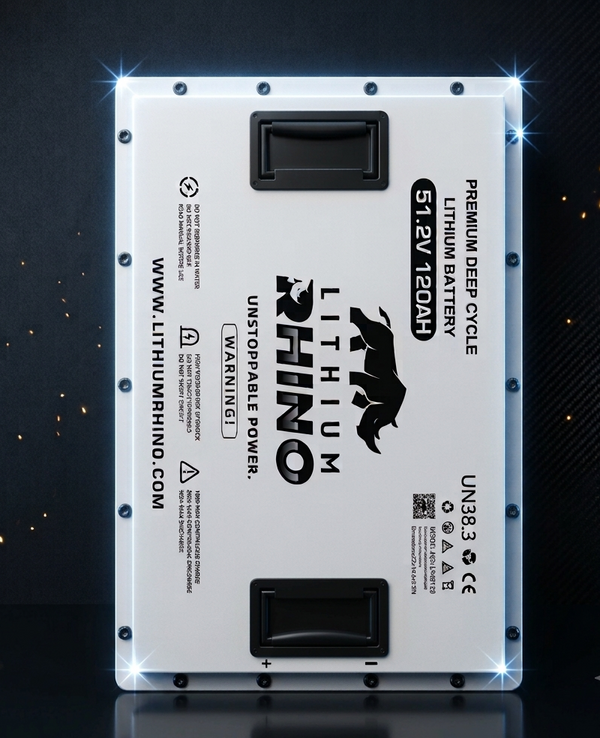
Lithium Rhino builds drop-in Yamaha golf cart batteries and lithium battery conversion kits for every electric Yamaha model, G14, G16, G19, G22, G29 Drive, and Drive2. Each kit ships with a 48-volt (or 76V) LiFePO4 battery, ultra-fast lithium charger with the correct Yamaha 2-pin plug, isolated 12V reducer for accessories, LCD touchscreen, mounting hardware, and lead-acid removal gear in one box. Backed by an 8-year warranty, 6,000+ charge cycles, and lifetime USA support, our Yamaha lithium battery conversion installs in a single afternoon and replaces 4–6 lead-acid batteries with one sealed lithium pack.
Why upgrade your Yamaha electric golf cart to a lithium battery?
A lead-acid pack in a Yamaha G22, G29 Drive, or Drive2 typically lasts 3–5 years, loses 30–40% of its usable range as it ages, and adds 350–400 lbs of dead weight to the cart. A Yamaha lithium battery changes all of that. One LiFePO4 pack from Lithium Rhino replaces all 6 or 8 lead-acid batteries, cuts pack weight by up to 70%, doubles drive range, and lasts 10–12+ years with effectively zero maintenance.
The upgrade also unlocks performance most Yamaha owners have never experienced, faster acceleration off the line, flatter torque on hills, steady voltage to the controller until the battery is nearly empty, and the ability to charge in 3–4 hours instead of 8–10. No more watering cells, no more corroded terminals, no more guessing how much range is left.
Lithium Rhino Yamaha battery options by model
Lithium Rhino's Yamaha golf cart lithium battery conversion kits are engineered to drop into the existing battery tray of every common electric Yamaha platform. Here is how the lineup maps to each model:
Yamaha G14, G16, G19 (1995–2002)
The G14 and G16 are 36V platforms running six 6V batteries, while the G19 transitions to 48V running four 12V batteries. The 36V kits are the direct fit for G14/G16 (see 36V conversion kits), and the 48V 65Ah, 105Ah, or 120Ah Lithium Rhino kits drop into the G19 battery tray. All kits ship with the Yamaha-specific 2-pin charge port adapter.
Yamaha G22 (2003–2006)
The G22 is a 48V cart running four 12V deep-cycle batteries from the factory. The 48V 105Ah kit is the most popular G22 upgrade, same footprint, half the weight, and double the range. For lifted G22s or 6-passenger Trans models, step up to the 48V 120Ah or 48V 170Ah 300A BMS kit.
Yamaha Drive (G29, 2007–2016)
The G29 Drive uses a 48V system with four 12V batteries. The 48V 105Ah is the everyday daily-driver match. The 48V 120Ah kit gives noticeably more range and is recommended for owners running stereos, lights, or off-road tires. The 48V 170Ah is the choice for fleet carts, neighborhood vehicles (LSVs), and heavily accessorized builds.
Yamaha Drive2 (2017–present)
The Drive2 electric (EFI is gas, see FAQ below) is a 48V platform. The 48V 105Ah kit fits the factory battery tray with room to spare, and the 48V 120Ah Self-Heated kit is the right choice for cold-climate Drive2 owners who need to charge below freezing safely.
Yamaha Adventurer / Concierge / UMAX commercial models
Commercial passenger and utility Yamahas (Adventurer 4/6, Concierge, UMAX Bistro) are 48V platforms designed for heavy daily use. The 48V 170Ah 300A BMS kit handles the continuous current draw of these fleet vehicles, while the 48V 120Ah is suitable for lighter-duty rotations.
Performance / 72V–76V Yamaha builds
For owners running a 72V/76V controller upgrade on a Yamaha, the 76V 105Ah or 76V 170Ah Godzilla kit delivers the voltage and current needed in a single drop-in pack — no series stacking, no custom wiring.
How to choose the right Yamaha battery (Ah explained)
The number after the voltage, 65Ah, 105Ah, 120Ah, 170Ah is the amp-hour capacity, which determines how far you can drive on a single charge. A quick guide for Yamaha owners:
- 65Ah: 25–35 miles per charge. Best for short neighborhood runs, budget upgrades, and seasonal use.
- 105Ah: 40–55 miles per charge. The most popular choice for G22, Drive, and Drive2, covers golf, neighborhood, and light hauling.
- 120Ah: 50–65 miles per charge. Great for lifted carts, hilly terrain, daily commutes, or LSV-converted Yamahas.
- 170Ah: 70–90+ miles per charge with a 300A BMS for high-current loads. Built for fleets, oversized carts, and performance builds.
Range varies with terrain, weight, tire size, and driving style. Take the 30-second battery quiz for a personalized match to your Yamaha year, make, and model.
What's included in every Yamaha lithium conversion kit
Lithium Rhino ships every Yamaha kit in a single hazmat-certified box with everything needed for a complete install:
- LiFePO4 lithium battery with proprietary Rhino BMS
- Ultra-fast lithium charger with Yamaha 2-pin plug adapter
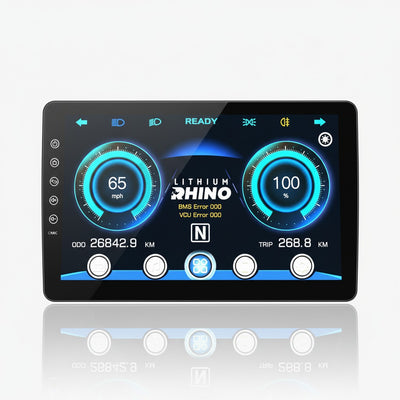
- LCD touchscreen + secondary dash power button
- Isolated 12V reducer (powers lights, accessories, stereo, USB)
- Main cables, charge port adapter, all hardware
- Lead-acid removal strap, safety gloves, and goggles
- Custom mounting brackets sized to Yamaha battery trays
- Step-by-step printed install guide + access to video walkthroughs
No second order, no missing connectors, no trips to the hardware store.
Installing a lithium battery in a Yamaha golf cart
Most Yamaha owners complete a lithium conversion in 2–4 hours. The high-level process:
- Disconnect the existing lead-acid pack and remove batteries using the included strap.
- Clean the battery tray and inspect cables and the Yamaha charge port for corrosion.
- Mount the new lithium battery using the included Yamaha-specific brackets.
- Connect main positive/negative cables, the isolated 12V reducer, and the BMS data line.
- Install the LCD touchscreen on the dash and run the harness.
- Charge to 100% with the included Rhino lithium charger and drive.
Every kit includes free access to a 30-minute video install call with a Lithium Rhino tech based in Charlotte, NC. Phone, text, and email support are available for the life of the battery.
Yamaha lithium battery warranty
Lithium Rhino offers an 8-year full-coverage warranty on every Yamaha battery — one of the longest in the industry. Full coverage means no proration, no exclusion for fleet use, and no charge-cycle cap inside the warranty window. Compare this to typical lead-acid Yamaha batteries (Trojan, Crown, Duracell), which carry a 12–18 month warranty, and most competing lithium kits, which prorate after year 2 or 3.
Why Yamaha owners choose Lithium Rhino
- Drop-in fit: engineered specifically for Yamaha G14, G16, G19, G22, Drive, and Drive2 battery trays.
- Yamaha 2-pin charger adapter included: no separate purchase, no wiring changes.
- All-in-one kit: touchscreen, charger, reducer, hardware, and removal gear in one box.
- USA-based support: real techs in North Carolina answer the phone.
- 6,000+ cycle life: 6× longer than lead-acid, with stable voltage to the last 5%.
- 0% APR financing: payments as low as $36/month via Shop Pay, Affirm, or PayPal.
- 30-day money-back guarantee: try the kit risk-free.
Frequently Asked Questions
What battery does a Yamaha golf cart use?
Most modern electric Yamaha golf carts (G22, G29 Drive, Drive2) use a 48-volt battery system, originally configured as four 12-volt lead-acid batteries. Older Yamaha models (G2, G8, G9, G14, G16) use a 36-volt system with six 6-volt batteries. Both can be upgraded to a single Lithium Rhino LiFePO4 conversion kit.
Are Yamaha golf carts 36 volt or 48 volt?
It depends on the model year. Yamaha G1 through G16 (1979–2002) are 36-volt carts. Yamaha G19 (1996+), G22, G29 Drive, and Drive2 electric are all 48-volt platforms. The Lithium Rhino 36V kits fit older Yamahas, and the 48V kits fit G19 onward.
How many batteries are in a 48-volt Yamaha?
A factory 48V Yamaha (G19, G22, Drive, Drive2) uses four 12-volt deep-cycle batteries wired in series. A Lithium Rhino 48V lithium conversion replaces all four with one sealed lithium pack — fewer connections, less weight, longer life.
How long do Yamaha lithium batteries last?
A Lithium Rhino LiFePO4 battery is rated for 6,000+ charge cycles, which translates to roughly 10–12+ years of typical golf cart use. Lead-acid Yamaha batteries average 3–5 years before noticeable range loss.
Can I convert my Yamaha Drive or Drive2 to lithium?
Yes. The Lithium Rhino 48V kits are designed as direct drop-in upgrades for the Yamaha G29 Drive (2007–2016) and Drive2 electric (2017–present). Each kit includes the Yamaha 2-pin charge port adapter, mounting brackets, and all wiring needed for the conversion. Most Drive/Drive2 owners complete the install in 2–4 hours.
What is the best battery for a Yamaha gas golf cart?
Gas Yamaha carts (G2-Gas, G9-Gas, G16-Gas, G22-Gas, Drive Gas, Drive2 EFI) use a small 12-volt starter and accessory battery, not a traction pack. For these carts, Lithium Rhino's main electric-cart conversion kits do not apply, but the Lithium Rhino Power Hub is designed to power 12V accessories (lights, fans, stereo, USB) on gas Yamahas without draining the starter battery.
Do I need a 12V battery on my Yamaha electric cart for accessories?
No separate 12V battery is required. Every Lithium Rhino conversion kit includes an isolated 12V reducer that powers all 12-volt accessories, headlights, taillights, brake lights, stereo, USB chargers, and fans, directly from the lithium pack, eliminating the need for a second battery.
How much does a Yamaha lithium battery conversion cost?
Lithium Rhino Yamaha conversion kits range from $1,699 (48V 65Ah) to $4,199 (76V 170Ah Godzilla). The most popular Yamaha Drive and G22 upgrade, the 48V 105Ah — is $2,299. Financing is available from $36/month at 0% APR through Shop Pay, Affirm, and PayPal.
Will a lithium conversion void my Yamaha warranty?
A lithium conversion does not void Yamaha's chassis or drivetrain warranty in most cases, since the battery is an aftermarket upgrade. The Lithium Rhino battery itself carries its own 8-year warranty. Check current Yamaha warranty terms for your specific model year and serial range.
How long does it take to install a Yamaha lithium battery kit?
Most Yamaha owners complete the install in 2–4 hours. The kit includes step-by-step instructions, all hardware, and free access to a 30-minute video install call with a USA-based Rhino tech.
Do I need a new charger for a lithium Yamaha battery?
Yes — lead-acid chargers will damage a lithium battery. Every Lithium Rhino Yamaha kit ships with the correct lithium charger and a Yamaha 2-pin plug adapter, so no separate purchase is required.
Can I charge my Yamaha lithium battery in cold weather?
Standard LiFePO4 batteries should not be charged below 32°F. For cold-climate Yamaha owners, the 48V 120Ah Self-Heated Lithium Rhino Kit includes an internal heating element that pre-warms the cells before charging, allowing safe operation down to –4°F.