

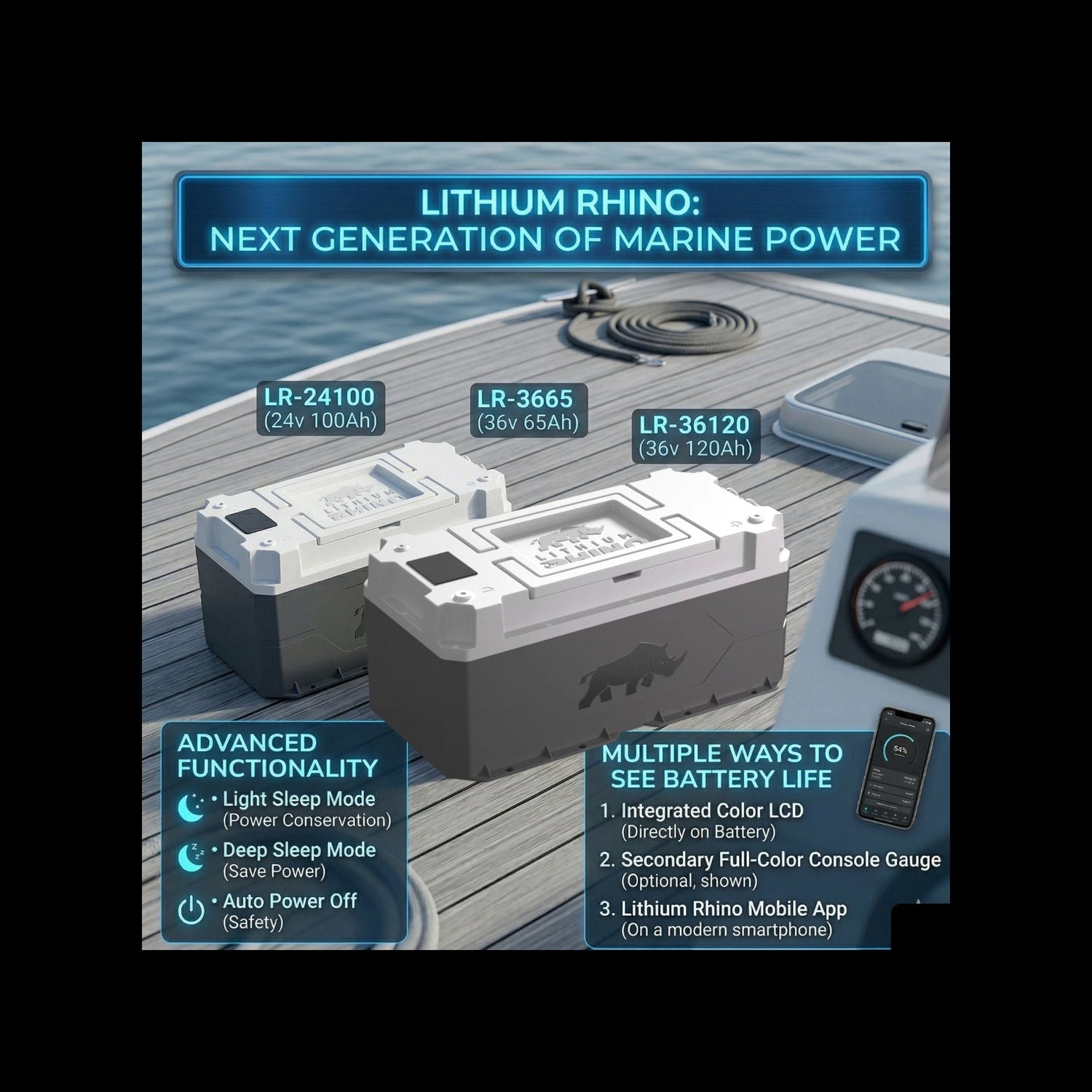
Introduction
It's one of the most common questions we get: "How many lithium batteries do I need for my trolling motor?" The answer depends on three things — your motor's voltage, your daily runtime, and how hard you push it. This guide walks you through the math so you buy exactly what you need, nothing more and nothing less.
Start Here: What Voltage Is Your Motor?
Trolling motors run on 12V, 24V, or 36V systems. Your motor's thrust rating tells you which:
- 12V: Up to ~55 lb thrust (e.g., Minn Kota Endura 55, Newport Vessels NV-Series)
- 24V: 55–80 lb thrust (e.g., Minn Kota Terrova 80, MotorGuide Xi5 80)
- 36V: 80+ lb thrust (e.g., Minn Kota Ultrex 112, MotorGuide Xi5 105)
Each voltage tier requires a specific number of 12V batteries wired in series:
- 12V system → 1 battery
- 24V system → 2 batteries
- 36V system → 3 batteries
This is the minimum battery count. Capacity (Ah) is a separate question — covered next.
Step 2: Calculate the Capacity You Need
Voltage tells you how many batteries. Amp-hours (Ah) tell you how big those batteries need to be.
Here's the formula:
Average amp draw × Hours of use = Ah needed
Your motor's spec sheet lists its amp draw at various speed settings. Most anglers don't run at full speed all day — a realistic average is 30–50% of max draw.
Quick reference for common motors:
| Motor | Voltage | Max Draw | Avg Draw (50% speed) |
|---|---|---|---|
| 55 lb thrust | 12V | ~50A | ~15–20A |
| 80 lb thrust | 24V | ~42A | ~15–18A |
| 112 lb thrust | 36V | ~44A | ~16–20A |
Example calculations:
- 6-hour day, 55 lb / 12V motor at avg 18A: 18A × 6hrs = 108Ah → one 100Ah or 120Ah lithium battery
- 8-hour day, 80 lb / 24V motor at avg 16A: 16A × 8hrs = 128Ah → two 100Ah lithium batteries (one per 12V position in series)
- 8-hour day, 112 lb / 36V motor at avg 18A: 18A × 8hrs = 144Ah → three 100Ah lithium batteries
Always add a 20% buffer so you're not running to zero — lithium batteries have a BMS that will cut off at low voltage to protect the cells.
Does Battery Count Change If I Add More Capacity?
For series-wired systems (24V and 36V), you can increase capacity by using higher Ah batteries — not by adding more batteries to the series chain. For example, upgrading from 100Ah to 150Ah batteries in a 24V system doubles your runtime without changing the 2-battery configuration.
You can also wire additional batteries in parallel to increase capacity while keeping the same voltage — but this adds complexity and weight. For most anglers, simply choosing the right Ah rating upfront is the cleaner solution.
Practical Recommendations by Boat Type
- Kayak / small jon boat (12V, 45–55 lb motor): 1 × 50–100Ah lithium battery. Weight savings here are dramatic — you might cut 40+ lbs from your bow
- Bass boat (24V, 70–80 lb motor): 2 × 100Ah lithium batteries. Full-day runtime for most fishing styles with room to spare
- Larger aluminum or fiberglass (36V, 100–112 lb motor): 3 × 100Ah lithium batteries. This setup will outlast most full tournament days without a recharge
One More Thing: Don't Forget Your Accessory Battery
Many anglers run a separate 12V battery for fish finders, livewells, and lighting — independent from the trolling motor bank. If that's your setup, factor in a dedicated accessory battery sized to your electronics draw. Running accessories off your trolling motor bank shortens your effective runtime.
Find the Right Battery for Your Motor
Browse our Marine Lithium Batteries — available in multiple voltages and capacities to match any trolling motor setup. Still unsure? Tell us your motor model and how long you fish, and we'll recommend the right bank.


Leave a comment
This site is protected by hCaptcha and the hCaptcha Privacy Policy and Terms of Service apply.