

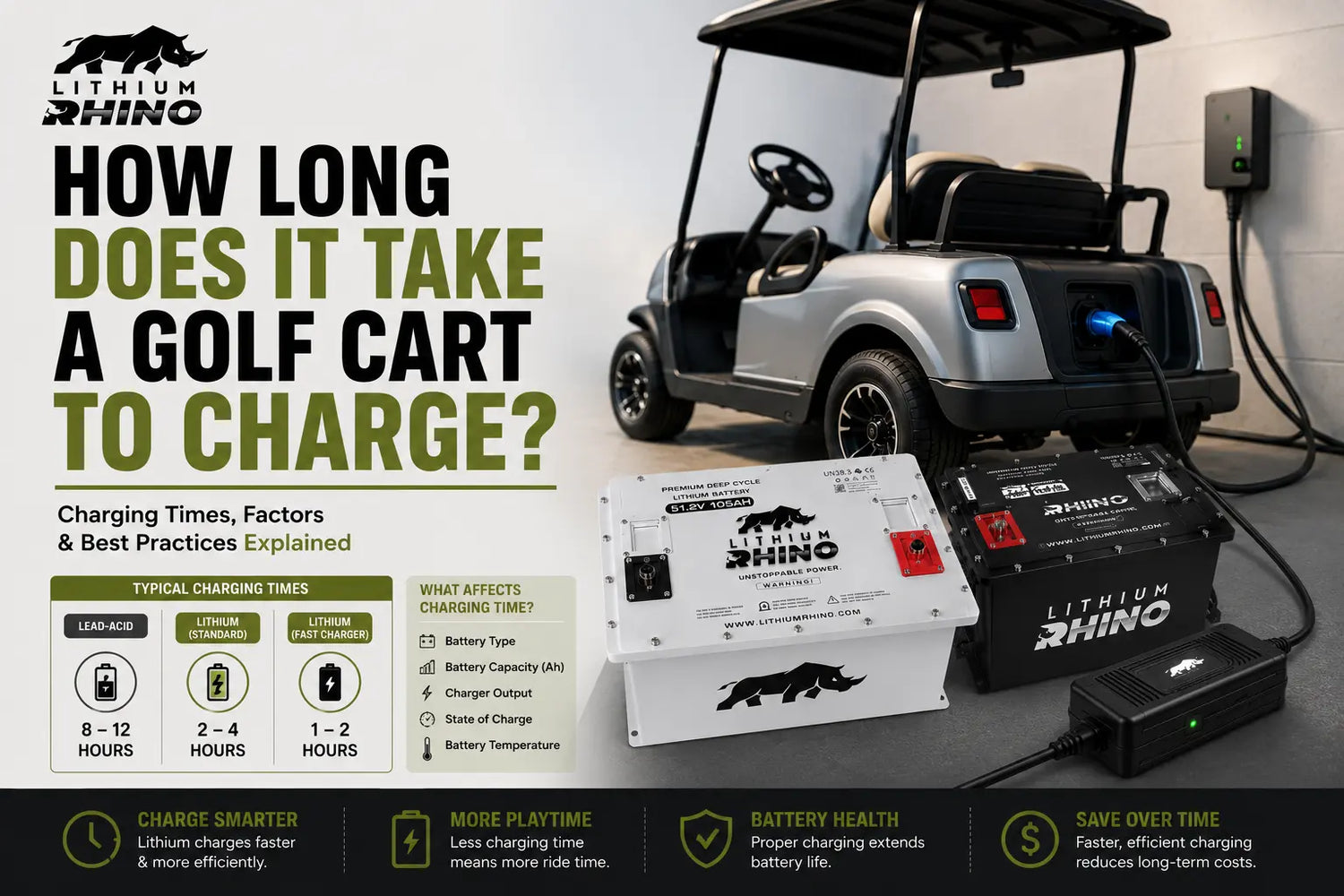
A lead-acid golf cart battery takes 6 to 10 hours for a full charge. A lithium (LiFePO4) golf cart battery takes 2 to 4 hours, less than half the time, because it accepts a much higher current for nearly the entire charge cycle instead of tapering off near the end.
That's the number most people are searching for. The rest of this guide covers why the gap is so big, what changes it for your specific cart, and how to know if your charger or your battery, is the real bottleneck.
Charging Time at a Glance
| Battery Type | Full Charge Time | Charge Cycles | Charger Amps Needed |
|---|---|---|---|
| Flooded Lead-Acid | 6–10 hours | 500–800 | 5–10A |
| AGM Lead-Acid | 5–8 hours | 600–900 | 5–10A |
| Lithium (LiFePO4) | 2–4 hours | 3,000–6,000+ | 10–15A |
Key takeaway: Charge time is driven mostly by battery chemistry, not cart brand. An EZGO, Club Car, or Yamaha on lead-acid will all fall in the same 6–10 hour range. Switch any of them to lithium, and all three drop to 2–4 hours.
Golf Cart Charging Time by Voltage (36V, 48V, 72V)
Voltage doesn't set charge time by itself, capacity (Ah) and charger amperage do. But in practice, here's what owners typically see:
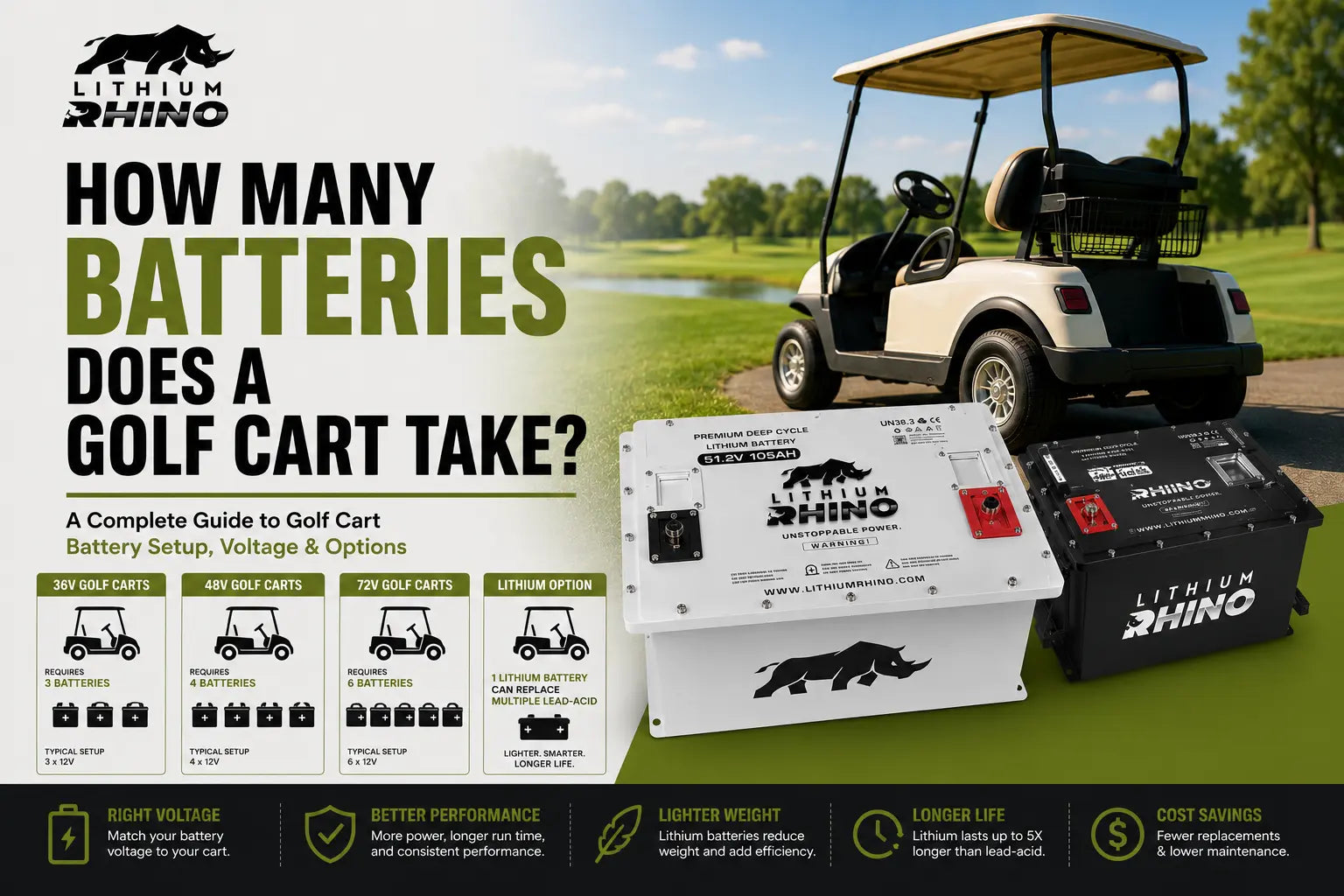
- 36V carts (older EZGO/Club Car models): Lead-acid 6–8 hrs · Lithium 2–3 hrs
- 48V carts (the most common setup today): Lead-acid 7–10 hrs · Lithium 2–4 hrs
- 72V/76V carts (performance and heavy-use builds): Lead-acid 8–10+ hrs · Lithium 3–5 hrs
If you're not sure which voltage your cart runs, our 36V vs. 48V vs. 76V comparison breaks down the differences in range, power, and cost.
5 Things That Actually Change Your Charging Time
- Battery chemistry: lead-acid vs. lithium is the single biggest variable.
- Charger amperage: a 5A charger takes roughly twice as long as a 10A charger on the same battery.
- State of discharge: a battery at 20% remaining takes longer to top off than one at 60%.
- Battery age: lead-acid batteries lose charge acceptance as they age, which is why a 3-year-old set often charges slower than it did when new.
- Temperature: very hot or very cold conditions slow the charging process for both chemistries, though lithium handles this better with a built-in BMS.
Why Lithium Charges in a Fraction of the Time
Lead-acid batteries have to charge in stages, fast at first, then a long, slow taper near the top to avoid overheating or gassing the electrolyte. That taper is where most of the 6–10 hours goes.
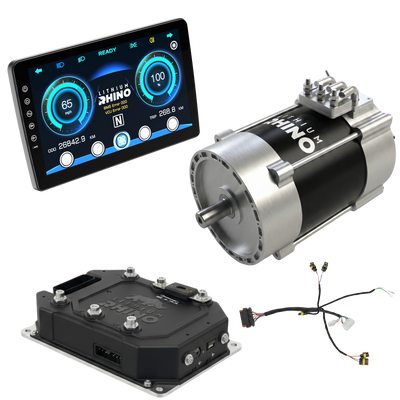
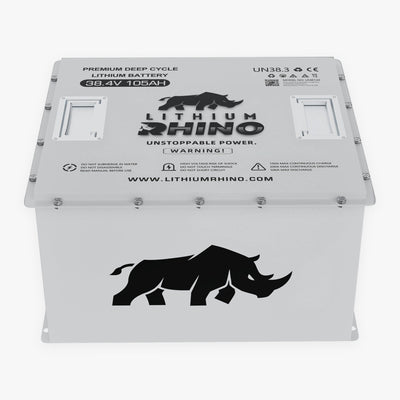
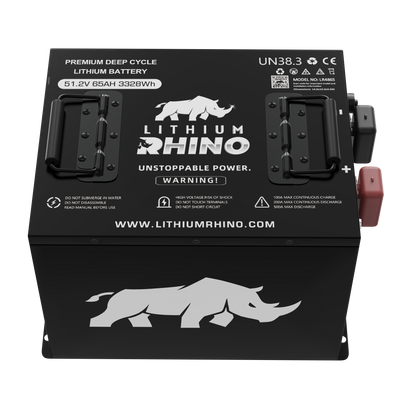
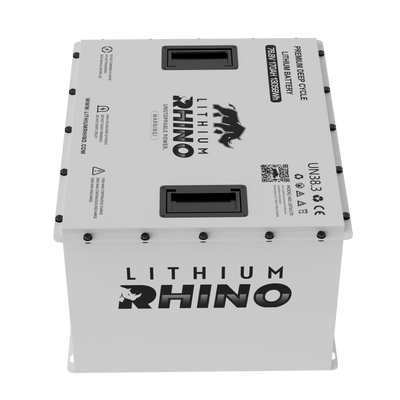
Lithium batteries don't need that taper. A quality LiFePO4 pack with a proper Battery Management System (BMS) like the ones built into every Rhino conversion kit can accept a strong charge rate almost the entire way to 100%, then cut off cleanly. That's the core reason charge time drops by more than half.
It's also why lithium batteries hold up to 3,000–6,000+ charge cycles instead of 500–800, the gentler, more consistent charge profile puts far less stress on the cells over time.
How Often Should You Charge It?
- Lead-acid: Charge after every use. Avoid letting it sit fully discharged that shortens lifespan fast, and proper maintenance matters more with lead-acid than most owners realize.
- Lithium: Charge whenever it's convenient. Partial charges don't cause memory-effect damage, so a quick top-off between rounds works fine.
Signs Your Charger or Battery Is the Problem
If your charge time keeps creeping past what's normal for your setup, it's usually one of these:
- Charger amperage too low for your battery's capacity
- Aging lead-acid batteries with reduced charge acceptance (common after 3–4 years)
- A charger mismatched to your cart's voltage system
- Sulfation buildup on lead-acid plates
If you're consistently waiting 10+ hours and still not getting a full charge, that's less a charging problem and more a sign the batteries themselves are near the end of their life.
Frequently Asked Questions
How long does it take to charge a 48V golf cart?
A 48V lead-acid cart takes 7–10 hours to fully charge. A 48V lithium cart takes 2–4 hours with a compatible charger.
Does a bigger charger charge a golf cart faster?
Yes. A 10–15A charger will charge a battery meaningfully faster than a 5A charger, as long as the battery itself can safely accept that higher current, lithium packs typically can, most lead-acid setups can't without risking damage.
Can you overcharge a golf cart battery?
Lead-acid batteries can be damaged by overcharging if the charger doesn't shut off properly. Lithium batteries with a built-in BMS automatically stop charging at full capacity, which removes that risk.
Is it bad to charge a golf cart every day?
For lithium, no, daily or partial charging is fine and doesn't reduce lifespan. For lead-acid, daily charging is actually recommended, since it's deep, prolonged discharge that causes the most damage.
How long do golf cart batteries last overall, not just per charge?
That depends on chemistry and usage. We cover full battery lifespan in detail here, including what shortens it and what extends it.
The Bottom Line
If your cart runs on lead-acid, charging is something you plan around. If it runs on lithium, it stops being something you think about. That's the entire case for converting not more power, though you get that too, just hours of your life back every week.
Take the 30-second quiz to find the exact Rhino kit for your cart's year, make, and model or browse 48V, 36V, and 72V kits directly.

Leave a comment
This site is protected by hCaptcha and the hCaptcha Privacy Policy and Terms of Service apply.