

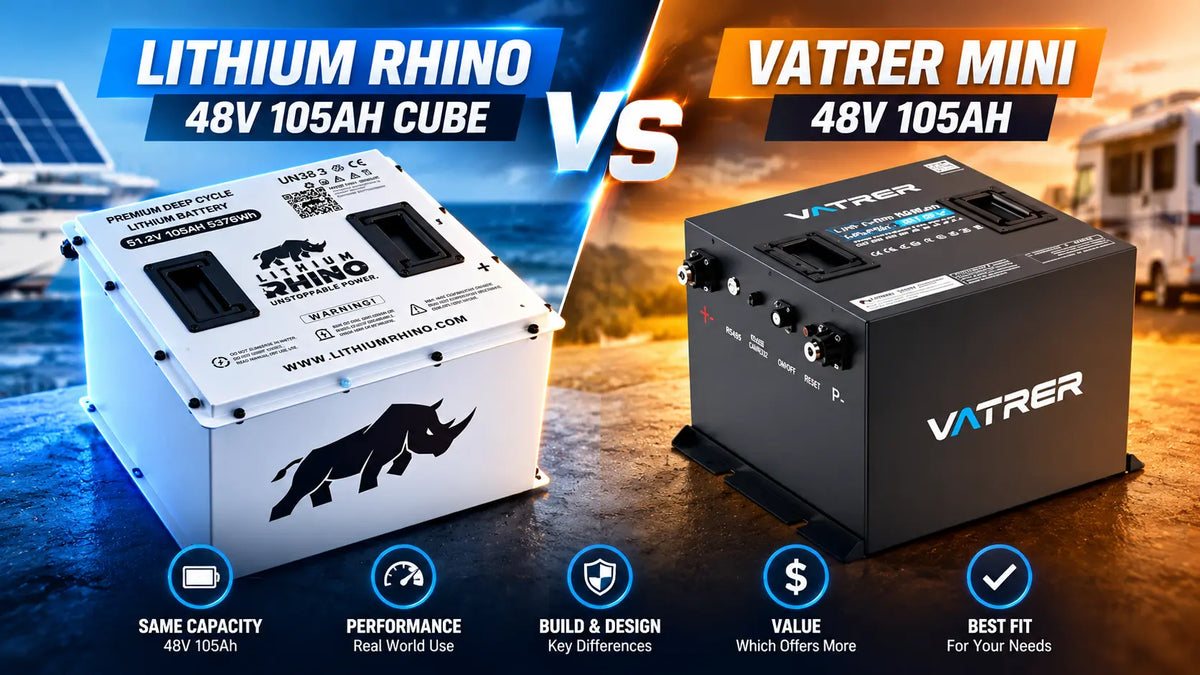
Choosing between the Lithium Rhino 105Ah CUBE and Battery 105Ah Mini comes down to more than battery capacity. Both offer 105Ah and 5,376Wh of listed energy, but Lithium Rhino costs more and includes a conversion-focused kit, while Vatrer is lighter and more affordable. Choose Lithium Rhino if its included equipment and higher advertised cycle life suit your needs. Choose Vatrer if lower upfront cost and reduced battery weight matter more.
Lithium Rhino CUBE vs Vatrer Mini: Quick Comparison
Both batteries offer the same advertised capacity, but their prices, dimensions, charging equipment, and included accessories differ. Here is a side-by-side comparison of their published specifications.
|
Feature |
Lithium Rhino 105Ah CUBE |
Vatrer 105Ah Mini |
|
Battery chemistry |
LiFePO4 |
LiFePO4 |
|
Nominal voltage |
48V-class system |
51.2V |
|
Capacity |
105Ah |
105Ah |
|
Listed energy |
5,376Wh |
5,376Wh |
|
Continuous discharge |
200A listed |
200A listed |
|
Advertised cycle life |
6,000+ cycles |
4,000+ cycles |
|
Weight |
Approx. 105 lb |
Approx. 90.57 lb |
|
Charger |
25A |
18A |
|
DC-to-DC converter |
40A listed in kit |
Depends on bundle |
|
Protection rating |
IP65 |
IP67 |
|
Advertised battery warranty |
8-year limited warranty |
5-year warranty service advertised |
|
Listed price |
$2,299 |
$1,579.99 |
Note: Prices, product versions, and bundle contents may change. Confirm the current details before purchasing.
1. Battery Capacity and Performance: Are They Equally Powerful?
At first glance, the Lithium Rhino CUBE and Vatrer Mini look evenly matched. Both are rated at 105Ah and 5,376Wh, so neither offers more listed energy capacity.
However, equal capacity does not guarantee equal driving range. A golf cart's range depends on its motor, controller, terrain, tire size, passenger weight, driving speed, and temperature.
For example, a cart travelling on flat paths with a light load may use less energy than one climbing hills with several passengers. This is why advertised maximum-range figures should be treated as estimates rather than guaranteed results.
What about acceleration and hill climbing?
Both manufacturers list 200A continuous discharge. This puts them on equal footing for that specification, but it does not prove identical performance in every golf cart.
Peak current, the duration for which it is available, and the battery management system's limits also affect performance. The manufacturers' published peak-current descriptions are not fully consistent across their product pages, so confirm the exact specifications before making a decision.
The takeaway: Neither battery has a clear advantage in listed capacity or continuous discharge. Your cart's electrical requirements and the battery's verified performance specifications matter more than the headline figures alone.
2. Size and Weight: Which Battery Fits Your Golf Cart?
A battery can have excellent specifications and still be unsuitable if it does not fit beneath your golf cart's seat.
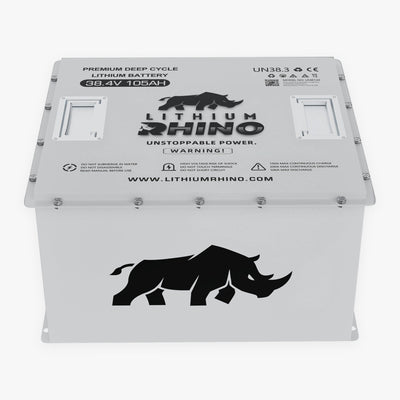
The Lithium Rhino CUBE measures approximately 14 × 13.1 × 9.3 inches. The Vatrer Mini measures 13.19 × 12.2 × 10.04 inches.
Vatrer has a smaller length-and-width footprint, but it is taller. That may help when floor space is limited, although the additional height could create a problem under a low seat or battery cover.
Weight is another difference. Vatrer is listed at approximately 90.57 pounds, compared with around 105 pounds for Lithium Rhino. That makes Vatrer about 14.4 pounds lighter according to the published specifications.
A lighter battery can be easier to handle during installation and reduces the weight carried by the cart. However, the effect on the complete vehicle depends on the battery bank being removed and the accessories installed.
Will either battery fit Club Car, EZGO, or Yamaha?
Compatibility depends on the exact golf cart model, model year, battery compartment, controller location, and electrical setup. A general compatibility claim does not replace checking your specific cart.
Measure the available space and allow room for terminals, cables, mounting brackets, and the battery cover. Also confirm the required voltage before ordering.
The takeaway: Vatrer is lighter and has a smaller footprint in length and width. Lithium Rhino is shorter in height. Check your actual battery compartment before choosing either model.
3. Charging Speed and Included Equipment: What Do You Get?
The battery itself is only part of a lithium conversion. Your golf cart may also need a compatible charger, a DC-to-DC converter, mounting hardware, cables, and a suitable charge-port arrangement.
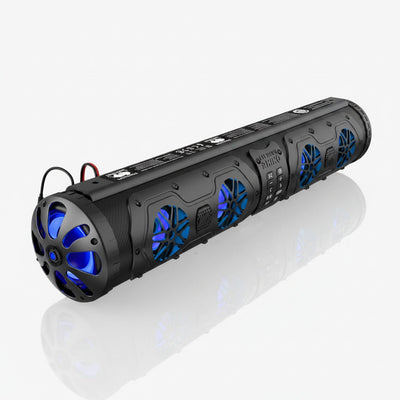
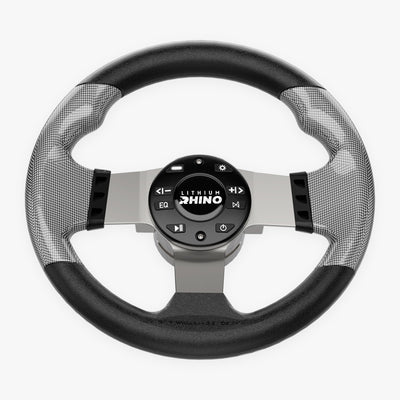
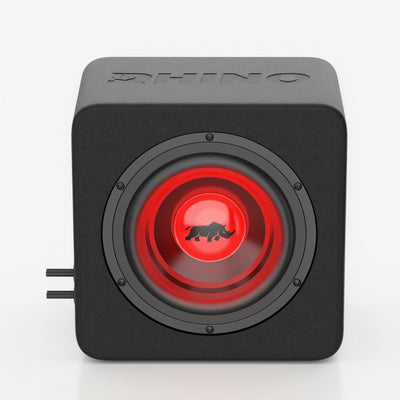
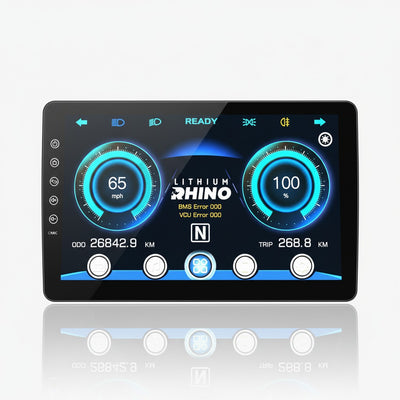
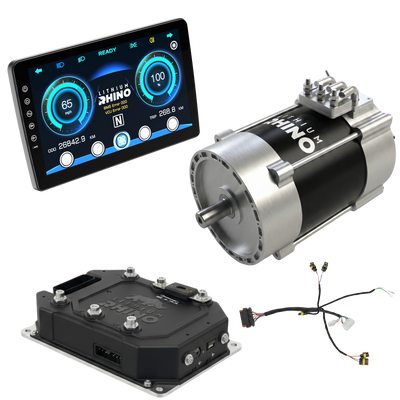
Lithium Rhino lists a 25A smart charger and a 40A DC-to-DC converter with its CUBE conversion kit. The package also lists a colour display, cables, mounting hardware, a charge-port adapter, and other installation-related accessories.
Vatrer lists an 18A charger and an LCD display. A DC-to-DC converter is available through a selected bundle, so buyers should confirm which configuration they are ordering.
Does the higher-amp charger make a difference?
A higher-rated charger can reduce charging time when the battery supports that current and operating conditions are suitable.
Lithium Rhino advertises charging in approximately four hours, while Vatrer advertises a full charge in under six hours. These are manufacturer claims, not guaranteed charging times for every golf cart owner. The starting charge level, temperature, and charging limits affect the actual duration.
If you use your cart frequently and need it ready again quickly, Lithium Rhino's higher-rated charger may be useful. If you normally charge overnight, the difference may be less important.
Why does the DC-to-DC converter matter?
A converter supplies regulated 12V power from the higher-voltage battery system for compatible accessories such as lights, USB ports, and certain other electrical components.
If your cart needs one, check whether it is included in the selected package and whether its output rating suits your accessories.
The takeaway: Lithium Rhino lists a higher-rated charger and a 40A converter in its kit. Vatrer can still be a good value, but the selected bundle must include the equipment your cart needs.
4. Cycle Life, Weather Protection, and Warranty
A golf cart battery is a long-term purchase, so its expected durability and warranty deserve careful attention.
Lithium Rhino advertises a cycle life of 6,000+ cycles, while Vatrer lists 4,000+ cycles. On the published figures, Lithium Rhino claims the higher cycle count.
However, cycle life is not a guarantee of a specific number of years. Actual service life depends on usage, depth of discharge, temperature, charging practices, and the conditions used to measure cycle life.
Which battery offers better environmental protection?
Lithium Rhino lists an IP65 rating, while Vatrer lists IP67. IP67 generally indicates a higher level of water-ingress protection under specified test conditions.
Vatrer also describes low-temperature charging protection. Its product page lists a cutoff around 32°F, with charging permitted again when the battery warms to around 41°F. This can be useful in cold environments, but charging protection should not be confused with a self-heating feature.
Which warranty is better?
Lithium Rhino advertises an eight-year limited battery warranty. Its published terms describe six years of full coverage followed by two years with a $500 customer responsibility under specified conditions. Registration requirements and other limitations apply, and accessories may have separate coverage.
Vatrer advertises a 5-year warranty service period. Buyers should read the complete written policy to understand the coverage, exclusions, and claims process. Check what happens if the battery fails after 3 years, whether replacement is full or conditional, and whether additional costs apply.
5. Is Lithium Rhino Worth $719 More?
At the time of checking, Lithium Rhino was listed at $2,299, while Vatrer was listed at $1,579.99. That creates a price difference of $719.01.
|
Price comparison |
Lithium Rhino CUBE |
Vatrer Mini |
|
Listed price |
$2,299 |
$1,579.99 |
|
Difference |
$719.01 more |
$719.01 less |
The real question is what that extra money buys you. Lithium Rhino's higher price comes with a listed conversion package that includes a 25A charger, a 40A converter, mounting accessories, and other components. It also advertises a higher cycle-life rating. Vatrer has the lower starting price and a lighter battery. For buyers who already have compatible equipment or need fewer accessories, the savings may be especially attractive.
However, a lower battery price does not always mean a lower total conversion cost. If you need to purchase a converter, wiring, mounting hardware, or other parts separately, those expenses should be included in the comparison.
Our assessment: Lithium Rhino offers better value for buyers who need its included conversion equipment and place greater importance on its advertised cycle life.
6. Which Battery Should You Choose?
The right battery depends on your golf cart, budget, and expectations. Neither option is automatically the best choice for every owner.
Choose Lithium Rhino 105Ah CUBE if:
-
You want a conversion-focused package with a listed 25A charger and 40A converter.
-
The included installation accessories match your golf cart.
-
Its higher advertised cycle life is important to you.
-
The price fits your budget after comparing equivalent packages.
Choose Vatrer 105Ah Mini if:
-
You want to reduce your upfront spending.
-
A lighter battery is a priority.
-
Your golf cart benefits from its smaller length-and-width footprint.
-
Its IP67 rating and published low-temperature charging protection suit your needs.
-
The selected bundle includes all the equipment your cart requires.
Before ordering, confirm your cart's voltage, controller requirements, available battery space, and included accessories. These checks are more useful than choosing a winner based on a single specification.
Frequently Asked Questions
1. Is Lithium Rhino 105Ah CUBE better than Vatrer 105Ah Mini?
Neither is best for every golf cart. Lithium Rhino offers a conversion-focused package and a higher advertised cycle life. Vatrer costs less on the checked listings and weighs less. Fitment, included accessories, and warranty terms should guide your decision.
2. Do both batteries have the same capacity?
Yes. Both manufacturers list 105Ah capacity and 5,376Wh of energy. Real-world driving range can still differ because the cart, load, terrain, and driving conditions affect energy consumption.
3. How much cheaper is the Vatrer Mini?
Vatrer was listed at $1,579.99, compared with $2,299 for Lithium Rhino. That is a difference of $719.01, although prices and bundle options may change.
4. Which battery weighs less?
Vatrer lists its Mini at approximately 90.57 pounds. Lithium Rhino lists the CUBE at around 105 pounds, making Vatrer about 14.4 pounds lighter.
5. Which battery charges faster?
Lithium Rhino includes a 25A charger, compared with Vatrer's 18A charger. The manufacturers advertise approximately four hours for Lithium Rhino and under six hours for Vatrer, but actual charging times vary.
6. Will these batteries fit my golf cart?
Compatibility depends on the exact golf cart model, year, battery compartment, and electrical system. Check the dimensions and confirm compatibility with the manufacturer before buying.
7. Which battery has a longer cycle life?
Lithium Rhino advertises 6,000+ cycles, while Vatrer lists 4,000+ cycles. These are manufacturer ratings, not guarantees of a specific service life.
8. Does Vatrer include a DC-to-DC converter?
Vatrer offers a bundle that includes a converter, but you should verify the exact contents of the configuration you select. Lithium Rhino lists a 40A converter with its CUBE kit.
9. Which battery has the better warranty?
Lithium Rhino advertises an eight-year limited battery warranty, while Vatrer advertises a 10-year warranty service period. Compare the written policies, exclusions, and replacement conditions before deciding.
10. Is IP67 better than IP65?
IP67 generally indicates a higher level of water-ingress protection under specified test conditions. Vatrer lists IP67, while Lithium Rhino lists IP65. Neither rating replaces proper installation and care.
11. Can I use my existing lead-acid charger?
Do not assume your old charger is compatible. Use the charger supplied with the battery or one explicitly approved for the exact LiFePO4 model.
12. Which battery offers better value for money?
Vatrer has the lower listed price. Lithium Rhino may offer better value if you need its included conversion equipment and value its higher advertised cycle life. Compare the complete cost of an equivalent installation.
Lithium Rhino 105Ah CUBE vs Vatrer 105Ah Mini: Which Battery Is Best in 2026
The Lithium Rhino 105Ah CUBE and Vatrer 105Ah Mini offer the same listed capacity and energy. The decision therefore comes down to what you receive for your money and which features matter most for your golf cart.
Vatrer is the stronger starting point for buyers focused on upfront savings and reduced battery weight. Lithium Rhino deserves consideration if you want its listed conversion equipment, a higher-rated charger, and a higher advertised cycle-life rating.
Before purchasing either model, confirm compatibility with your cart and review the full warranty. A suitable battery should meet your electrical requirements, fit securely, and include the equipment you need.

Leave a comment
This site is protected by hCaptcha and the hCaptcha Privacy Policy and Terms of Service apply.